
At a glance
How to choose product photography studios for ecommerce: studio types, real pricing models, platform image specs, and when AI tools beat a physical shoot.
| Need | What to do |
|---|---|
| Get oriented | Read the short summary, then use the checklist below. |
| Create a test image | Try Product Photo Editor Free |
What Product Photography Studios for Ecommerce Actually Do
Product photography studios for ecommerce exist to solve a specific problem: online sellers need high volumes of consistent, platform-ready images that convert browsers into buyers. These aren't general commercial photography outfits shooting brand campaigns or editorial spreads. They're production-focused operations built around speed, consistency across hundreds or thousands of SKUs, and strict compliance with marketplace image standards.
Think of it this way. A commercial photoshoot tells a story, building an aspirational lifestyle around a product. An ecommerce product photography session, on the other hand, focuses entirely on showcasing the item itself: accurate colors, multiple angles, clean backgrounds, and enough detail that a shopper feels confident clicking "add to cart." Both matter, but they serve different stages of the buyer journey and demand different workflows.
If you're a seller researching your options for the first time, understanding this distinction saves you from overpaying for services you don't need or underpaying for results that won't perform.
What Makes Ecommerce Photography Studios Different
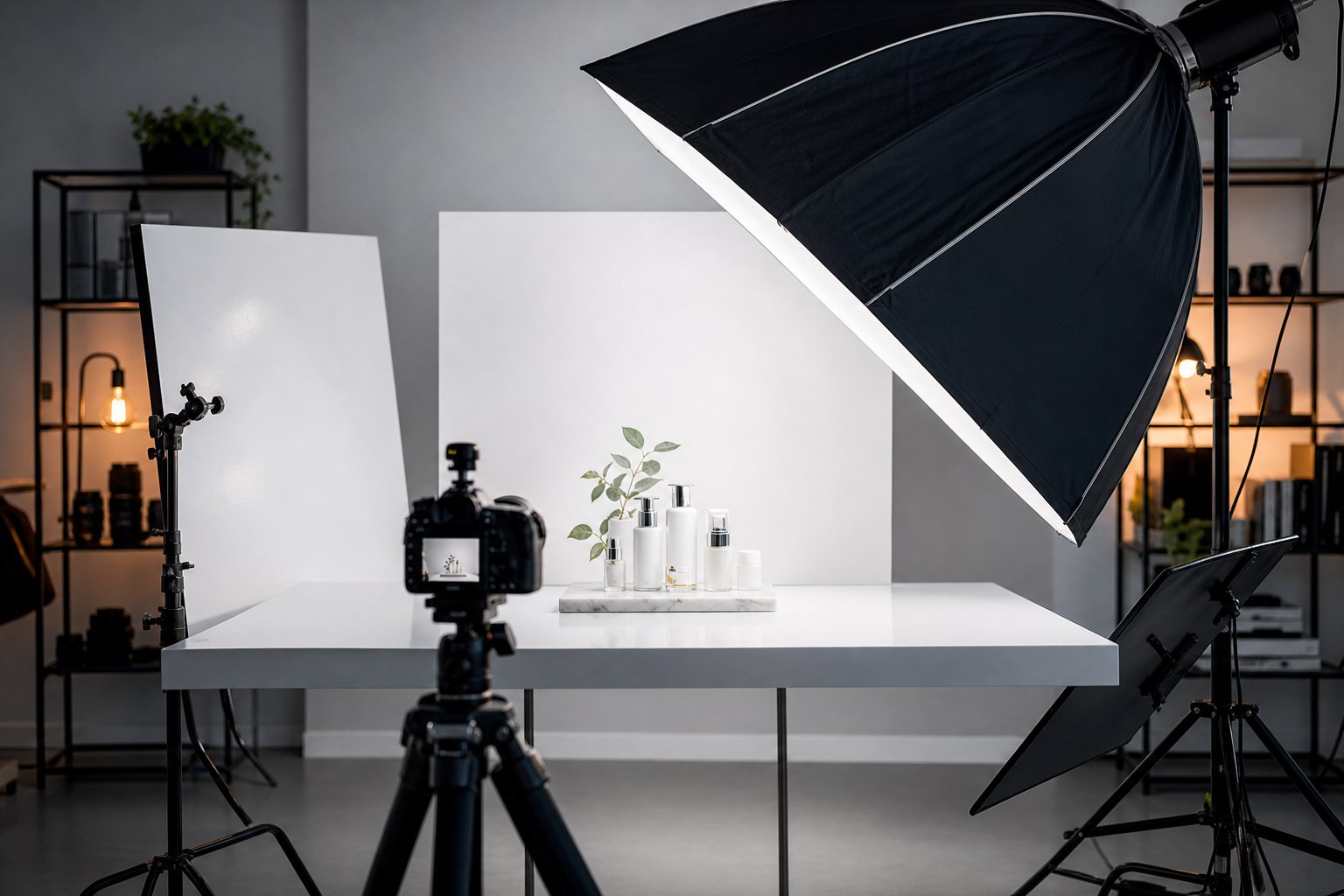
The demands of online retail imagery are unusually specific. Marketplaces like Amazon require pure white backgrounds (RGB 255,255,255) with the product filling 85% of the frame. Shopify stores benefit from lifestyle context shots. Mobile shoppers need compositions that read clearly on a five-inch screen. Studios specializing in e-commerce photography build their entire setup around these requirements: standardized lighting rigs for color accuracy, turntable systems for 360-degree views, and post-production pipelines that batch-process retouching across entire catalogs.
Consistency is the operational keyword. When you're listing 200 products, every image needs the same lighting quality, background treatment, and framing style. That level of uniformity signals professionalism and builds brand trust with shoppers scanning your storefront.
Why Product Imagery Drives Online Sales
Your product photo is the closest substitute a shopper has for picking an item up in a store. Baymard Institute's UX research found that 56% of online shoppers explore product images first on a page, before reading titles or descriptions. And Salsify's 2025 Consumer Research Report shows 77% of shoppers say high-quality images and videos are important to their purchase decisions.
When shoppers can't touch or hold a product, the image becomes the entire basis for trust, perceived value, and purchase confidence.
The performance data backs this up across platforms. Cornell Tech researchers found that eBay listings with higher-quality photos are up to 25% more likely to sell in categories like handbags. Product photography ecommerce sellers invest in isn't a vanity expense. It's a direct lever on conversion rates, return rates, and how much customers are willing to pay.
The real question isn't whether commerce photography matters. It's which type of studio setup actually fits your business, your catalog size, and your budget.
Types of Ecommerce Product Photography Studios Explained
The studio landscape for ecommerce sellers isn't one-size-fits-all. Four distinct models have emerged, each built around different operational strengths. Knowing which category a studio falls into helps you match your needs to the right provider before you ever request a quote.
Full-Service Production Studios
These are end-to-end creative operations. A full-service ecommerce photography studio handles everything from creative direction and prop styling to shooting, retouching, and final asset delivery. You'll find art directors, set designers, and dedicated post-production teams under one roof.
Imagine you're launching a lifestyle brand and need on-model imagery, flat-lay compositions, and hero shots for a campaign landing page. That's where full-service studios earn their fee. The tradeoff is cost and timeline. Complex creative direction takes longer to plan, execute, and approve. For brands that need polished storytelling alongside their product pages, though, this model delivers the strongest creative output.
Volume and High-Throughput Studios
Speed and repeatability define this category. High-throughput ecommerce product photography studios are built for processing large SKU counts using standardized lighting setups, fixed camera positions, and streamlined retouching pipelines. They shoot dozens or hundreds of products per day with minimal variation in the process.
The setup stays consistent so your 500th product image looks identical in quality to your first. Creative flexibility is limited by design. You're paying for efficiency and uniformity across a large catalog, not bespoke styling for each item.
Boutique and Specialized Studios
Some product categories demand very specific technical expertise. Jewelry requires macro lenses and precise reflection control. Food photography needs styling skills that keep dishes looking fresh under hot lights. Electronics involve managing reflective surfaces and screen glare. An ecommerce fashion photography studio, for example, understands garment steaming, fit presentation, and ghost mannequin retouching in ways a generalist provider simply won't.
The value of a boutique ecommerce photo studio is domain knowledge. They've already solved the technical challenges unique to your product type, which means fewer reshoots and better results on the first pass.
Platform-Based and Remote Studios
This newer model removes geography from the equation entirely. You ship your products to an ecommerce photography studio, they photograph everything according to a pre-agreed shot list, and you approve proofs online. No travel, no on-site presence required.
Remote studios like Squareshot have standardized this into a documented stage-by-stage workflow that runs from brief confirmation and item delivery through final approval and product return. It works especially well for sellers who need consistent catalog imagery but don't require hands-on creative direction during the shoot itself. The ecommerce studio model here prioritizes process clarity and predictable turnaround over bespoke creative collaboration.
| Studio Type | Typical Use Case | Volume Capacity | Creative Flexibility | Price Range | Turnaround Speed |
|---|---|---|---|---|---|
| Full-Service Production | Lifestyle campaigns, on-model shoots, brand storytelling | Low to medium (10-100 SKUs per project) | High | High | 1-4 weeks |
| Volume / High-Throughput | Large catalog packshots, white-background standards | High (100-1,000+ SKUs per batch) | Low | Low to medium | 3-10 business days |
| Boutique / Specialized | Category-specific needs (jewelry, food, fashion, electronics) | Low to medium (5-200 SKUs) | Medium to high | Medium to high | 1-3 weeks |
| Platform-Based / Remote | Standardized ecommerce catalog imagery without on-site presence | Medium to high (20-500+ SKUs) | Low to medium | Low to medium | 5-10 business days |
Most ecommerce product photography studios you'll encounter fit into one of these four categories, though some blend elements across models. A boutique studio might also offer a remote shipping workflow, or a high-throughput operation might have a premium tier with lifestyle add-ons.
The framework above gives you a starting point for conversations. But knowing which studio type fits your business isn't just about creative preferences. It's heavily influenced by how many products you're selling, how fast your catalog is growing, and what your current budget can support.
Matching Studio Type to Your Business Scale
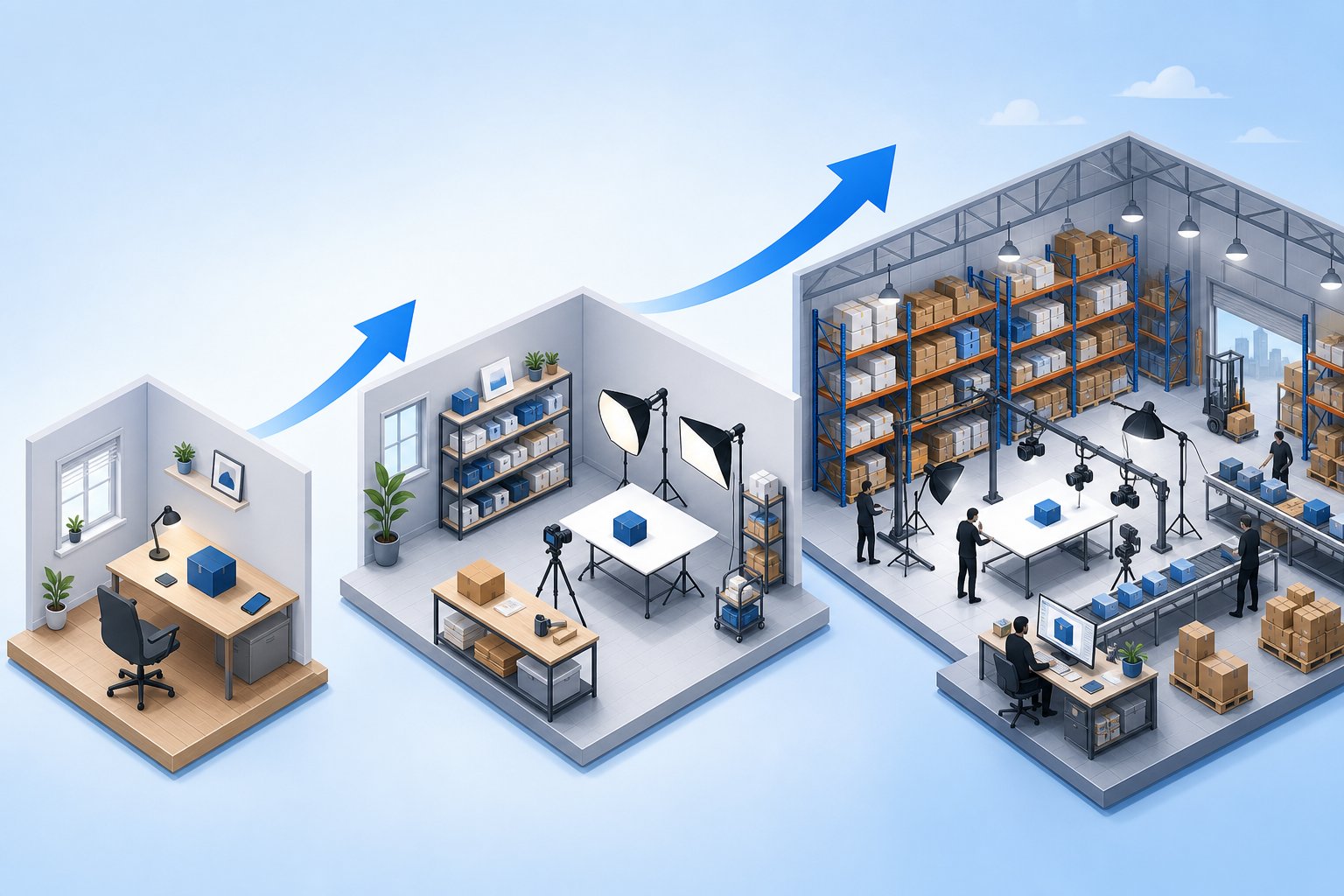
A boutique jewelry brand with 20 SKUs and a wholesaler managing 3,000 product lines have almost nothing in common when it comes to photography needs. Yet both end up searching for the same thing: product photography for online stores that fits their budget and delivers results. The right studio choice depends less on which type sounds appealing and more on where your business actually sits today.
Early-Stage Brands With Small Catalogs
When you're working with fewer than 50 SKUs, every dollar carries weight. Professional product photography can run anywhere from $12 to $500 per image depending on complexity, and most products need three to five angles plus a lifestyle shot. That math adds up fast. A 30-product catalog at mid-range rates ($50 to $150 per image) could cost $7,500 to $22,500 before you've validated whether those products will sell.
At this stage, per-image pricing models are your friend. They keep costs predictable and eliminate the risk of paying a full day rate for a shoot that only fills half the time. Remote platform studios work well here too, since you ship a small batch of products and receive standardized ecommerce photos without committing to a larger production.
But here's the honest question: does professional photography for ecommerce products make sense before you've proven product-market fit? For many early sellers, a hybrid approach works better. Shoot your hero products (top 10-20 items likely to drive initial revenue) professionally, and handle the rest with a controlled DIY setup or AI tools while you validate demand. Once a product hits consistent sales, upgrade its imagery. This revenue-threshold approach ensures you're investing in photography for proven winners rather than speculative inventory.
Growing Brands Managing Seasonal Launches
The calculus shifts once you're managing 50 to 500 SKUs with regular product drops. Consistency across a growing catalog becomes the main challenge. When each batch of photos looks slightly different in tone, lighting, or composition, your online storefront photography starts to feel disjointed, and shoppers notice. Visual inconsistency undermines the professional brand image you're building.
This is where retainer or subscription models start making financial sense. Instead of negotiating one-off projects every time you launch a new collection, you lock in a relationship with a studio that already knows your brand guidelines, lighting preferences, and platform requirements. The per-image cost typically drops with volume commitments, and turnaround becomes more predictable because the studio allocates capacity for your recurring needs.
Seasonal launches add another layer. If you're dropping new collections quarterly, you need a studio that can handle bursts of 50 to 100 products on a compressed timeline without sacrificing quality. Ask about peak-season capacity before committing. A studio that delivers beautiful work on a 10-SKU test batch may struggle when you send 80 products ahead of a holiday launch.
Enterprise Operations With Thousands of SKUs
At enterprise scale, photography becomes a logistics operation as much as a creative one. You're not just looking for great images. You need a partner that can process hundreds of products per week with consistent quality, integrate deliverables into your content management system or product information management (PIM) platform, and maintain organized file naming conventions across thousands of assets.
High-volume sellers typically need studios with dedicated production lines: standardized setups that stay consistent across operators, automated retouching pipelines, and quality assurance checkpoints that catch issues before delivery. Turnaround speed matters enormously at this scale. A two-week delay on 500 product images means delayed listings, missed launch windows, and lost revenue.
Integration with existing workflows is the differentiator at this tier. The best enterprise-scale studios deliver final assets directly into your DAM system with proper metadata, file naming, and platform-specific crop variants ready to go. They function less like a creative vendor and more like an extension of your content operations team.
Not sure whether you've outgrown your current photography setup? These signals usually indicate it's time to move to a different studio tier:
- You're spending more time coordinating and managing photo shoots than running your business
- New product listings are delayed because photography can't keep pace with sourcing
- Visual consistency across your catalog has degraded noticeably as product count has grown
- Your return rates are climbing with "not as described" or "looks different than photo" cited by customers
- You're paying rush fees regularly because standard turnaround no longer fits your launch schedule
- Your DIY or freelance setup can't accommodate the volume of your next seasonal drop
- Cart abandonment is running significantly above typical industry averages, suggesting visual trust issues
- You need images formatted for multiple platforms simultaneously but your current provider only delivers one spec
If three or more of these resonate, the cost of staying with your current approach likely exceeds the cost of upgrading. The next question is understanding exactly what each platform demands from your images, and how those requirements narrow down which studios can actually serve your needs.
Get studio-quality product photos with Snappyit →
Platform-Specific Image Requirements That Shape Studio Choice
Every marketplace has its own rulebook for product imagery. A studio that delivers stunning lifestyle shots might still produce files that get rejected on Amazon because the background reads RGB 250,250,250 instead of pure white. When you're evaluating studios for e-commerce product photography, platform compliance isn't a nice-to-have. It's a baseline requirement that directly affects whether your listings go live on schedule.
Amazon Product Image Technical Standards
Amazon enforces the most prescriptive image standards of any major marketplace, and they're checked by both automated bots and human moderators. For main images, the rules are non-negotiable: a pure white background (RGB 255,255,255), the product filling 85% or more of the frame, and absolutely no text, logos, watermarks, or inset graphics. The image must show the actual product, not an illustration or mockup. Minimum resolution is 1,000 pixels on the longest side to enable the zoom function, and Amazon itself recommends 1,600 pixels or higher for the best zoom quality.
The additional media slots (Amazon listings display 6 images plus 1 video) offer more flexibility. Lifestyle shots, infographics, scale references, and close-up details are all encouraged in those slots. But that main ecommerce photo? It has to be clinical.
Why does Amazon experience matter when choosing a studio? Because non-compliant images get listings suppressed. Your product disappears from search until you upload corrected files, resubmit, and wait for approval. For sellers launching dozens of SKUs simultaneously, a single batch of rejected images can delay an entire product drop by days or weeks. Studios that regularly shoot for Amazon have their lighting calibrated to produce true white backgrounds and their framing dialed in to meet the 85% fill requirement without guesswork.
Shopify and Independent Store Flexibility
Selling on your own Shopify or WooCommerce store flips the creative constraints entirely. There's no algorithm suppressing your listing because you used a colored background or included text overlays. You set the rules, which means product photography for e-commerce on owned storefronts can lean heavily into lifestyle imagery, contextual scenes, and brand storytelling.
That creative freedom comes with its own challenge, though. Shopify themes crop and display images based on theme-specific aspect ratios. Most modern themes default to a 1:1 square crop on collection pages, so uploading a mix of portrait and landscape ecommerce product photos creates an uneven, amateurish-looking grid. The recommendation is to shoot at 2,048 x 2,048 pixels for Shopify, pick one consistent aspect ratio across your catalog, and crop deliberately before uploading rather than letting the platform auto-crop for you.
Multi-Channel Consistency Challenges
Here's where things get complicated. Most growing sellers list on multiple platforms simultaneously, and each one demands different dimensions, backgrounds, and file specs. You need a pure white hero shot for Amazon, a lifestyle-forward first image for Etsy, a fast-loading square for Google Shopping, and a theme-matched set for your Shopify store. All from the same product.
The practical solution is a master-and-export workflow. Shoot at 3,000 pixels or larger on the long edge, archive a high-quality master file per product, then export platform-specific variants at the correct dimensions and compression levels. Studios experienced in e-commerce product photography for multi-channel sellers build this into their delivery process, providing separate folders with assets formatted per platform rather than handing you a single set of files and leaving you to resize everything yourself.
| Platform | Recommended Dimensions | Background Rules | File Formats | Images Recommended per Listing |
|---|---|---|---|---|
| Amazon | 1,600 x 1,600 px (minimum 1,000 px for zoom) | Pure white (RGB 255,255,255) required for main image | JPEG (preferred), PNG, TIFF, GIF | 6 images + 1 video (main + lifestyle + infographics) |
| Shopify | 2,048 x 2,048 px square | No restriction; theme-driven display, consistency recommended | JPEG, PNG, WebP, GIF | 5-8 per product |
| Etsy | 2,700 x 2,025 px (4:3 landscape) | No restriction; lifestyle and scene-based imagery encouraged | JPEG, PNG, GIF | 10 photos + 1 video |
| WooCommerce | 1,200 x 1,200 px (theme-dependent) | No restriction; set via Customizer for catalog consistency | JPEG, PNG, WebP | 5-8 per product |
Notice the pattern: marketplace platforms enforce strict background and formatting rules, while self-hosted stores give you creative control but demand internal discipline. A studio that understands this distinction will ask which platforms you sell on before they even discuss shot lists or pricing. If they don't ask, that's a signal they may not deliver platform-ready assets without extra rounds of revision.
Platform requirements tell you what your images need to look like. The next piece of the puzzle is understanding what those images will cost, and why pricing varies so dramatically across different studio models.
How Pricing Works Across Different Studio Models
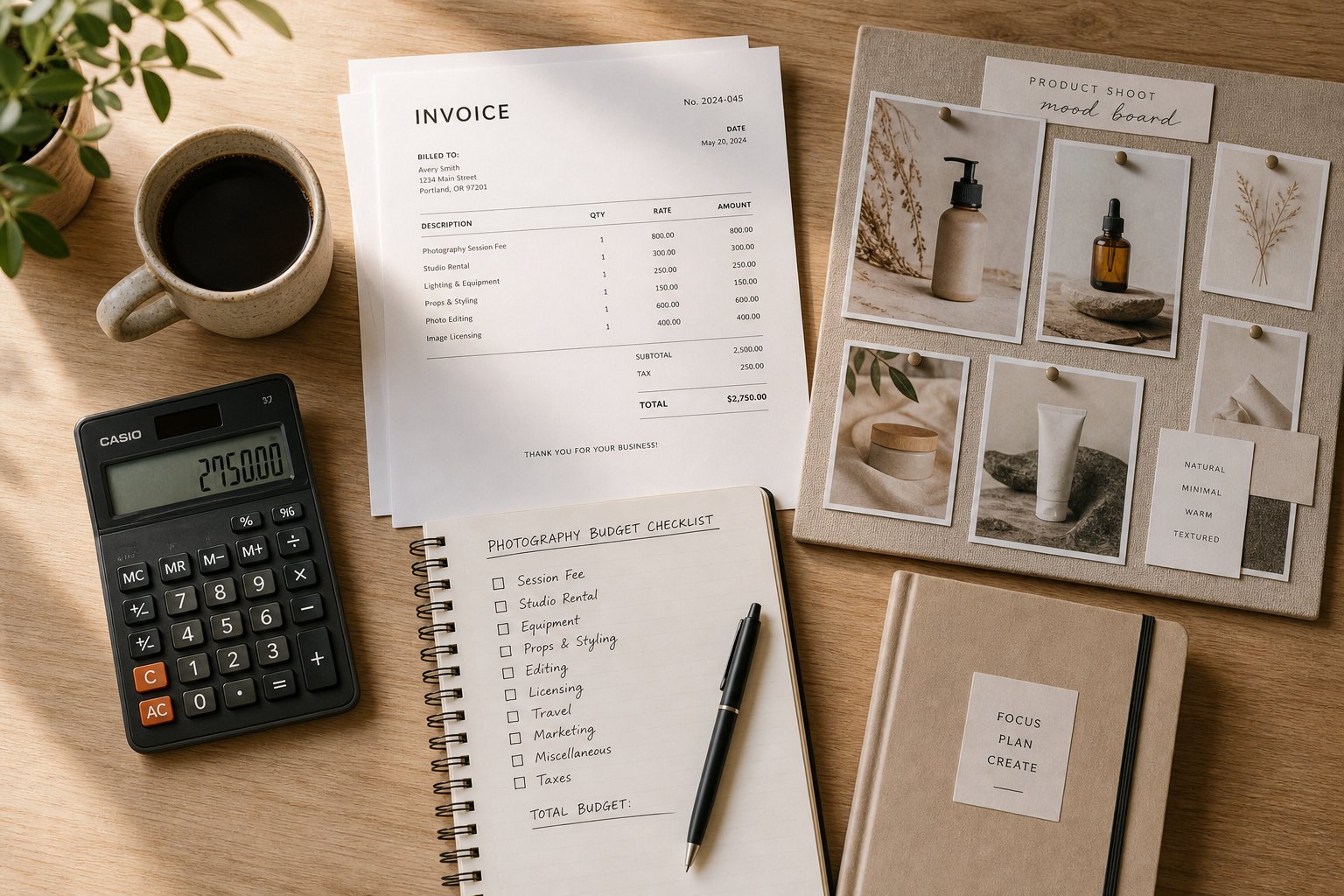
Pricing in ecommerce product photography services is notoriously opaque. Two studios can quote wildly different numbers for seemingly identical deliverables, and without understanding the underlying pricing model, you can't tell whether you're getting a deal or getting taken. The gap is real: verified 2026 market rates range from $12 per image on volume-discount platforms to $10,000 for a full commercial day rate. That spread exists because "product photography" covers fundamentally different services depending on who you hire.
Common Pricing Models in Ecommerce Photography
Four pricing structures dominate the market, and each works best for different situations:
Per-image pricing is the most common model for ecommerce catalog work. You pay a flat rate per final, edited image delivered. Simple white-background shots typically run $12 to $75 per image, mid-range styled shots land at $50 to $150, and lifestyle or editorial images range from $100 to $500 per image. Most studios offer volume tiers where the per-image cost drops as you order more. Basic retouching (color correction, background cleanup) is usually included. Advanced retouching, prop styling, and multiple revision rounds often aren't.
Day-rate pricing works differently. A full-day rate in 2026 runs $1,500 to $10,000 depending on the photographer's experience and shoot complexity. Here's what catches many sellers off guard: the day rate typically covers the photographer's time and creative fee only. According to Frameonce's itemized shoot breakdown, studio rental ($75 to $150 per hour), models ($50 to $250 per hour), stylists ($500 to $1,500 per day), props, and post-production are all billed separately. A mid-range lifestyle shoot day can easily total $3,000 to $8,000 before retouching.
Subscription and platform models have emerged as a middle ground. Services like Soona (starting at $39 per image) and Squareshot (tiered per-image pricing with volume discounts) operate as on-demand platforms. You ship products, choose a package, and receive images within a defined window. These e-commerce photography services prioritize predictability and speed over bespoke creative direction. They're well-suited for straightforward catalog work where you need professional results without managing a complex production.
Retainer arrangements lock in ongoing capacity with a product photography company at negotiated rates. You commit to a monthly or quarterly volume, and in exchange you get priority scheduling, lower per-image costs, and a team that already knows your brand guidelines. Studios offering retainers typically include a set number of revision rounds, consistent styling, and dedicated account management. The tradeoff is a minimum commitment whether or not you use the full allotment every month.
What Drives Cost Differences Between Studios
Even within the same pricing model, quotes can vary by 3x to 5x. These are the factors moving the number:
Location. Photographers in New York and California charge 50 to 100% more than equivalents in lower cost-of-living markets. For pure white-background catalog work, shipping products to a remote studio is often the most cost-effective option if you're outside a major metro. Studios in cities like Brooklyn or LA carry higher overhead for rent, insurance, and staffing, and that gets passed through in their rates.
Product complexity. A flat-lay of a t-shirt on white costs a fraction of what a reflective jewelry piece or transparent glass bottle demands. Reflective surfaces require specialized lighting setups and significantly more time per shot. Apparel with ghost mannequin compositing, electronics with screen management, and food with perishable styling timelines all push costs upward. Your product category is one of the strongest predictors of per-image price.
Post-production depth. Basic edits are often included, but advanced retouching can add $10 to $50+ per image on top of the shoot cost. Categories like jewelry, cosmetics, and electronics routinely need this level of post-work. Some brands separate the shooting from editing entirely, sending RAW files to dedicated retouching services for faster turnaround at lower per-image editing costs.
Turnaround speed. Standard delivery for professional product photography is 5 to 10 business days. Need it faster? Rush delivery typically adds 25 to 50% to the base cost. If your launch timeline is tight, factor this premium in early rather than discovering it after you've committed to a date.
Usage rights. This one catches sellers off guard. Some photographers, particularly at the commercial and editorial end, charge a separate licensing fee. Unlimited perpetual rights (website, social, ads, forever) cost more than a one-year single-platform license. For straightforward ecommerce catalog work, most ecommerce product photography service providers include full usage rights in the base price. Always confirm this in writing before signing.
Building a Photography Budget by Business Stage
Rather than chasing a single "right" number, think about photography spend relative to your product launch investment. Many ecommerce businesses treat visual content, including photography, as a dedicated slice of their marketing budget rather than an afterthought. High-quality imagery consistently lifts conversion performance, which means the spend often pays for itself through improved sales.
The practical framework looks different at each stage. An early-stage brand might invest $1,000 to $2,500 for a 20-product catalog shot at a platform studio. A growing brand managing quarterly launches might budget $10,000 to $20,000 annually across catalog and lifestyle shoots. An enterprise operation with hundreds of new SKUs monthly could spend $50,000+ per year, justified by the direct revenue impact of faster, higher-quality listings.
Before you request quotes from any product photography agency or studio, answer these questions to scope your actual budget needs:
- How many SKUs need photography in the next 3 to 6 months, and what's your projected growth rate beyond that?
- What shot types does each product require: white-background hero, additional angles, close-up details, lifestyle context, or on-model?
- Which platforms are you selling on, and do their requirements demand separate image specs or can one master set be cropped to fit all?
- What's your turnaround urgency: do you have a fixed launch date that requires rush delivery, or can you work within standard 5 to 10 day timelines?
- How complex are your products to photograph: simple flat objects, reflective surfaces, apparel requiring mannequin or model work, or items needing assembly and styling?
- Do you need ongoing capacity for regular product drops, or is this a one-time catalog build?
- What level of post-production do you expect: basic background cleanup, or advanced retouching with shadow work, reflection removal, and color matching?
Your answers to these seven questions determine whether you need a $25-per-image platform studio, a $150-per-image ecommerce photography agency with full creative direction, or something in between. The clearer your brief, the more accurate your quotes will be, and the easier it becomes to compare providers on an apples-to-apples basis.
Pricing clarity only gets you halfway, though. Knowing what a studio charges tells you nothing about whether they'll deliver quality work on time. The evaluation process, from portfolio review to contract questions, is where you protect yourself from expensive mistakes.
Evaluating Studios Before You Commit
A polished homepage and a handful of gorgeous sample images can make almost any photographer for products look like the right choice. But polished marketing doesn't guarantee consistent delivery for your specific catalog, platform, and timeline. Evaluating ecommerce photographers takes a more structured approach, one that looks past hero shots and digs into the operational details that determine whether a partnership actually works.
Here are the evaluation criteria that matter most, ranked in priority order:
- Category-specific portfolio relevance — Do they show products like yours, shot for platforms like yours?
- Consistency across volume — Can they maintain quality from product #1 to product #100 in the same batch?
- Lighting and color accuracy — Are white backgrounds truly white? Do product colors look natural and repeatable?
- Clear process and communication — Do they have documented workflows for intake, proofing, revisions, and delivery?
- Revision and turnaround policies — Are expectations defined in writing before work begins?
- File delivery standards — Do they deliver platform-ready assets with proper naming, sizing, and formats?
- Product handling and liability — What happens if your inventory is damaged or lost in their care?
What to Look for in a Studio Portfolio
The first filter is simple: does the portfolio feature products in your category? An ecommerce product photographer who excels at jewelry may struggle with soft goods. Someone brilliant with food styling might not understand how to light electronics without creating distracting reflections. Razor Creative Labs recommends looking for multiple recent examples within your specific category rather than settling for one or two similar shots buried in a broader body of work.
Beyond category relevance, zoom into the details. Can you see fabric texture, stitching quality, and hardware finishes? Professional ecommerce photographers deliver images where you can inspect fine detail at full resolution, because that's exactly what shoppers do on a product page. If sample images look good at thumbnail size but fall apart when viewed larger, the studio may lack the equipment or skill to deliver at ecommerce standards.
Then test for volume consistency. Ask to see a complete project, not just portfolio highlights. Browse 20 to 30 images from the same shoot and check whether lighting, background tone, cropping, and retouching style stay uniform throughout. Inconsistency across a batch is one of the clearest indicators that a studio can't handle catalog-scale work reliably.
Questions to Ask Before Signing a Contract
Once the portfolio passes your visual inspection, shift to operational due diligence. The answers to these questions reveal whether a studio runs a repeatable process or relies on improvisation:
Revision policies: How many revision rounds are included? What counts as a revision versus a reshoot? Is there a cost for additional rounds? Studios with clear revision terms typically produce better first drafts because they've thought carefully about their approval workflow.
Turnaround guarantees: What's the standard timeline from product intake to final delivery? Is that timeline guaranteed in writing, or is it an estimate? Ask what happens if they miss the deadline. A reliable e-commerce photographer will specify this upfront rather than leaving it vague.
File delivery formats: Will you receive platform-ready exports (web-optimized JPEGs at specific dimensions) in addition to high-resolution masters? Do they handle file naming and organization, or does that fall on your team?
RAW file ownership: Who owns the original files? Some studios retain RAW files and only deliver edited exports. Others include full RAW delivery as part of the package. If you plan to re-edit or repurpose images later, this matters.
Product handling: How do they handle damaged, defective, or lost products? Is there insurance coverage during the time your inventory is in their possession? For sellers shipping high-value or one-of-one samples, this question is essential.
Can you show me a complete set of images from a single project in my product category, not just selected portfolio highlights?
That single question forces transparency. It reveals consistency across volume, shows you their actual deliverable standard rather than cherry-picked best work, and immediately surfaces whether they have real experience with products like yours. Reviewing a photographer's full project output, rather than curated highlights, is the fastest way to gauge whether their quality matches your expectations — and it pairs naturally with the kind of structured questions Yeager Anderson Photography recommends asking before you hire.
Red Flags That Signal a Poor Fit
Some warning signs are obvious in hindsight but easy to overlook when you're eager to get a project moving. Watch for these patterns when searching for "product photography services near me" or evaluating remote providers:
No category-specific examples. If a studio claims to shoot "everything" but can't produce five recent images of products similar to yours, they're likely learning on your dime. Generalist portfolios without depth in any single category often indicate a newer operation or one that hasn't developed specialized expertise.
Vague pricing with undefined extras. A quote that lists a low per-image rate but doesn't specify what's included in retouching, how many crops you receive, or whether styling and props carry additional charges is designed to look competitive on paper. The real cost reveals itself through add-ons after you've committed. Always request an itemized breakdown that shows exactly which deliverables and services your quoted price covers.
No defined revision process. If a studio can't explain how revisions work, how many are included, and what the approval flow looks like, you're likely headed toward confusion and frustration once you receive proofs. A clear revision policy protects both sides.
Unrealistic turnaround promises. A studio promising 48-hour delivery on 100 complex lifestyle images is either cutting corners on quality, outsourcing retouching to low-cost providers with no oversight, or simply telling you what you want to hear. Professional ecommerce product photography at scale requires adequate production and post-production time. Unusually fast timelines without a clear explanation of how they achieve that speed deserve skepticism.
Poor communication before the project starts. If getting answers to basic questions feels like pulling teeth during the sales process, imagine what happens when you need revisions or have urgent questions mid-shoot. The studios that communicate clearly before you sign are almost always the ones that deliver smoothly after.
Evaluation only tells you whether a studio can do the work. The next step is understanding what the actual working relationship looks like from first contact through final delivery, so you know what to expect once you've made your choice.
The Client-Side Workflow From Inquiry to Final Assets
You've evaluated portfolios, asked the right questions, and chosen a studio. What actually happens next? For sellers booking their first ecommerce photoshoot, the gap between signing a contract and receiving final images can feel like a black box. Understanding each phase of the process helps you prepare better, avoid delays, and get stronger results on the first pass.
From Initial Inquiry Through Creative Brief
The discovery phase sets the tone for everything that follows. Most studios begin with an intake form or kickoff call where you share product details, catalog size, platform requirements, and any brand guidelines. From there, the conversation moves into defining your shot list — the backbone of any ecommerce photoshoot. A well-built shot list ensures photographers capture every required angle and variation while keeping the production day on schedule.
A strong creative brief covers lighting direction, background preferences, styling references (mood boards or Pinterest links work well here), and final delivery specs like image dimensions, file formats, and naming conventions. Studios that handle shooting ecommerce imagery regularly will ask about your selling platforms upfront, since Amazon, Shopify, and Etsy each demand different outputs from the same shoot. The more specific you are at this stage, the fewer surprises and revision rounds you'll encounter downstream.
Production Day and Real-Time Collaboration
Production day works differently depending on whether you're attending in person, joining remotely, or handing off the entire ecommerce shoot to the studio's creative team.
Attended shoots give you direct control. You're on set reviewing compositions on a tethered monitor, requesting angle adjustments in real time, and approving styling before the photographer moves to the next product. This model works best for complex creative projects, on-model work, or first-time partnerships where you haven't yet built trust in the studio's judgment.
Remote collaboration has become standard for catalog-scale work. Platforms like soona offer live virtual attendance where you review photos and give feedback to the creative crew in real time from your home or office, without traveling to the studio. You see each image as it's captured and can request changes on the spot.
Unattended shoots, by contrast, rely entirely on a well-defined creative brief. You ship your products, the studio executes against the shot list, and you review proofs after the shoot wraps. This approach is faster for high-volume catalog work and keeps costs lower, but it requires clarity in your brief since there's no mid-shoot feedback loop. For an ecom photoshoot involving straightforward white-background catalog imagery, unattended workflows often deliver perfectly fine results without your real-time presence.
Post-Production and Asset Delivery
Once shooting wraps, post-production begins. The standard workflow moves through image selection (culling the best shots from each setup), color correction and exposure balancing, retouching (background cleanup, blemish removal, shadow work), and final export at platform-specific dimensions.
Revision rounds are where timelines either stay on track or spiral. Most studios include one to two rounds of revisions in their base price. A revision might be adjusting crop framing, tweaking background color consistency, or fixing a missed styling detail. A reshoot — needing entirely new images because the brief was unclear — is a different category and typically costs extra. Keeping your creative brief tight minimizes this risk.
For file delivery, professional studios organize final assets by SKU with consistent naming conventions (brand_productname_angle_platform.jpg is a common structure). Delivery methods range from shared cloud folders (Google Drive, Dropbox) to direct integration with DAM platforms or even automated upload to your Shopify or Amazon listings. Ask about this during the evaluation phase so the handoff matches your internal workflow.
Here's the typical timeline from first contact to receiving final images for a photoshoot for online products, with common delay points flagged:
- Initial inquiry and scoping — 1 to 3 days (delays occur when product counts or requirements aren't clearly defined upfront)
- Creative brief and shot list finalization — 3 to 7 days (multiple stakeholders requesting revisions to the brief is the most common bottleneck here)
- Scheduling and product shipping — 3 to 10 days (shipping transit time and studio calendar availability are the main variables; send products early to build buffer)
- Production day — 1 to 3 days depending on volume (50 SKUs on white background can shoot in a single day; lifestyle or on-model work extends this)
- Post-production and retouching — 5 to 10 business days (complex retouching, high volume, or holiday-season queues stretch this window)
- Client review and revision rounds — 2 to 5 days per round (delays happen when approval authority isn't designated to one person internally)
- Final asset delivery — 1 to 2 days after approval (export, organize, upload to delivery platform)
Total elapsed time from first email to final files: roughly 2 to 5 weeks for a standard catalog project, though if several stages hit their maximums the timeline can stretch past 6 weeks. Lifestyle and on-model work skew toward the longer end. The most common cause of delays isn't the studio itself — it's unclear briefs, slow internal approvals, and late product shipping on the client side.
Knowing this timeline helps you plan backward from your launch date. If you need images live by a specific date, count back at least five weeks — six or more if lifestyle or on-model work is involved — and initiate contact no later than that. Studios with available capacity can sometimes compress this timeline, but rushed projects almost always involve tradeoffs in creative flexibility or per-image cost.
This entire workflow assumes you're working with a traditional studio. A growing category of AI-powered platforms compresses or eliminates several of these steps entirely, which raises a practical question: when does a physical shoot remain essential, and when can technology deliver equivalent results faster?
AI-Powered and Hybrid Studios as an Emerging Alternative
The traditional studio workflow described above involves coordination, shipping, scheduling, and waiting. AI-powered photography platforms collapse most of those steps into a single interface. You upload reference images of your product, describe the visual context you want, and receive professional ecommerce photography service output without booking a physical studio session, hiring a photographer, or shipping inventory anywhere.
This isn't a future trend. It's an active category that's reshaping how sellers shoot products for ecommerce at scale. The question isn't whether AI photography works — it demonstrably does for specific use cases — but rather where it fits within a broader visual content strategy and where traditional studios remain the better investment.
How AI Product Photography Platforms Work
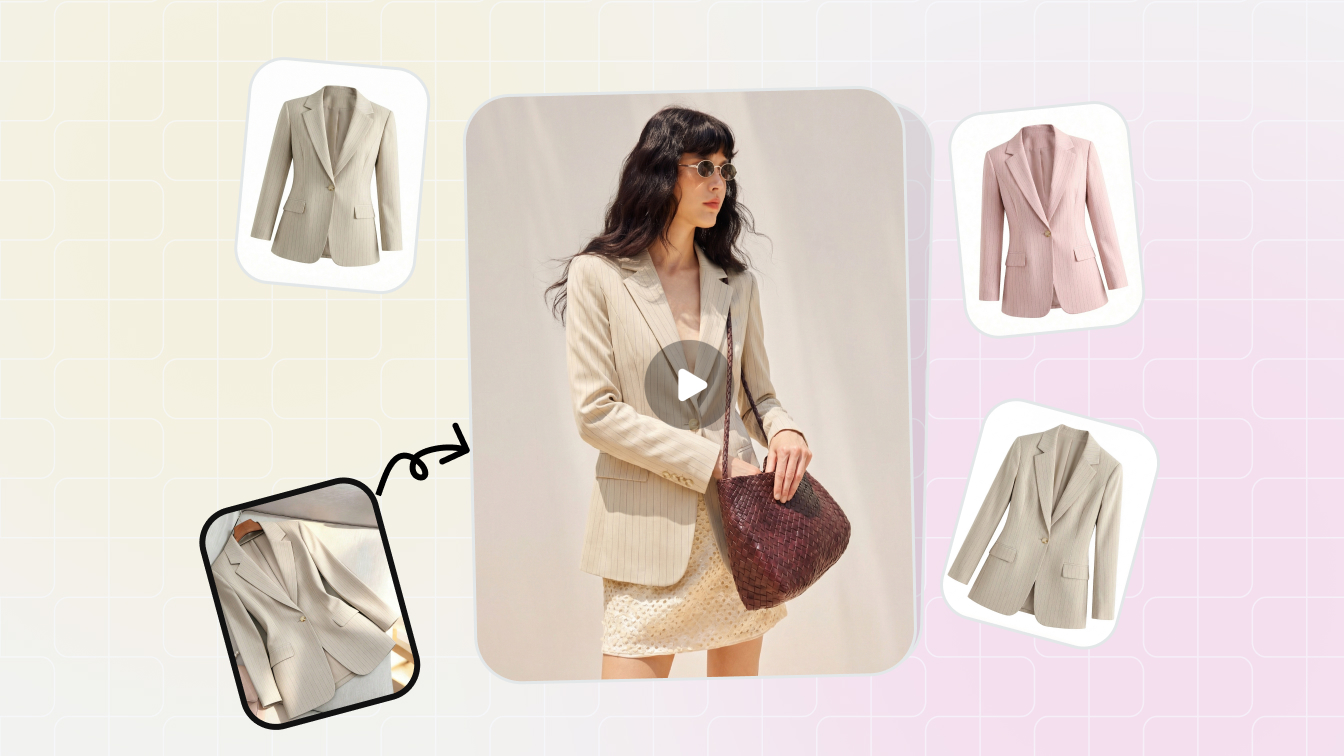
The core workflow is straightforward. You start with a basic product photo, often shot on your phone against a plain surface. The AI platform then generates professional backgrounds, lifestyle scenes, and platform-ready compositions around your actual product. Some platforms generate entirely new product renders from text descriptions, while others use your existing photo as an anchor and build the scene around it.
Platforms like Snappyit serve ecommerce sellers, marketplace merchants, and small online brands specifically, creating professional product visuals without requiring a traditional photo studio. The appeal is clear: no studio rental, no photographer fees, no shipping logistics, and turnaround measured in hours rather than weeks. You get studio-quality results without the overhead of booking physical studio time.
The technology has matured significantly. Pixelense reports that for most ecommerce applications — including white-background hero shots, lifestyle imagery, and catalog photography — AI now matches or exceeds what brands receive from mid-range traditional photographers. The cost difference is substantial: traditional studio photography for 50 images typically runs $2,500 to $8,000+, while AI photography services can deliver equivalent output for under $750, representing an 80% or greater reduction in direct production cost.
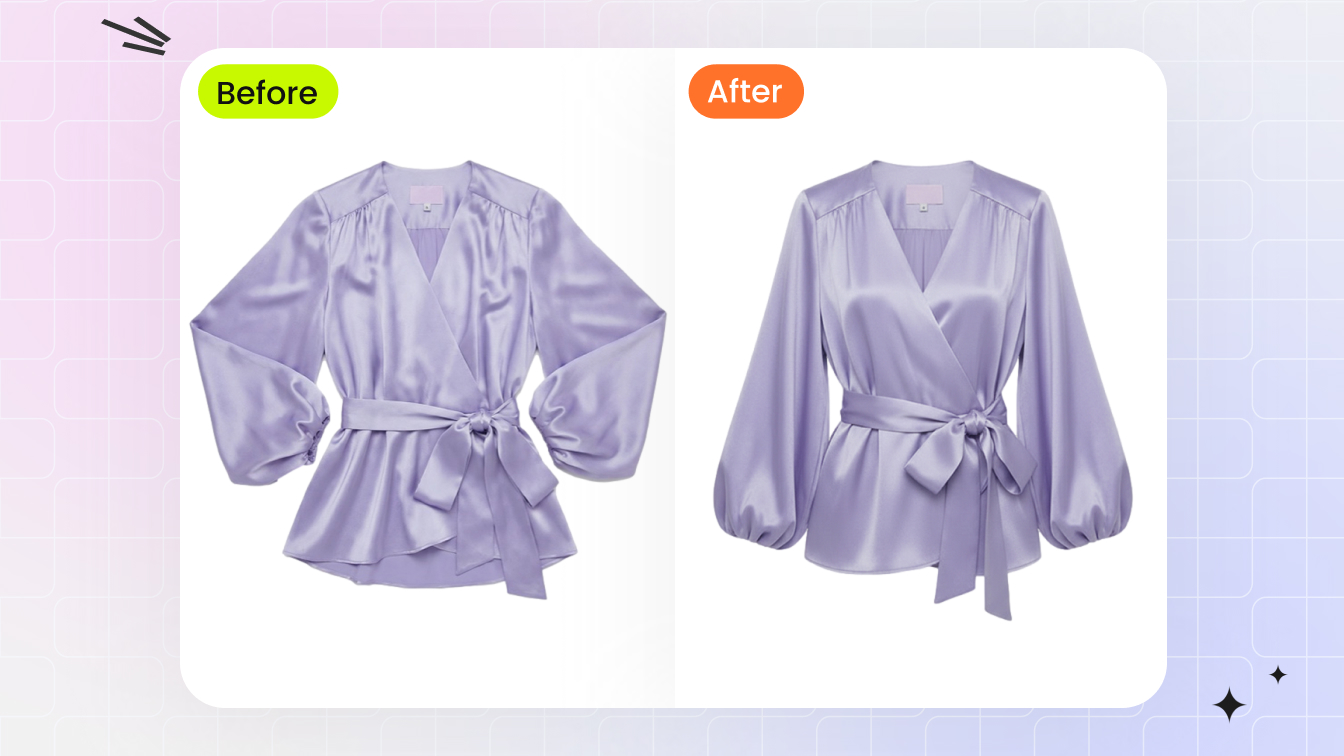
Post-processing is typically built into the platform rather than billed separately. Images arrive color-corrected, retouched, and sized for your selling platform. Background removal, upscaling, and format exports that would add days and dollars to a traditional workflow happen automatically within the generation pipeline.
When AI Photography Is Sufficient
AI-powered ecom photography excels in specific scenarios where its speed and cost advantages create genuine strategic value:
Rapid A/B testing of visual styles. Traditional studios make creative experimentation expensive. Every additional background, lighting mood, or composition variant costs more time and money. AI lets you generate multiple versions of the same product image and test which converts better, without multiplying your production budget. The best-performing Shopify and Amazon sellers run systematic visual testing programs that would be cost-prohibitive with traditional shoots.
Scaling visual content across large catalogs. When you're managing hundreds or thousands of SKUs, AI changes the math entirely. Once your creative direction and brand aesthetic are established, producing the 500th image costs the same as the first. For brands managing seasonal collections or large marketplace catalogs, this economics-at-scale advantage is decisive.
Generating seasonal and promotional variants. Need your entire product line placed in holiday contexts, summer scenes, or Valentine's Day settings? AI generates these variations from existing product images without a single reshoot. What would take weeks of studio time and thousands in production costs becomes a same-day operation.
Supplementing existing photography. Many brands use AI to extend their professional ecommerce photography rather than replace it. Shoot your hero images in a traditional studio, then use AI to generate additional lifestyle contexts, background variations, and platform-specific crops from that same base photography. This hybrid approach is where forward-thinking brands are finding the strongest ROI.
Speed-critical launches. A fashion brand that spots a trend on Monday can have commercial ecommerce photography live on their store by Wednesday. That speed-to-market advantage is physically impossible with traditional studio workflows that require weeks of coordination.
When Traditional Studios Remain Essential
Honesty matters here. AI photography has clear limitations that no amount of technological improvement has fully resolved:
On-model photography. Human models wearing clothing, demonstrating product usage, or interacting physically with items still requires traditional shoots. AI-generated human models have improved dramatically, but for brands where fit, drape, and real human interaction drive purchase confidence, a physical shoot delivers authenticity that AI approximates but doesn't replicate.
Complex product interactions. Items with intricate moving parts, unusual geometries, or products that need to be shown in actual use (a kitchen appliance mid-operation, a tool demonstrating its mechanism) are better served by real photography. The physics of how products behave in real environments is difficult to replicate algorithmically.
Texture-critical items. Jewelry, watches, luxury leather goods, and products where the micro-detail of material finish drives the purchase decision push the limits of current AI. A diamond's brilliance, the grain of premium leather, or the exact sheen of brushed metal at specific angles — these details still favor traditional photography with controlled lighting setups.
Brand campaigns requiring original creative direction. When you need a cohesive visual story told across a campaign — styled sets, custom props, specific atmospheric lighting — the creative collaboration of a best ecommerce photography studio with art directors and set designers produces results that AI's pattern-based generation can't match. Premium brands building visual identity benefit from the intentionality of a directed shoot.
Consumer perception adds another layer. Research from Clutch found that 95% of consumers have concerns about AI image usage, with top issues including deception (71%) and lack of authenticity (65%). For brands where trust and authenticity are core to positioning, transparency about AI usage matters. The ecommerce photography website listing that's clearly AI-generated may perform differently than one featuring real studio photography, depending on your audience's sensitivity.
| Dimension | AI-Powered Platforms (e.g., Snappyit) | Traditional Studio Photography |
|---|---|---|
| Setup Time | Minutes (upload photo, describe scene) | Days to weeks (booking, shipping, scheduling) |
| Cost Per Image Tier | Low ($5-$15 per final image) | Medium to high ($12-$500+ per image depending on complexity) |
| Scalability | Near-flat marginal cost once creative direction is set | Cost scales with shoot time — every new image adds shoot and retouching hours, even with volume discounts |
| Creative Control | Prompt-driven; strong for backgrounds and scenes, limited for novel physical setups | Full control over lighting, styling, angles, and physical product presentation |
| Best-For Scenarios | Catalog scale, A/B testing, seasonal variants, marketplace sellers, supplementing existing photography | On-model work, luxury campaigns, texture-critical products, original brand storytelling |
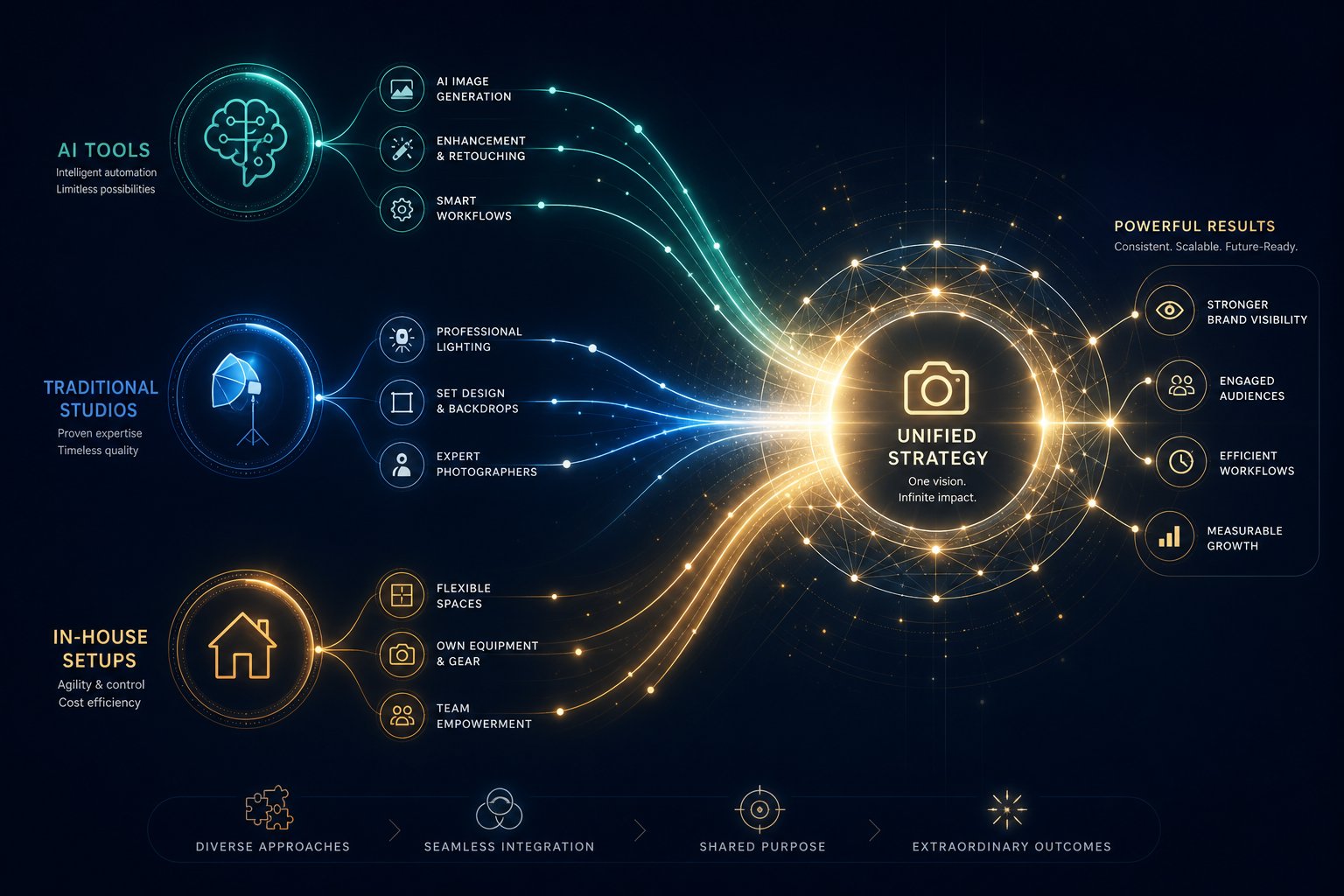
The practical takeaway? Most growing ecommerce brands don't need to choose one approach exclusively. The sellers getting the best results use AI platforms for catalog-scale efficiency and rapid iteration, while reserving traditional studio budgets for hero imagery, campaign work, and product categories where physical photography remains superior. That hybrid model — matching the right production method to each specific need — is where the conversation about studio selection is heading.
Deciding on the Right Photography Path for Your Brand
You've seen how studio types, pricing models, platform requirements, and AI alternatives each solve different pieces of the puzzle. The final step is mapping those options to your specific situation rather than defaulting to whatever appears first when searching for "ecommerce photography near me" or asking a colleague for a referral.
Mapping Your Needs to the Right Solution
Think of this as a simple decision tree. Your answers to five variables point you toward the right starting approach:
Product count under 50 SKUs + limited budget + standard white-background needs? Start with an AI platform like Snappyit to produce professional visuals without committing to full studio costs. Reserve traditional photography for your top 5 to 10 hero products that drive the most revenue.
50 to 500 SKUs + regular launches + multi-platform selling? A hybrid strategy works best here. Partner with a platform-based or volume studio for consistent catalog imagery, supplement with AI-generated lifestyle and seasonal variants, and invest in a boutique or full-service studio once or twice a year for campaign-level creative.
500+ SKUs + fast turnaround requirements + enterprise workflows? You need a high-throughput studio with integration capabilities for your DAM or PIM system, combined with AI tools for rapid iteration and visual testing across your catalog. At this scale, photography for e-commerce becomes a repeatable operations function, not a project-based expense.
High creative complexity (on-model, lifestyle campaigns, ecommerce fashion photography)? Traditional studios remain essential for original creative direction. An ecommerce fashion photographer with category expertise delivers authenticity that AI can't fully replicate. Use AI to extend those hero assets into additional contexts and platform variants afterward.
Speed is the primary constraint? AI platforms win on turnaround every time. When a product needs to be live in days rather than weeks, starting with AI-generated imagery and upgrading to studio photography later is a perfectly valid strategy.
Building a Photography Strategy That Scales
Here's the reality most sellers eventually discover: no single approach covers everything forever. The brands performing best in ecommerce photography treat their visual content like a layered system. Traditional studios handle hero imagery and brand campaigns where originality and physical realism drive purchase confidence. AI platforms like Snappyit handle catalog scale, rapid A/B testing, and seasonal content refreshes where speed and cost-efficiency matter more than bespoke creative direction. In-house smartphone setups cover quick updates, social content, and urgent product additions between major shoots.
That mix evolves as your business grows. An early-stage brand might lean 80% AI and 20% selective studio work. A mature ecommerce operation running photography for ecommerce across multiple categories and channels might invert that mix for hero content while keeping AI for the long tail of catalog imagery. The point isn't finding one perfect solution. It's building a system where each method handles the work it does best.
Whether you're searching for "ecommerce photography near me" for a local studio partnership or exploring remote AI platforms that serve sellers globally, the strongest strategy matches production method to content purpose rather than forcing everything through a single pipeline.
Ready to move forward? Here's your action-step checklist:
- Audit your current catalog imagery — identify which products have underperforming visuals based on conversion rate, return rate, or customer feedback
- Define your platform requirements — document the exact image specs for every marketplace and storefront you sell on
- Categorize your products by photography complexity — separate simple catalog items from those requiring specialized lighting, models, or creative styling
- Set a quarterly photography budget based on your business stage using the framework from the pricing section
- Test an AI platform on 10 to 20 products to establish a baseline for quality, speed, and cost before committing to a larger production
- Request full-project portfolio samples from any traditional studio you're considering — not just curated highlights
- Build a shot list template you can reuse across launches so scoping new projects takes minutes, not hours
- Designate one person internally as the approval authority to prevent revision delays and communication bottlenecks
- Schedule your first studio project at least five weeks before your target launch date to accommodate the full production timeline
- Reassess your photography strategy quarterly — what works at 50 SKUs won't work at 500, and the tools available are improving rapidly
The sellers who get product photography right aren't the ones who find a single perfect studio. They're the ones who build a flexible system, match each tool to its best use case, and evolve their approach as their catalog and ambitions grow.
Want studio results without the studio invoice? Upload a simple product photo and Snappyit turns it into clean, platform-ready imagery in minutes. Try Snappyit free →
FAQs About Product Photography Studios for Ecommerce
How much does ecommerce product photography cost per image?
Pricing varies widely based on complexity and studio type. Simple white-background shots typically range from $12 to $75 per image, styled mid-range shots run $50 to $150, and lifestyle or editorial images cost $100 to $500 each. Volume discounts lower the per-image rate as order size increases. AI-powered platforms like Snappyit offer an alternative at $5 to $15 per image for sellers who need professional results without traditional studio overhead. Day rates, which cover photographer time only, range from $1,500 to $10,000 with studio rental, models, styling, and retouching billed separately.
What image requirements does Amazon have for product photos?
Amazon enforces strict standards for main listing images: a pure white background at exactly RGB 255,255,255, the product filling 85% or more of the frame, no text overlays or watermarks, and a minimum resolution of 1,000 pixels on the longest side (1,600+ recommended for zoom functionality). Secondary image slots allow lifestyle shots, infographics, and detail views. Non-compliant images trigger listing suppression, meaning your product disappears from search until corrected files are approved. Studios with Amazon-specific experience calibrate their lighting and framing to meet these requirements without post-production guesswork.
Should I use AI product photography or a traditional studio?
It depends on your product type and content needs. AI platforms excel at catalog-scale imagery, A/B testing visual styles, generating seasonal variants, and supplementing existing photography at low cost and fast turnaround. Traditional studios remain essential for on-model photography, texture-critical items like jewelry or luxury goods, complex product interactions, and original brand campaigns requiring creative direction. Most successful ecommerce brands use a hybrid approach: AI tools like Snappyit for catalog efficiency and rapid iteration, paired with traditional studios for hero imagery and premium creative work.
How long does a typical ecommerce product photography project take?
From first contact to final delivered images, expect 2 to 5 weeks for a standard catalog project with a traditional studio. This breaks down into scoping (1-3 days), creative brief finalization (3-7 days), scheduling and shipping (3-10 days), production (1-3 days), post-production (5-10 business days), and client review rounds (2-5 days each). The most common delays come from unclear briefs, slow internal approvals, and late product shipping on the client side. AI platforms compress this timeline dramatically, delivering images in hours rather than weeks.
How do I choose between a full-service studio and a volume photography studio?
Match your choice to your primary need. Full-service studios handle end-to-end creative direction including styling, art direction, and complex compositions. They suit brands needing lifestyle campaigns, on-model shoots, or storytelling imagery, but cost more and take longer. Volume studios optimize for processing large SKU counts quickly with standardized setups, delivering consistent white-background catalog images at lower per-unit cost. If you need 100+ products shot with uniform quality and fast turnaround, choose volume. If you need 20 products with styled scenes and creative variety, choose full-service.
Picking the right studio is one piece of a stronger catalog — it sits inside Snappyit's wider AI product photography workflow.