Define the task before you generate
Remove dress layer from photo can mean several things. In a fashion editing workflow, the acceptable version is removing or simplifying an outer layer, jacket, cardigan, overskirt, robe, cover-up or dress overlay from an authorized adult model photo so the image can be used for a visible outfit edit. The source should be yours or rights-cleared. The result should not be nude or non-consensual.
This article focuses on outfit cleanup and try-on preparation. Examples include removing a jacket from your own photo, simplifying a beach outfit before a bikini try-on, cleaning a dress layer before a fashion mockup, or preparing an adult model photo for a lingerie or resortwear edit with permission.
The input must be a model photo. If you have a flat-lay product photo, mannequin photo or hanger image, use product photography tools instead.
Related legitimate workflows include remove dress layer from photo, remove jacket from photo, remove outerwear from photo, remove cover-up from photo, clothing layer cleanup, dress remover alternative, AI outfit cleanup and virtual try-on preparation.

Acceptable use cases for dress-layer cleanup
Personal photos
Clean your own adult travel, beach, lifestyle or mirror photo before trying a new outfit direction.
Creator planning
Prepare a creator-owned image for a visible outfit concept, thumbnail or sponsored styling draft.
Fashion teams
Use approved adult model photos to simplify layers before campaign review or virtual try-on.
The common thread is consent. If the person in the photo did not approve the edit, do not use the image. Do not use minors, private photos, screenshots from social media, celebrity images or dating-profile photos.
How to prepare a photo for AI layer cleanup
Choose a photo where the clothing layer is visible and not tangled with hands, hair, bags or furniture. A jacket hanging cleanly over the torso is easier to clean than a dress layer covered by crossed arms and shadows. A simple background also helps preserve camera direction.
- Confirm the subject is 18+ and the image is yours or authorized.
- Choose a model photo with clear pose, lighting and clothing boundaries.
- Decide what layer should be simplified or removed, and what visible outfit direction comes next.
- Generate the cleanup, then inspect hands, neckline, waist, hips and fabric edges.
- Move into an AI clothes changer or bikini editor only if the cleanup looks coherent.
Quality check after removing a dress layer
Quality depends on whether the image still looks like one photograph. Check for broken shoulders, warped arms, missing hair, mismatched shadows, unnatural fabric boundaries and new skin or garment areas that do not make visual sense. If the cleanup changes identity, body shape or pose too aggressively, start over with a better source.
| Area | What to check |
|---|---|
| Pose | The output should preserve the original stance, camera angle and body direction. |
| Clothing boundary | Edges should support a visible outfit edit, not create exposure or ambiguity. |
| Lighting | Shadows should match the source photo and not float around the edited area. |
| Rights | The image should be authorized for the edit and intended use. |
Personal edits and commercial workflows are different
Personal users may want to clean a travel photo, remove a jacket layer, simplify a beach outfit image or prepare their own adult photo for virtual try-on. That use case is private and should stay limited to images they control. Commercial teams need stricter review because the output may appear in a product page, campaign board or social ad.
For commercial use, document the source rights, model approval, photographer license and whether the edit is allowed in the model release. For sensitive fashion categories such as swimwear, lingerie, bras and underwear, apply an adult-only and non-explicit review standard before sharing the result.
Snappyit tool path for layer cleanup and outfit changes
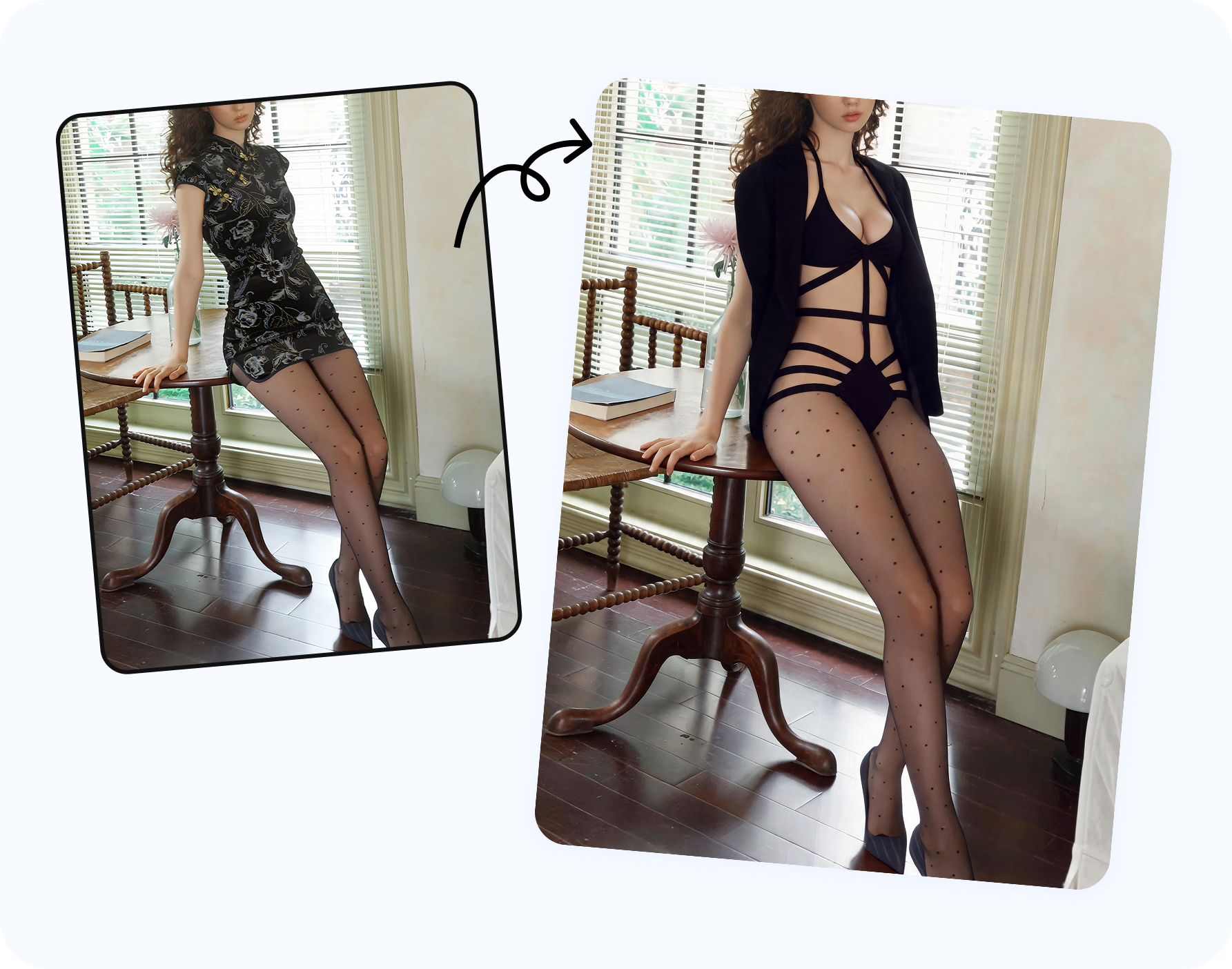
Use Snappyit AI Clothes Remover for authorized 18+ model-photo cleanup. Use AI Bikini Photo Editor after cleanup when the next step is a visible bikini, lingerie, underwear or resortwear outfit. Use AI Fashion Model instead when your input is a garment photo rather than a person.
Clean an authorized model photo
Controls that make dress-layer cleanup more predictable
Instead of asking for a vague removal, describe the controlled edit: remove the outer jacket layer, simplify the cardigan area, clean the dress overlay, prepare the torso area for a visible outfit change, or remove the beach cover-up from your own adult photo. The more specific the layer, the easier it is to review the result. Avoid instructions that ask the tool to expose the person or infer private body details.
Use neutral language in team workflows. Terms like outfit cleanup, layer cleanup, remove jacket from photo, travel photo outfit cleanup and virtual try-on prep describe the legitimate outcome more clearly than risky undress wording. If an internal brief needs to mention clothes remover for SEO or user-intent mapping, follow it immediately with the authorized 18+ and clothed-output boundary.
Move from cleanup to a visible outfit edit
Layer cleanup is rarely the final asset. It is a preparation step. After removing or simplifying an outer layer, move into the actual creative direction: bikini try-on, resortwear styling, dress replacement, underwear model photo, creator thumbnail, travel edit or campaign board. This second step should add a clear visible outfit and make the image easier to understand.
For personal users, that may mean seeing whether a beach look works before a trip. For creators, it may mean building a sponsor-ready visual concept. For fashion teams, it may mean creating a clearer approved-model image before a retouch or try-on pass. In every case, keep the source rights and 18+ boundary attached to the file throughout the workflow.
Edge cases: dresses, cover-ups, robes and layered outfits
Layer cleanup is easiest when the layer is visually separate. An open jacket over a top, a beach cover-up over a swimsuit, a robe over lingerie or a cardigan over a dress can be cleaned because the boundaries are readable. It becomes harder when the garment is the only visible outfit, tightly wrapped, heavily shadowed or blocked by hands. In those cases, the tool may have to invent too much, and the result should not be trusted for publication.
A dress layer can also mean an overskirt, sheer overlay, apron layer, costume layer or styling layer. Define it precisely. If the intent is to prepare a clothed outfit edit, describe the next visible outfit. If the intent is to remove the only clothing from another person's photo, do not proceed. The distinction is not cosmetic; it determines whether the task belongs in a fashion workflow at all.
For fashion teams, keep a source log. Note who approved the image, what layer was edited, what tool was used and where the result will be used. That is especially important for swimwear, lingerie and underwear campaigns.
C-end scenarios: lifestyle, travel and personal try-on
Many users are not sellers. They may want to clean their own beach photo, simplify a travel outfit, remove a jacket from a mirror selfie, prepare a resort look or see whether a bikini or dress direction fits a planned trip. That is a valid personal workflow when the user is the adult subject and controls the image.
Personal use should still follow boundaries. Keep private images private, avoid editing other people without permission and do not use the tool on minors. A personal AI clothes remover alternative should make the photo easier to style, not turn it into a non-consensual or explicit image.
Frequently asked questions
Can AI remove a dress layer from a photo?
Yes, only when it is your own adult photo or an authorized 18+ model image, and the goal is outfit cleanup or visible try-on prep.
Can I use it on someone else?
No. Do not upload anyone who has not consented, including private photos, social screenshots, celebrity images or dating-profile photos.
Can I use it on minors?
No. Do not upload minors or images where age is uncertain.
Is this for flat-lay product photos?
No. AI Clothes Remover should use model photos. Use product photography tools for flat-lays, mannequins and hanger images.
Can it remove a jacket from my own photo?
Yes, if you are the adult subject and the result is used for outfit cleanup, lifestyle editing or virtual try-on prep.
Can creators use it before a sponsored post?
Yes, if they own the image rights and the adult subject approved the edit and usage.
Can fashion sellers use it?
Yes, for approved adult model photos and campaign prep, with documented commercial rights.
What should I check after generating?
Check hands, hair, neckline, waist, hips, fabric edges, lighting and whether the output remains appropriate.
What tool should I use after cleanup?
Use AI Bikini Photo Editor for bikini, lingerie, underwear or resortwear outfit changes.
What is the better-framed search intent?
Frame the task as outfit cleanup, jacket removal from photo, dress layer cleanup, AI outfit changer prep or virtual try-on prep on authorized adult images.