If you have generated an on-model shot, a lifestyle scene, or a clean studio image with AI and then paused before hitting publish, you are asking the right question. The tools are good enough that the output looks like a real photoshoot — which is exactly why regulators, marketplaces, and ad platforms now care how you use them. The honest answer is that AI-generated product photos are legal in the markets most e-commerce sellers operate in, but the law treats them as conditionally legal: a few rules decide whether a specific image is fine, needs a label, or crosses into deceptive advertising.
This guide walks through the four things that actually govern whether you can ship an AI image — deception standards, disclosure laws, likeness rights, and platform policy — and ends with a practical compliance checklist you can apply across every product category. It broadens the legal section sellers usually only see in narrow how-to guides into something that covers all of your imagery, not just one niche. One note up front: this is general information for sellers, not legal advice. For a specific situation, talk to a qualified attorney in your jurisdiction.
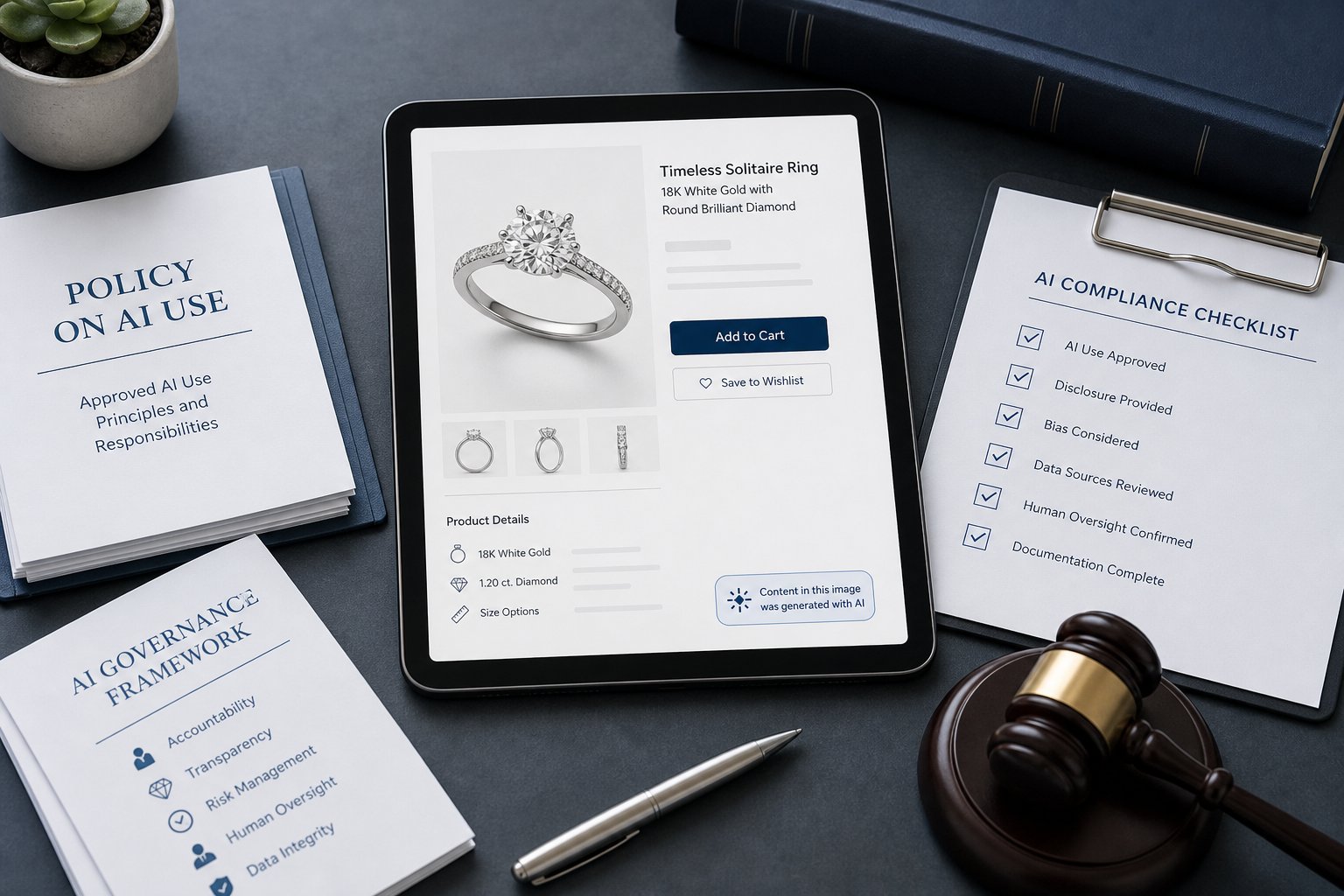
The Short Answer: Legal, With Conditions
There is no law in the United States, the EU, or the major e-commerce markets that bans using AI to create product or model images for commerce. Generating a synthetic model wearing your apparel, placing your product in a lifestyle scene, or cleaning up a supplier photo are all permitted activities. What is regulated is not the act of generating the image — it is what the image claims and whether the viewer is misled.
That distinction matters because it reframes the question. Instead of "Is AI photography allowed?" the operative questions are:
- Does the image accurately represent the product a customer will actually receive?
- Does the jurisdiction or platform require a disclosure that the content is AI-generated or that a depicted person is synthetic?
- Does the image use anyone's likeness — a real model, a public figure, or a face that closely resembles a real person — without consent?
- Who owns the rights to the resulting image, and does it matter for your business?
Answer those four well and you are compliant almost everywhere. Get any one wrong and a perfectly "legal" tool can still land you with a removed listing, a rejected ad, a chargeback dispute, or a regulatory complaint. The rest of this article is about answering them correctly.
Deception Is the Real Line, Not the Tool
The single most important legal principle for sellers predates AI entirely: advertising cannot be deceptive. In the US, the Federal Trade Commission treats a claim or image as unlawful if it contains a material misrepresentation likely to mislead a reasonable consumer — and a misrepresentation is "material" if it would affect a buyer's decision. Whether the picture came from a camera, Photoshop, or a diffusion model is irrelevant to that test.
Applied to AI imagery, this draws a clear line:
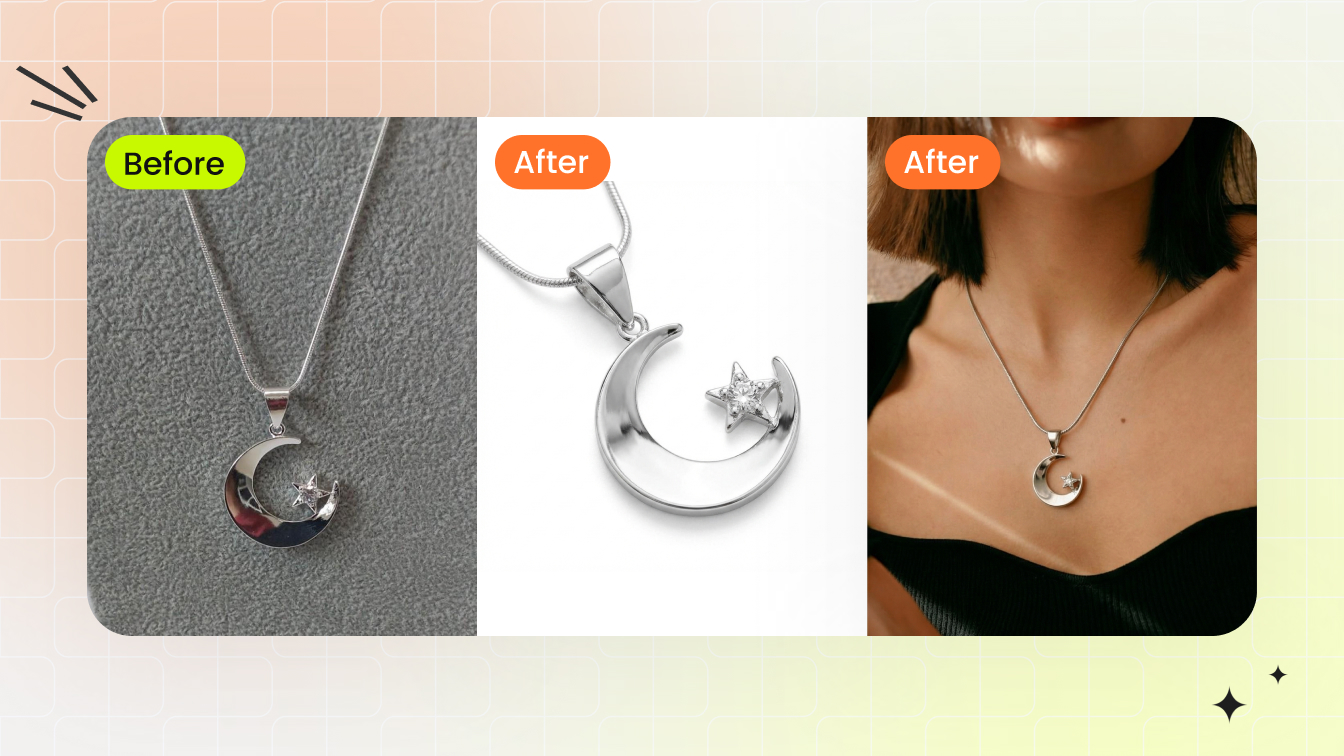
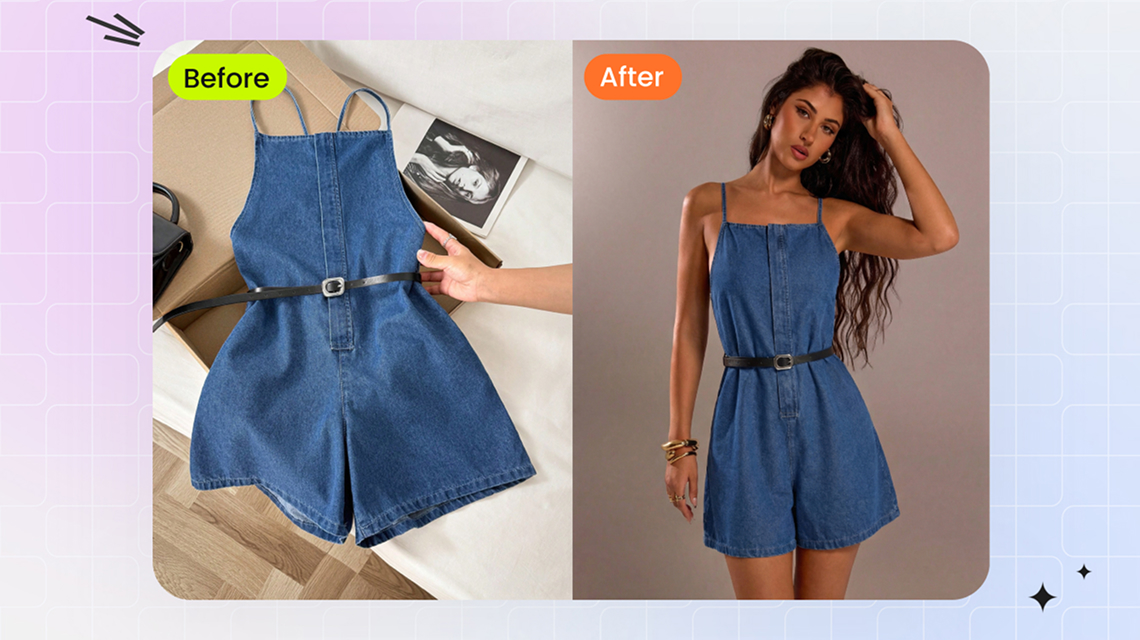
- Generally safe: generating a synthetic human model to wear an item you actually sell, placing your real product into a new background or lifestyle scene, recoloring a garment to show a colorway you genuinely stock, or cleaning up lighting and blemishes that do not change the product itself.
- Risky or prohibited: adding features, textures, or finishes the product does not have; showing a garment fitting in a way the real item never could; generating a fictional "before/after" result a customer will not get; or implying scarcity, awards, or endorsements that did not happen.
The practical rule of thumb: AI may change how your product is presented, but it must not change what the product is. An AI on-model image of a dress you ship is presentation. An AI image that gives that dress beading it does not have is deception. The FTC's advertising rules apply the same standard either way, and its 2024 rule on fake reviews and testimonials shows the agency is actively policing AI-fueled deception.

AI Disclosure Laws You Need to Know
Beyond general deception rules, a wave of laws now requires affirmative disclosure when content is AI-generated or when a depicted "person" is synthetic. Two are especially relevant to sellers and the agencies who run their ads.
New York's synthetic performer disclosure law
Effective June 9, 2026, New York requires that most advertisements reaching New York audiences and featuring a "synthetic performer" — a computer- or AI-generated asset designed to look like a human performer who is not a recognizable real person — conspicuously disclose that the performer is not real. Civil penalties start at $1,000 for a first violation and rise to $5,000 for each subsequent one. If you run ads with a fully AI-generated model and those ads can reach New York (which, for most online campaigns, they can), plan to add a clear "AI-generated" or "not a real person" disclosure. See the law firm summary of the synthetic performer law for scope details.
New York Fashion Workers Act
If your imagery is based on a real model rather than a wholly invented one, the New York Fashion Workers Act is the law to watch. It requires clear, conspicuous, and separate written consent before a model's "digital replica" — an AI-enhanced representation of their face, body, or voice — is created or used, and that consent must spell out scope, purpose, rate of pay, and duration. Standard boilerplate from an old "all media now known or hereafter devised" release is not enough; you need AI-specific, scoped consent. The New York Department of Labor FAQ is the authoritative reference.
These are state-level laws, but New York's reach across national advertising makes them a practical baseline. Other states are moving in the same direction, so treating disclosure as the default rather than the exception is the durable strategy.
The EU AI Act Article 50 Transparency Rule
If you sell into Europe — or run ads that reach EU users — the EU AI Act adds a transparency layer. Under Article 50, providers and deployers of AI systems that generate synthetic image, audio, video, or text content must ensure outputs are marked in a machine-readable format as artificially generated or manipulated, and that content which could be mistaken for an authentic photograph is disclosed to viewers. These transparency obligations apply from 2 August 2026.
Two points sellers often miss. First, Article 50 is not limited to "high-risk" AI — it applies to ordinary generative tools used to make ordinary marketing content, so it is squarely relevant to product imagery. Second, the obligation has two halves: a machine-readable mark (think embedded content credentials/metadata, typically handled by the tool you generate with) and a human-facing disclosure when the image could pass for a real photograph. Non-compliance carries significant fines. You can read the obligation text at the EU AI Act Article 50 reference.
Practically, that means choosing tools that can embed standard provenance metadata, and adding a visible "AI-generated image" note where an EU shopper might reasonably believe they are looking at a conventional photo.
Disclose AI imagery the easy way. Generate on-model shots from a flat product photo, then label them per platform. Try Snappyit free →
Model and Likeness Rights
When you hire a real model, a signed release grants commercial rights to their likeness. With AI-generated faces you skip that step — but a different risk appears: an AI face that happens to closely resemble a real, identifiable person can trigger a right-of-publicity claim in states like New York, California, and Tennessee, even if you never intended to depict that individual. In publicity law, identifiability matters more than intent.
This produces a clear risk ranking for the synthetic models you use:
- Lowest risk: a fully synthetic, brand-owned model that is not based on any specific real person and is reused consistently across your catalog. You control it, it resembles no one in particular, and it carries no consent obligations.
- Medium risk: tools that generate a brand-new random face on every image. Most outputs are fine, but the more faces you generate, the higher the chance one resembles a real person.
- Highest risk: training or prompting a model to look like a specific real individual — a celebrity, an influencer, or a model from a reference photo — without scoped, written consent.
For most sellers the takeaway is simple: prefer consistent, generic synthetic models, avoid recreating any identifiable person, and if your imagery is derived from a real model's appearance, get AI-specific consent that satisfies laws like the Fashion Workers Act.
Who Owns an AI-Generated Image?
Copyright is the area where the law is clearest and most counterintuitive. In the United States, the Copyright Office maintains that human authorship is a prerequisite for copyright. Its guidance concludes that purely AI-generated material is not registrable, and that where a work mixes human and AI contributions, only the human-authored portions are potentially protectable. Prompting alone generally does not establish authorship, because a prompt does not give the user enough control over the expressive details of the output.
This position was reinforced by the D.C. Circuit's March 2025 decision in Thaler v. Perlmutter, which affirmed the human-authorship requirement. (Note: this was an appellate court ruling and Copyright Office policy — not, as some write-ups loosely claim, a Supreme Court holding.) The authoritative source is the Copyright Office's own analysis in its Copyright and Artificial Intelligence report.
What this means for an e-commerce seller is narrower than it sounds:
- Your brand name, logo, and product designs remain protected by trademark and design rights regardless of how a marketing image was made.
- The AI image itself may have thin or no copyright protection, so a competitor could, in theory, produce a similar AI image without infringing the image's copyright.
- Adding substantial human creative work — meaningful selection, arrangement, retouching, and composition — strengthens any claim to the human-authored elements.
In short: AI imagery rarely creates a copyright problem for sellers, but do not assume an AI hero image is as defensible as a commissioned photograph if exclusivity matters to your brand.
Marketplace Policies Move Faster Than Law
Platform rules have outpaced legislation and they vary, so the marketplace where a listing lives often dictates your disclosure more than any statute. Policies change frequently — verify the current rule on each platform's official help center before relying on the summary below.
| Platform | General stance on AI imagery | What sellers typically must do |
|---|---|---|
| Amazon | AI-assisted edits (background, lighting) are generally allowed; AI that misrepresents the product is prohibited. | Keep the product accurate; disclose substantial AI modifications per current listing policy. |
| Etsy | Treats AI-generated visuals as a disclosure-and-attribution matter. | Indicate AI use where required and choose the correct "made by" vs "designed by" attribution. |
| Shopify (own store) | No platform-mandated AI label, but FTC deception rules still apply. | Ensure images do not mislead; add voluntary disclosure where an image could be mistaken for a real photo. |
| eBay / others | Accuracy-first; AI guidance evolving. | Avoid misrepresenting condition or features; follow category-specific image rules. |
The safe operating posture across all of them is identical: represent the real product faithfully, and where a platform offers or requires an AI-content label, use it. Disclosure almost never hurts a listing; an undisclosed image that gets flagged can suppress or remove it.

Ad Platform Disclosure
Paid advertising adds its own labeling layer on top of marketplace policy and the synthetic-performer laws above. Major ad platforms — Meta and TikTok among them — provide or require AI-content labels when creative is AI-generated, AI-modified beyond standard filters, or features a synthetic person. Because these labels are built into the ad-creation flow, applying them is usually a single toggle rather than a legal burden.
Combine this with New York's synthetic performer rule and the EU AI Act, and a consistent practice emerges for any seller running ads: if a person in your creative is AI-generated, label it. You will satisfy the platform's policy and most disclosure laws in one step, and you avoid the awkward position of having an ad pulled mid-campaign.
Build disclosure into your workflow. Recolor, restage, and on-model your real products, then label per channel — no reshoot needed. Try Snappyit free →
A Practical Compliance Checklist
Pull the rules above together into a repeatable routine. Run every AI image through this before it goes live, and keep the records — an audit trail is what turns "we think it's fine" into "we can prove it's fine."
- Accuracy gate: confirm the image represents the real product — same shape, color, material, and features the customer receives. Fix anything the AI invented.
- Likeness check: use a consistent, fully synthetic model not based on a real person; if a real model's appearance was used, secure scoped, AI-specific written consent.
- Disclosure mapping: for each channel, apply the required label — marketplace AI tag, ad-platform AI label, and a visible "AI-generated" note where viewers might assume a real photo (especially for EU audiences and NY-reaching ads).
- Provenance: prefer tools that embed machine-readable content credentials so EU AI Act marking is handled automatically.
- Record keeping: log which tool and version generated each image, the source product photo used as input, the model identity (fixed or random), and every channel and date it ran.
- Policy review: re-check marketplace and ad-platform AI policies on a recurring schedule — quarterly is reasonable given how fast they change.
- Retention: keep these records for several years to match advertising-claim limitation periods in most jurisdictions.
None of this makes AI imagery impractical. It is a few minutes per batch, mostly front-loaded into your workflow once and then repeated. Sellers who build the habit now will not scramble when the next rule lands.
Common Mistakes That Create Legal Risk
Most problems do not come from using AI — they come from a handful of avoidable patterns:
- Letting AI "improve" the product. Smoothing wrinkles is fine; adding a sheen, pattern, or feature the item lacks is misrepresentation.
- Treating disclosure as optional everywhere. Skipping a label because one platform does not require it ignores the platforms and jurisdictions that do.
- Reusing old model releases for AI. Pre-AI releases rarely cover digital replicas; assuming they do can violate laws like the Fashion Workers Act.
- Generating endless random faces. A fixed synthetic model lowers right-of-publicity risk and strengthens brand consistency at the same time.
- Assuming you own the image outright. AI output may carry thin copyright; do not rely on it for exclusivity-critical hero assets.
- Not keeping records. If a listing is flagged or a claim is challenged, your inputs, tool versions, and consent documents are your defense.
Avoid those six and you have handled the overwhelming majority of legal exposure that AI product photography creates for an e-commerce business.
Generate compliant product imagery in minutes
AI product photos are legal when they represent your real product, respect likeness rights, and carry the right disclosures. Snappyit lets you turn a single product photo into on-model, lifestyle, and colorway imagery you control — so the compliance work becomes a label, not a reshoot.
More Resources for E-Commerce Sellers
Frequently Asked Questions
Are AI-generated product photos legal to use for selling online?
Yes. No major market bans using AI to create product or model imagery for commerce. Legality is conditional: the image must accurately represent the product the customer will receive, must not use anyone's likeness without consent, and must carry any AI-content disclosure required by the marketplace, ad platform, or jurisdiction it reaches. Meet those conditions and AI product photos are legal almost everywhere.
Do I have to disclose that a product image is AI-generated?
Often, yes. Disclosure depends on the channel. Many marketplaces require an AI-content tag, major ad platforms provide AI-content labels for synthetic creative, New York's synthetic performer law requires disclosing that a depicted performer is not real, and the EU AI Act Article 50 requires marking AI-generated images that could pass for real photographs. The safest practice is to label AI imagery by default rather than wait to be flagged.
Can I get in trouble for an AI face that looks like a real person?
Potentially. In states with strong right-of-publicity laws, such as New York, California, and Tennessee, an AI-generated face that closely resembles a real, identifiable person can support a claim even if you did not intend to depict them, because identifiability matters more than intent. Using a consistent, fully synthetic model that is not based on any specific real individual is the lowest-risk approach.
Who owns the copyright to an AI-generated product image?
In the United States, purely AI-generated images are not registrable for copyright because human authorship is required; only portions with substantial human creative input are potentially protectable, a position affirmed by the 2025 Thaler v. Perlmutter appellate decision and Copyright Office guidance. Your brand, logo, and product designs remain protected by trademark and design rights regardless, but an AI image may have thin protection, so do not rely on it for exclusivity-critical assets.
Is it legal to edit a real product photo with AI?
Yes, as long as the edits do not misrepresent the product. AI-assisted fixes like background replacement, lighting correction, and minor cleanup are generally permitted on marketplaces and under advertising law. What is prohibited is changing what the product is, for example adding features, textures, or finishes the real item does not have, since that is a material misrepresentation likely to mislead a reasonable buyer.
What records should I keep to stay compliant?
Keep an audit trail for each AI image: the tool and version used, the source product photo provided as input, whether the model identity was fixed or randomly generated, any model-consent documents, and every channel and date the image ran. Apply the disclosure each platform requires, review marketplace and ad-platform AI policies on a recurring schedule, and retain the records for several years to match advertising-claim limitation periods.