
At a glance
Master luxury fashion video production: lighting silk, grading skin tones, lens selection, and platform delivery for premium brand campaigns.
| Need | What to do |
|---|---|
| Get oriented | Read the short summary, then use the checklist below. |
| Create a test image | Try Fashion Video Free |
What Sets Luxury Fashion Video Apart from Standard Production
When you watch a Chanel campaign film versus a mid-market brand's seasonal lookbook, the difference registers instantly. You feel it before you can articulate it. That visceral gap between "polished" and "premium" comes down to specific, repeatable luxury fashion video production techniques that most creative teams either overlook or execute inconsistently.
This is not a strategy guide or a beginner's overview. It is a technical production reference for cinematographers, directors, and creative leads who already understand the fundamentals and need to close the gap between competent fashion content and work that genuinely signals high-end positioning.
What Defines Luxury Fashion Video
Luxury fashion video production operates under a distinct set of aesthetic and technical benchmarks. Every frame must communicate intentionality. Lighting is sculpted, not simply adequate. Camera movement is motivated, never arbitrary. Color palettes are controlled with the same discipline a fashion house applies to its seasonal collections.
The visual language borrows from editorial photography and cinema rather than commercial advertising. Pacing tends toward restraint. Compositions favor negative space. Textures are rendered with enough fidelity that viewers can almost feel the weight of a cashmere coat or the sheen of polished calfskin. In fashion and luxury video production, these details are non-negotiable rather than aspirational.
Why Production Technique Matters for Brand Perception
Technical execution is not separate from brand strategy. It is brand strategy made visible. Research into luxury brand perception confirms that perceived value directly shapes consumer attitudes and purchase intent. The production quality of video content functions as a signal, telling audiences whether a brand belongs in the premium tier or is merely claiming to.
Production quality is the first and most immediate signal of brand positioning. Audiences decode it in seconds, long before they process a single word of copy or recognize a product.
Premium brands understand that visual discipline communicates confidence. Space, restraint, and consistency across every touchpoint build trust. The same principles that govern premium brand design apply directly to luxury fashion video production: every element must earn its place, and nothing should feel accidental.
The gap most brands fall into is not a lack of creative ambition. It is a lack of technical specificity in execution, from lighting ratios and lens selection through to color grading and delivery specs. Bridging that gap starts with the workflows that happen before a camera ever rolls.
Pre-Production Workflows That Define Premium Results
The difference between a forgettable fashion video and one that elevates a brand often has nothing to do with what happens on set. It lives in the documents, conversations, and decisions made weeks before anyone touches a camera. Luxury fashion brand video production techniques demand a pre-production rigor that standard commercial workflows simply do not require.
Imagine pitching a campaign concept to a heritage fashion house with a 150-year visual legacy. The margin for misalignment is zero. Every creative choice must be traceable back to a shared understanding of brand DNA, and that understanding gets built through deliberate pre-production systems.
Creative Briefs and Mood Boards for Premium Brands
A luxury creative brief is not a one-page summary of deliverables. It is a translation document that converts brand identity into visual direction. You'll notice that the best briefs for premium fashion work include tonal references, texture palettes, movement vocabulary, and even negative references showing what the brand is not.
Mood boards in this context go beyond Pinterest collections. They function as alignment tools between the creative director, the client's brand team, and every department head on the shoot. As Hudsmith's production team emphasizes, creating visual references helps bring everyone onto the same page with the original creative vision. For luxury work, that means curating references from fine art, architecture, and cinema rather than pulling exclusively from other fashion campaigns.
When fashion campaign video production pitching happens at the premium level, agencies present these mood boards alongside detailed treatment documents that specify lighting tone, color temperature ranges, and movement philosophy. The brief becomes a contract of aesthetic intent.
Team Composition and Crew Roles
A luxury fashion shoot requires specialized roles that standard commercial productions often consolidate or skip entirely. Each position contributes a distinct layer to the final aesthetic:
- Director - Owns the creative vision and guides performance, pacing, and overall narrative tone
- Director of Photography (DP) - Translates the director's vision into lighting design, lens choices, and camera movement
- Gaffer - Executes complex lighting setups that reveal fabric texture and material quality without compromise
- Art Director - Controls set design, prop selection, and environmental details that reinforce brand world
- Stylist - Manages garment presentation, ensuring every fold, drape, and accessory placement reads correctly on camera
- Shoot Producer - Oversees scheduling, logistics, and communication flow between all departments and the client
A fashion video production agency working at the luxury tier understands that these roles cannot be collapsed without visible quality loss. The gaffer is not optional when you are lighting silk charmeuse. The art director is not a luxury when every background element must feel intentional.
Budget Planning Across Production Tiers
Rather than chasing specific dollar figures, luxury productions allocate budget proportionally in ways that differ sharply from standard commercial work. Pre-production typically commands a larger share than most teams expect, often rivaling the production day spend itself. This reflects the reality that alignment failures caught on set cost exponentially more than those resolved in the planning phase.
A practical framework for proportional allocation looks like this: roughly equal investment across pre-production, production, and post-production, with a contingency buffer reserved for unforeseen adjustments. As production professionals note, setting aside a portion of the budget as an emergency buffer prevents compromises that would undermine the premium standard.
The essential pre-production deliverables, ranked by priority, form the backbone of any luxury fashion video project:
- Approved creative brief with brand alignment sign-off
- Detailed mood board and visual treatment document
- Confirmed crew list with role-specific portfolios reviewed
- Location scouting report with lighting assessments and backup options
- Shot list tied to storyboard frames and timing estimates
- Wardrobe and styling plan with garment-specific handling notes
- Client approval workflow with defined feedback rounds and decision-makers
- Technical specifications document covering camera, lens, and delivery requirements
Each of these deliverables serves as a decision checkpoint. Skip one, and you introduce ambiguity that surfaces as costly improvisation on the day. The discipline of this workflow is what separates productions that feel controlled and elevated from those that merely look expensive on the surface but lack coherence underneath.
With these systems locked in, the real craft begins: shaping light to reveal the qualities that make luxury materials worth filming in the first place.
Lighting Techniques for Luxury Materials and Textures
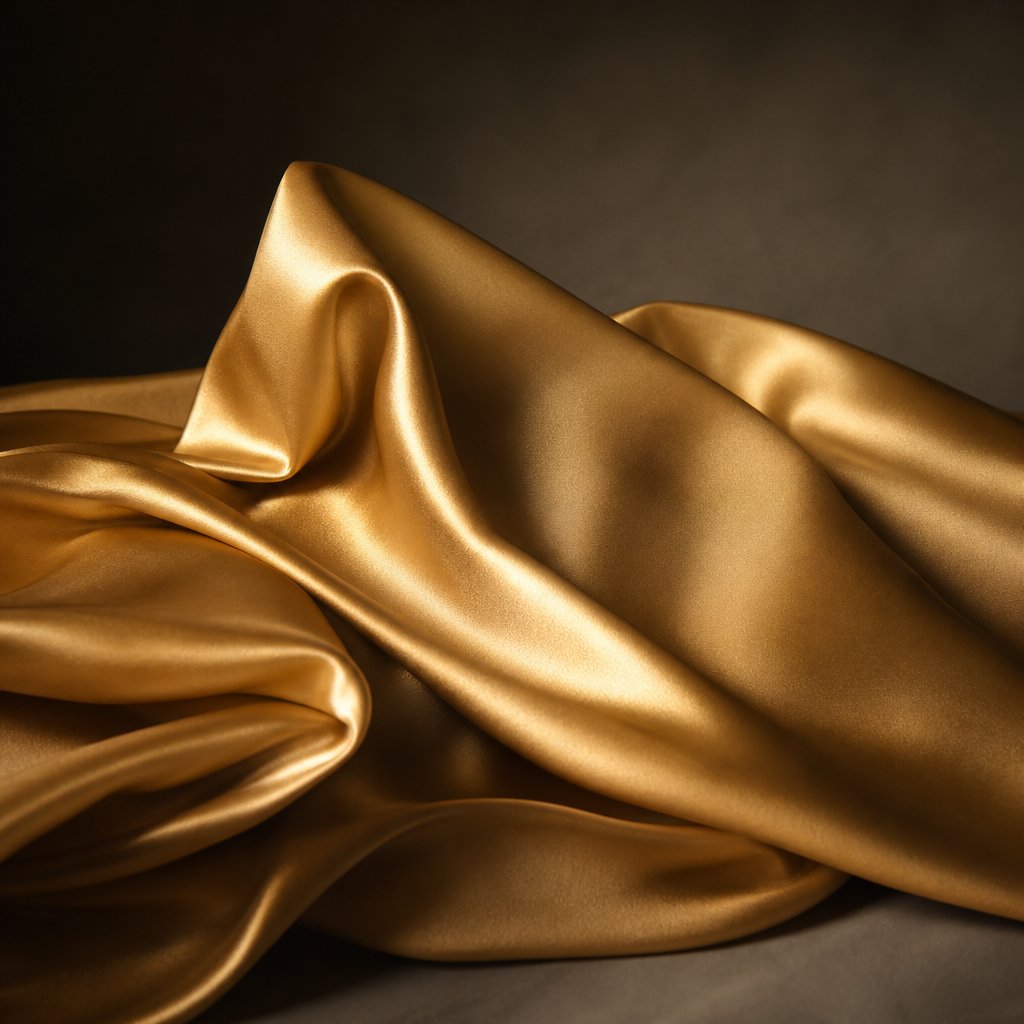
Silk catches light differently than leather. A diamond refracts it. Brushed gold absorbs and scatters it. Each luxury material has a distinct relationship with illumination, and the wrong lighting setup does not just look mediocre. It actively misrepresents the product. This is where high fashion video production techniques diverge most sharply from standard commercial work: the lighting must be designed around the material, not the other way around.
Most fashion product video content relies on flat, even illumination that renders everything adequately but nothing beautifully. Premium fashion video production techniques demand a material-first approach, where the gaffer and DP build each setup to reveal the specific qualities that make a fabric, gemstone, or metal surface worth its price point.
Lighting Setups for Fabric Textures and Silk
Textiles are three-dimensional surfaces. Thread count, weave pattern, and fiber composition all create micro-textures that only become visible under carefully angled light. The goal is revealing dimensionality without blowing highlights on reflective materials like silk charmeuse or satin.
A butterfly lighting setup, where the key light sits directly above and in front of the subject, works well for matte fabrics like cashmere and wool because it creates gentle, even shadows that emphasize the softness of the weave. You'll notice this approach in editorial campaigns where the garment needs to feel tactile and inviting.
For silk and satin, the challenge shifts. These materials produce specular highlights that can easily clip and lose detail. The solution is pulling the key light to a steeper angle, roughly 60 to 70 degrees from the subject, and diffusing it heavily. Large softboxes or frames of diffusion positioned close to the fabric create broad, graduated highlights that roll across the surface rather than punching through it. Soft light is essential here because hard, directional sources create harsh reflections that flatten the perceived quality of the textile.
Rembrandt lighting, characterized by a key light positioned roughly 45 degrees to the side and above the subject, excels at revealing the drape and fold structure of heavier luxury fabrics like velvet, brocade, and structured wool. The triangle of light it creates on the shadow side of the face also adds editorial drama when garments are shown on a model. The fill ratio matters enormously: keep it low, around 4:1 or even 8:1, and the fabric's three-dimensional folds become sculptural.
One technique that separates minimalist fashion video production techniques from busier commercial approaches is negative fill. Rather than adding more light, you subtract it. Placing black flags or V-flats on the shadow side deepens contrast and makes the fabric's surface texture pop against controlled darkness.
Techniques for Jewelry, Watches, and Metallic Surfaces
Hard luxury goods present the opposite problem from textiles. Metals, polished cases, and gemstones are dominated by specular reflections. Every light source, every crew member, every piece of equipment in the room becomes a potential reflection on a watch dial or a gold bracelet.
The principle here is controlling what the surface sees. A polished metal object does not reflect light in the way fabric does. It reflects its environment. So the lighting setup for jewelry and watches is really about building the environment that you want reflected.
Clamshell lighting, where a key light sits above and a fill light or reflector sits below the subject at matching angles, creates clean, symmetrical reflections on curved metallic surfaces. This is the standard starting point for watch and fine jewelry work because it produces a predictable, elegant gradient across convex surfaces.
For faceted gemstones, you need a harder, more directional source to activate the internal refraction. A small, focused spot positioned at a steep angle above the stone creates the fire and brilliance that makes diamonds and colored gems come alive on camera. The key is keeping this source isolated so it does not contaminate the surrounding metal with harsh reflections.
Tent lighting, where the product is surrounded by diffusion material on all sides with the camera shooting through a small opening, gives maximum control over reflections on highly polished surfaces. Many luxury watch campaigns use a variation of this approach, building custom light tents that shape exactly which gradients appear on the case and bracelet.
Skin Tone Rendering in Luxury Contexts
Luxury fashion video always involves models, and how skin renders under your lighting setup is just as critical as how the product looks. The premium aesthetic standard demands skin that appears luminous, dimensional, and natural rather than flat or over-processed.
As cinematographer Ava Berkofsky, DP on HBO's Insecure, has noted, lighting education historically neglected the nuances of rendering diverse skin tones. In luxury contexts, where the standard is perfection, this gap becomes unacceptable. Every skin tone reflects and absorbs light differently, and your setup must account for that.
For darker skin tones, unbleached muslin as a diffusion material adds a warmth that gives brown skin a rich, aesthetically pleasing glow without the orange cast that standard CTO gels can introduce. Gold reflectors bounced as fill bring radiance into deeper complexions. Filters like Tiffen Satin or Glimmerglass can also enhance the natural luminosity of darker skin without the softening effect that heavier diffusion filters create.
For lighter skin tones, bleached muslin and neutral white bounce maintain a clean, even quality. The risk with pale skin under strong key lights is blowing out highlights on the forehead and cheekbones while losing detail in the midtones. A clamshell setup with a low fill ratio, around 2:1, keeps the contrast manageable while still providing enough shape to avoid flatness.
Regardless of skin tone, the luxury standard requires that skin and product look equally refined within the same frame. This often means building separate lighting zones: one optimized for the model's face and body, another shaped specifically for the garment or accessory. Flags and negative fill create the separation between these zones without visible transitions.
| Material Type | Technique Name | Key Light Position | Fill Ratio | Best Use Case |
|---|---|---|---|---|
| Silk / Satin | Diffused overhead with steep angle | 60-70 degrees above, heavily diffused | 2:1 to 3:1 | Revealing fabric sheen without clipping highlights |
| Leather / Suede | Rembrandt with negative fill | 45 degrees side, slightly above | 4:1 to 8:1 | Emphasizing texture and grain depth |
| Metal (polished) | Clamshell / Tent lighting | Above and below at matching angles | 1:1 to 2:1 | Controlling reflections on watches and hardware |
| Gemstones | Focused spot with isolated source | Steep angle, 70-80 degrees above | Minimal fill (8:1+) | Activating internal refraction and fire |
| Cashmere / Wool | Butterfly with soft overhead key | Directly above, front-facing | 2:1 to 3:1 | Communicating softness and tactile quality |
| Velvet / Brocade | Rembrandt with hard edge accent | 45 degrees side with backlight rim | 4:1 to 6:1 | Revealing pile direction and structural depth |
The common thread across all of these setups is intentionality. Nothing is left to chance. Every light source has a purpose tied to a specific material quality you want the audience to perceive. That level of control extends naturally into the next critical decision: which lens and camera movement will translate this carefully sculpted light into footage that feels cinematic rather than merely well-lit.
Camera and Lens Choices for Cinematic Fashion Footage
Beautifully sculpted light means nothing if the lens capturing it flattens the depth, distorts the garment, or renders textures without the dimensionality you worked so hard to create. Cinematic fashion video production techniques live and die by focal length selection and camera movement decisions that most production teams treat as afterthoughts rather than creative choices with direct brand impact.
The lens you choose determines how a viewer perceives proportion, compression, texture, and spatial relationship between model and environment. Camera movement dictates pacing and emotional tone. Together, they form the visual grammar of your film.
Lens Selection for Luxury Sub-Categories
Different luxury categories demand different optical approaches. A focal length that flatters a full-length couture gown will not serve a macro shot of a watch complication. Here is how to match your glass to the subject.
For haute couture and full-body editorial, the 85mm and 105mm primes are your workhorses. The compression at 85mm makes outfits drape beautifully, legs appear longer, and backgrounds melt into smooth tonal gradients. At 105mm, that compression intensifies, creating a cinematic separation between model and environment that reads as unmistakably premium. When you need environmental context, showing the garment within an architectural space or location, a 50mm prime delivers natural proportions without the subtle wide-angle distortion that cheapens the frame.
For fine jewelry and watches, you are working at macro and close-up distances. A 100mm macro lens gives you the working distance needed to light small objects without the camera or operator casting shadows. Pair it with a 135mm for beauty-adjacent shots that show jewelry on a model while maintaining that compressed, editorial feel.
For leather goods and accessories, the 50mm to 85mm range handles most scenarios. A 50mm captures a handbag in context, showing how it relates to the body and the outfit. An 85mm isolates it, pulling the viewer's attention to stitching, hardware, and material quality.
For fashion runway video production techniques, the 70-200mm zoom is non-negotiable. It gives you the reach to capture models from a fixed position while the telephoto compression makes every outfit look structured and proportional. As industry professionals note, nothing beats this focal range for consistent runway results regardless of your distance from the catwalk.
One principle applies across all sub-categories: fast apertures matter. Lenses at f/1.4 or f/2.8 give you the shallow depth of field that separates luxury visual language from the deep-focus, everything-sharp look of catalog work. That selective focus tells the viewer exactly where to look and creates the dimensionality that premium brands expect.
Camera Movement Techniques with Specific Use Cases
Camera movement in luxury fashion video production is defined by one word: motivation. Every move must have a reason. Unmotivated movement, a pan that leads nowhere, a jib that rises without purpose, immediately signals amateur execution regardless of how expensive the equipment is.
Here are the most common camera movements in luxury fashion contexts, ranked from most to least frequently used:
- Slider (linear tracking) - The foundation of luxury fashion movement. A slow, controlled lateral or forward slide reveals garment details progressively and adds subtle parallax depth. Used in nearly every high-end campaign for product reveals and editorial transitions.
- Dolly (forward/backward tracking) - Creates intimacy when pushing in on a model or product, and establishes scale when pulling back. The smooth acceleration and deceleration of a dolly move reads as cinematic and intentional.
- Crane or jib (vertical arc) - Adds grandeur to establishing shots and runway coverage. A slow descent from overhead to eye level introduces a collection with authority. Overuse or unmotivated vertical movement feels theatrical rather than refined.
- Gimbal (stabilized handheld tracking) - Useful for following models through environments or capturing backstage energy. Works well for fashion editorial video production when the concept calls for movement and spontaneity, but the stabilization must be flawless. Any micro-jitter undermines the premium feel.
- Static (locked tripod) - Underrated and underused. A perfectly composed, completely still frame forces the viewer to engage with composition, light, and performance. Many of the most iconic luxury campaign films use predominantly static frames with movement reserved for one or two key moments.
- Handheld (unstabilized) - Rarely appropriate for luxury work. The organic shake that signals authenticity in documentary or streetwear content reads as lack of control in a premium context. Reserve it only for intentional behind-the-scenes content or when the creative brief explicitly calls for raw energy.
The critical distinction is speed. Luxury camera movement is almost always slower than you think it should be. A slider move that feels right in real time often needs to be 30 to 50 percent slower to match the pacing audiences associate with premium brands. Restraint in speed communicates confidence.
Frame Rate and Resolution Standards
Fashion video production techniques at the luxury level require deliberate frame rate choices tied to creative intent rather than defaulting to whatever the camera ships with.
For standard campaign footage, 24fps remains the cinematic standard. It produces the motion blur and cadence that audiences subconsciously associate with high-end filmmaking. Shooting at 25fps for PAL territories is acceptable, but avoid 30fps for hero content. The slightly smoother motion of 30fps reads as broadcast or corporate rather than cinematic.
Slow motion is where frame rate selection becomes a creative tool. Shooting at 120fps or 240fps allows you to emphasize fabric movement, the flutter of a lightweight textile, or the precise moment a model's gesture reaches its peak. At 120fps played back at 24fps, you get a 5x slowdown that reveals details invisible at normal speed. For jewelry and watch work, 240fps captures the sparkle and refraction of gemstones in a way that feels almost tactile.
Resolution standards have settled at 4K (3840x2160) as the minimum delivery spec for luxury fashion content. Many productions now originate in 6K or 8K to allow reframing in post without resolution loss, which is particularly valuable when a single shoot must deliver both widescreen campaign films and vertical social formats from the same footage.
Codec choice matters more than most teams realize. For acquisition, shoot in a log or RAW format that preserves maximum dynamic range. ProRes RAW, ARRIRAW, or Blackmagic RAW give your colorist the latitude to shape skin tones and material textures in the grade without introducing noise or banding. Compressed codecs like H.264 or H.265 are delivery formats, not acquisition formats. The difference becomes visible the moment you push an image in color grading, which is exactly where luxury video separates itself from everything else.
These technical choices, focal length, movement philosophy, frame rate, and codec, form an interconnected system. Change one variable and the others must respond. A 135mm lens on a gimbal at 24fps tells a completely different story than the same lens on a tripod at 120fps. The craft lies in understanding which combination serves the specific emotional beat your film requires, and then directing the talent in front of the camera with the same level of precision.
Talent Direction and Sound Design for Premium Aesthetics
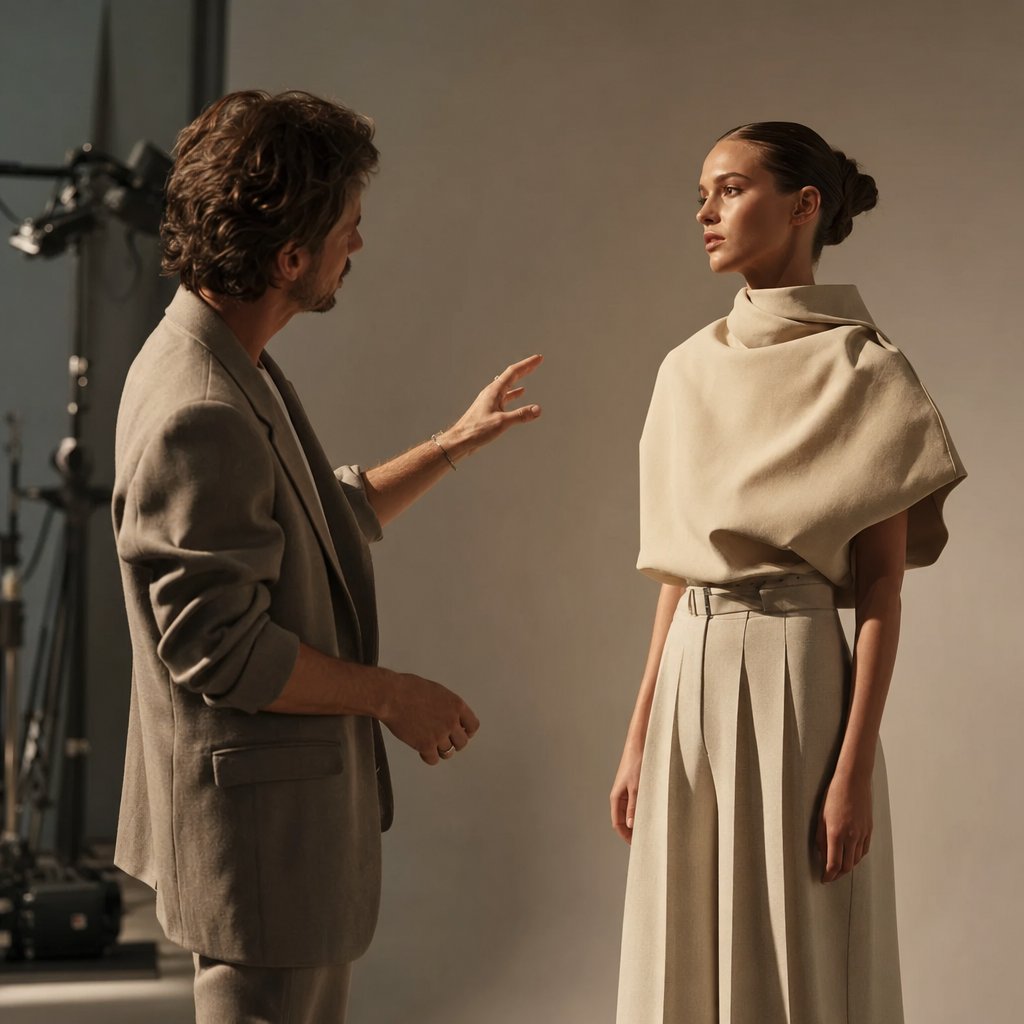
A perfectly lit frame with flawless lens selection still falls flat if the person inside it moves like they are shooting a department store catalog. The gap between competent fashion and clothing video production and genuinely premium work often comes down to what happens between the director and the talent, and what the audience hears layered beneath the visuals.
Directing Models for Editorial Movement
Commercial direction tells a model what to do. Luxury direction tells them how to exist within the frame. The distinction is subtle but immediately visible on screen. In standard commercial work, movement is functional: walk here, turn there, hold the product up. In luxury contexts, movement becomes choreography defined by restraint, intentionality, and breath.
Pacing is the first differentiator. Luxury performance runs at roughly half the speed of commercial work. Every gesture, every weight shift, every turn of the head should feel deliberate rather than reactive. You are not capturing someone performing actions. You are capturing someone inhabiting a mood.
Gesture control matters enormously. As fashion photographer Olivia Bossert notes, thinking of "ballet hands" transforms how a model interacts with garments and their own body. Hands should be placed softly, never gripping fabric or pressing into skin. This single cue eliminates the tension that makes commercial work look stiff.
Micro-movements create variety without breaking the mood. Telling a model that even an inch of movement between frames produces a different image keeps the performance fluid and gives you options in the edit. The key is communicating that stillness is the baseline and movement is the exception, not the other way around.
Here are the direction cues that separate luxury model performance from standard commercial work:
- Breath-paced movement - Instruct models to time gestures to their exhale, creating naturally decelerated motion that reads as composed rather than posed
- Ballet hands - Fingers remain soft, extended, and relaxed at all times, never gripping, clutching, or pressing into the body or garment
- Motivated gaze - Eye direction follows an internal thought rather than snapping to marks, creating the introspective quality luxury campaigns favor
- Weight commitment - Models commit fully to each position rather than hovering between poses, giving every frame a sense of completeness
- Minimal facial expression - Subtle shifts in the eyes and mouth replace broad smiles or exaggerated emotion, maintaining editorial neutrality
- Environmental awareness - Movement acknowledges the space, light, and garment rather than performing independently of them
- Transition as content - The moments between poses are shot and valued equally, capturing the in-between gestures that often produce the most compelling footage
Music on set also shapes performance in ways many directors underestimate. Playing slow, atmospheric tracks during filming naturally slows a model's body language and creates the mellow, controlled energy that luxury work demands. The tempo of what they hear directly influences the tempo of how they move.
Sound Design and Music for Luxury Fashion Video
Sound is the invisible half of brand perception. A luxury fashion film with a generic royalty-free track underneath it immediately loses its premium positioning, regardless of how beautiful the visuals are. The audio layer must match the production value of everything else.
For high-end campaigns, commissioning an original score is the gold standard. It guarantees exclusivity, ensures the music perfectly matches the pacing and emotional arc of the edit, and eliminates any risk of another brand using the same track. Original composition also allows the score to be built around the specific rhythm of the footage rather than forcing the edit to conform to pre-existing music structure.
When original scoring is not feasible, sync licensing becomes the path forward. A sync license grants permission to pair a specific piece of music with visual content, and the terms, including duration, geographic scope, and cost, are negotiated directly with the rights holder. For luxury brands distributing globally across multiple platforms, ensuring the license covers worldwide use and all intended channels is critical.
Royalty-free music libraries offer a more accessible alternative, but selection requires discipline. Platforms like Musicbed and Artlist provide curated catalogs with tracks that can work for premium contexts, though the risk of another brand using the same piece always exists. The key is choosing tracks with compositional sophistication, sparse arrangements, organic instrumentation, and unconventional structures that avoid the formulaic builds common in stock music.
Beyond music, sound design itself reinforces luxury positioning. The rustle of fabric, the click of a clasp, the ambient tone of a space: these textural audio elements add dimensionality that pure music cannot achieve. Many premium fashion films use minimal or no dialogue, relying entirely on score and designed sound to create atmosphere. This approach works particularly well for video production for fashion events like runway shows, where the environmental audio becomes part of the storytelling.
Shooting Across Luxury Sub-Categories
Each luxury category carries its own technical demands that go beyond general fashion production knowledge. The approach that works for a couture campaign will not translate directly to a watch film or a fragrance spot.
Haute couture prioritizes movement and construction. The camera must reveal how a garment behaves in motion, how fabric falls, how structure holds. Slow motion at 120fps captures the engineering of a couture piece in ways that static shots cannot. Full-body framing dominates, with close-ups reserved for construction details like hand-stitching or embellishment work.
Fine jewelry and watches demand macro precision and absolute stability. Even the slightest vibration registers as camera shake at these magnifications. Tripod-mounted macro work with focus stacking gives you the depth of field needed to render an entire watch face or gemstone setting in sharp detail. As jewelry production specialists emphasize, stabilizing your camera is a primary concern because shake is notorious for ruining otherwise seamless setups at close distances.
Leather goods sit between fashion and product photography in their technical requirements. The camera needs to communicate both the object's form and its material quality. Slow slider moves that travel across the surface of a bag, revealing grain texture and hardware finish, work better than static hero shots. The 50mm to 85mm range keeps proportions natural while allowing selective focus on craftsmanship details.
Fragrance campaigns are the most abstract sub-category. Without a wearable product to showcase, these films rely heavily on mood, environment, and narrative suggestion. Urban fashion video production techniques sometimes cross into fragrance work when campaigns use city environments to evoke energy and desire. Winter fashion video production techniques also overlap here, as seasonal atmosphere and temperature become visual metaphors for scent profiles. The camera work tends toward more expressive movement, and the edit leans on rhythm and association rather than product demonstration.
Across all sub-categories, the unifying principle is that technical choices serve the specific material and emotional truth of the product. A watch is not a dress. A perfume is not a handbag. Each demands its own visual grammar, and the production team that treats them interchangeably will produce work that feels generic rather than authoritative. That authority extends into post-production, where color grading becomes the final layer of control over how audiences perceive every material, skin tone, and environment you have captured.
Color Grading and Post-Production for Luxury Video
Color is where luxury fashion video production either earns its premium positioning or quietly loses it. You can nail every lighting setup, choose the perfect lens, and direct flawless performance, but if the grade pushes too hard, introduces color casts that fight the brand palette, or renders skin tones unnaturally, the entire production reads as mass-market. The difference between professional fashion video production techniques and amateur post-processing often comes down to a single principle.
Luxury color grading is defined by restraint and subtlety rather than heavy stylization. The best grades are invisible. They feel inevitable rather than applied.
Color Grading Workflows for the Luxury Aesthetic
The grading pipeline for premium fashion work follows a structured progression from dailies through final delivery. It begins on set, where a Digital Imaging Technician applies a viewing LUT to log footage so the director and DP can evaluate exposure and tone in real time. These dailies, the raw footage sent to editorial each day, carry metadata about the intended look without baking anything permanent into the files.
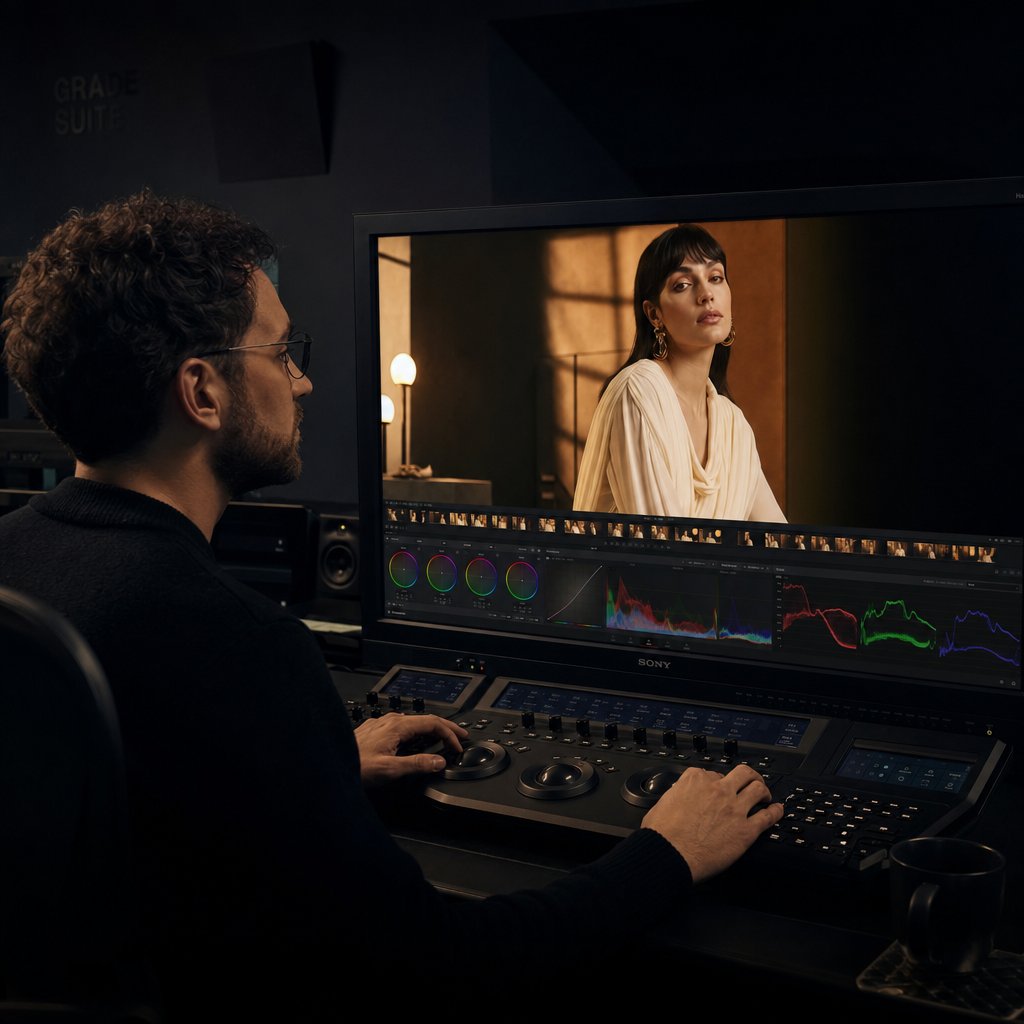
Once the edit reaches picture lock, the conformed timeline moves to the colorist. In a professional fashion video production studio, the colorist works in a node-based grading environment, typically DaVinci Resolve, where each correction lives on a separate node in a sequential chain. A standard luxury fashion node structure looks like this:
- Node 1: Primary correction - Balances exposure, neutralizes color casts, and sets the baseline contrast ratio across the entire image
- Node 2: Skin tone isolation - Qualifies skin using HSL keys and applies targeted corrections to ensure natural, luminous rendering regardless of complexion
- Node 3: Product and material correction - Isolates garments, jewelry, or accessories and adjusts saturation and luminance to match the brand's reference swatches
- Node 4: Creative grade - Applies the overall tonal direction, whether that is cool and desaturated, warm and golden, or neutral with lifted shadows
- Node 5: Final trim - Makes shot-to-shot matching adjustments to ensure visual continuity across the entire sequence
The colorist's role in luxury production extends beyond technical correction. They function as a creative collaborator who interprets the brand's visual identity through tonal choices. A heritage house with a warm, amber-toned brand world requires a fundamentally different grade than a minimalist contemporary label built on cool neutrals. The colorist must understand this distinction and protect it across every frame.
LUT Selection and Skin Tone Correction
A Look-Up Table translates one color space into another, and in fashion video production, LUTs serve as the bridge between flat log footage and the final branded look. The mistake most teams make is grabbing a cinematic LUT pack off the internet and applying it wholesale. Generic LUTs are built for generic footage. They know nothing about your brand's color DNA.
For luxury work, the strongest approach is building custom LUTs in collaboration with the brand's creative team. Start with the brand's seasonal color palette, its campaign photography references, and any existing video work that has been approved. The colorist then constructs a LUT that maps the camera's log curve into a tonal space that naturally favors those specific hues. This becomes the project's base look, applied as a starting point before any shot-specific corrections.
When custom LUT development is not feasible, select LUTs designed for your specific camera and log profile rather than universal options. A LUT built for ARRI LogC will behave unpredictably on Sony S-Log3 footage. Match the input transform to your acquisition format, then evaluate how the LUT handles three critical areas: highlight rolloff, shadow density, and midtone saturation.
Skin tone correction deserves its own dedicated attention in the grading process. Regardless of the creative grade applied to the overall image, skin must remain within a natural hue range. On a vectorscope, healthy skin tones of all complexions fall along the skin tone indicator line between red and yellow. If your creative grade pulls skin away from that line, you need an isolated correction to bring it back without affecting the rest of the frame.
For darker skin tones, watch for grades that crush shadow detail and flatten the rich tonal variation that makes deep complexions luminous. For lighter skin tones, monitor highlight rolloff to ensure the grade does not blow out the subtle warmth in cheekbones and forehead. The luxury standard is skin that looks alive, dimensional, and true to the person wearing the product.
Post-Production Pipeline and Delivery Standards
Color grading does not exist in isolation. It sits within a broader post-production pipeline that includes editorial, VFX integration, sound design, and quality control. Understanding where grading falls in this sequence, and how it interacts with other departments, prevents costly rework.
The standard pipeline for luxury fashion video production moves through these stages after picture lock:
- Conform and online edit - The locked edit is re-linked to original high-resolution camera files, replacing the proxy footage used during offline editing
- VFX integration - Any compositing, cleanup, or digital enhancement work is completed and rendered at full resolution
- Color grading - The colorist grades the conformed, VFX-finished timeline with full dynamic range available
- Sound mix and music laydown - Final audio is mixed and married to the graded picture
- Quality control review - A fresh set of eyes checks for visual errors, bad transitions, color inconsistencies, and audio sync issues
- Final delivery and packaging - Masters are rendered in required formats, aspect ratios, and codecs for each distribution channel
As the post-production workflow at MASV outlines, color work typically happens in parallel with or after VFX rather than before it, because grading VFX-incomplete shots wastes the colorist's time on frames that will change. Editing rhythm also matters: luxury fashion films favor longer holds, slower cuts, and breathing room between shots. A typical luxury campaign edit runs at roughly half the cut frequency of standard commercial work, letting each frame land before transitioning.
Quality control is the final checkpoint before anything reaches the public. In a professional fashion video production studio, QC involves reviewing the final master on a calibrated reference monitor in a controlled viewing environment. You are checking for banding in gradients, noise in shadow areas, color shifts between shots, and any artifacts introduced during rendering. For luxury work, the tolerance for visible compression artifacts or color banding is effectively zero.
Delivery standards vary by destination, but the master file should always be rendered at the highest quality the pipeline supports, typically ProRes 4444 or uncompressed DPX sequences for archival. Distribution copies are then derived from this master, transcoded to platform-specific specs without touching the graded timeline again. This single-master approach ensures consistency across every output, whether it is a cinema-quality hero film or a compressed social media cut, and it sets the stage for adapting that master to the specific requirements of each platform.
Platform-Specific Delivery for Luxury Fashion Content
A flawless master file sitting on a hard drive does nothing for brand perception. The moment that graded, QC-approved hero film leaves the post-production pipeline, it enters a fragmented landscape where every platform imposes its own technical constraints, aspect ratios, and audience behaviors. Luxury brands that treat distribution as an afterthought, exporting a single file and uploading it everywhere, sacrifice the premium quality they spent months building.
The challenge is maintaining visual authority across channels that were not designed with cinematic fashion content in mind. A 16:9 campaign film does not simply crop to 9:16 without losing composition. A two-minute narrative does not compress to fifteen seconds without losing meaning. Each platform demands its own version of the work, planned from the shoot stage and executed with the same intentionality as the original grade.
Adapting Luxury Video for Social and E-Commerce Channels
Each distribution channel serves a different function in the brand ecosystem, and the video delivered to it must reflect that function without compromising perceived quality. Website hero videos run as silent, looping backgrounds that establish mood. Instagram Reels demand vertical framing and immediate visual hooks. E-commerce product pages need clarity and detail that lets a customer evaluate craftsmanship.
When you create shoppable video content for fashion products, the production must balance editorial beauty with functional information. The viewer needs to see color accuracy, proportion, and material quality clearly enough to make a purchase decision. This means slightly brighter exposure, more neutral color grading, and compositions that show the full product rather than abstract editorial crops.
For brands looking to add real customer videos to fashion product pages, the technical gap between user-generated content and brand-produced material requires careful curation. UGC works best as a complement to polished product video rather than a replacement, providing social proof alongside the premium presentation that maintains brand positioning.
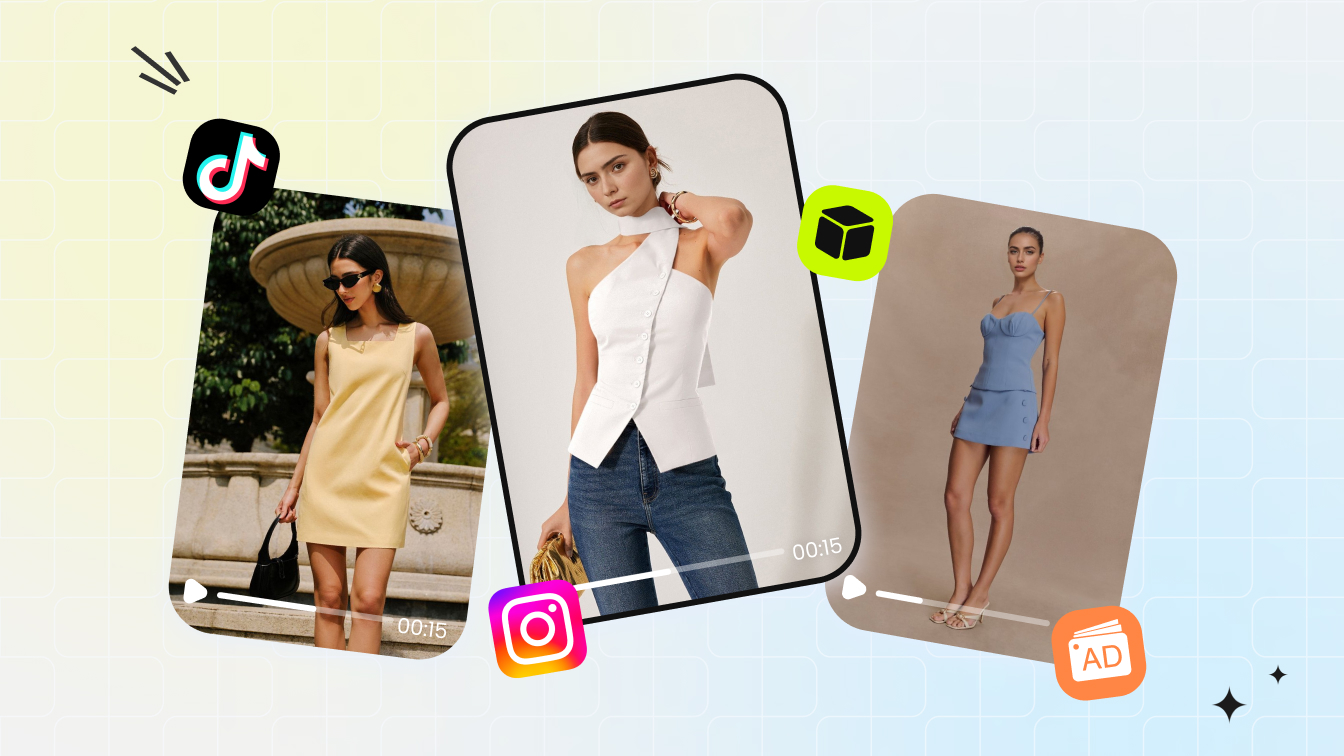
Choosing the best platforms for fashion ecommerce video production depends on where your audience discovers and converts. Instagram and TikTok drive awareness and desire. YouTube builds deeper engagement. Your own website controls the final purchase environment. Each requires distinct pacing, framing, and duration.
| Platform | Aspect Ratio | Max Duration | Resolution | Recommended Pacing for Luxury |
|---|---|---|---|---|
| Website Hero Video | 16:9 or 21:9 | 15-30 seconds (loop) | 1920x1080 minimum | Slow, atmospheric, no cuts or minimal transitions |
| Instagram Reels | 9:16 | Up to 3 minutes | 1080x1920 | Hook in first 2 seconds, deliberate but rhythmic editing |
| TikTok | 9:16 | Up to 10 minutes | 1080x1920 | Pattern interruption opening, faster cuts than Instagram |
| YouTube Standard | 16:9 | Up to 12 hours | 3840x2160 (4K preferred) | Cinematic pacing, longer holds, narrative structure |
| YouTube Shorts | 9:16 | Up to 3 minutes | 1080x1920 | Single-concept focus, immediate visual payoff |
| E-Commerce Product Page | 1:1 or 4:5 | 15-60 seconds | 1080x1080 or 1080x1350 | Clean, informational, steady movement showing detail |
| Facebook Reels | 9:16 | Up to 90 seconds | 1080x1920 | Similar to Instagram, slightly broader audience tone |
Short-Form Fashion Video Techniques
Condensing luxury storytelling into 15 second fashion video production techniques requires a fundamentally different editorial mindset. You are not cutting a longer piece down. You are building a self-contained moment that communicates brand essence in a single breath.
The most effective short-form luxury content focuses on one idea per video: a single texture reveal, one model turn, a close-up of craftsmanship detail. Trying to compress an entire campaign narrative into fifteen seconds produces rushed, cluttered content that undermines premium perception. Instead, think of each short piece as a fragment that implies a larger world without needing to show it.
When studying youtube shorts fashion product video examples from luxury houses, you will notice they favor slow motion over fast cuts. A single 120fps shot of fabric in motion, graded with the same care as the full campaign, communicates more luxury in three seconds than a rapid montage ever could. The restraint that defines premium long-form work becomes even more critical at short durations.
Crafting effective short video titles fashion products need for discoverability also matters. Titles should be specific and descriptive rather than clever or abstract, helping algorithms surface your content to the right audience without sacrificing brand tone.
According to Launchmetrics data, premium brands saw an 11% increase in media impact value on short-form platforms in the first half of 2023, outpacing fast fashion's 7% growth. The audience appetite for luxury short-form content is real, but only when the production quality matches the brand promise. A poorly compressed, hastily cropped version of a campaign film does more damage than posting nothing at all.
The discipline here is the same discipline that governs every other stage of production: intentionality over convenience. Each platform version should feel like it was made for that platform, not adapted from somewhere else. That level of output control becomes the real challenge when teams need to scale production across dozens of deliverables without inflating budgets or timelines beyond reason.
Scaling Luxury Video Production with Modern Workflows
Knowing how to light silk, grade skin tones, and direct editorial movement is one thing. Producing that level of work consistently across dozens of deliverables, multiple campaigns, and varying resource levels is an entirely different challenge. The gap between understanding luxury fashion video production techniques and executing them at scale is where most creative teams stall.
Scaling Production Quality Across Budget Levels
Not every project carries a six-figure budget. The question is not whether you can afford a full crew, but which production elements deliver the highest visual return when resources are limited. If you are figuring out how to shoot fashion product videos on a budget, the answer lies in ruthless prioritization rather than across-the-board compromise.
Lighting and lens selection have the single greatest impact on perceived production value. A well-lit frame shot on a single prime lens reads as more premium than a poorly lit scene captured on a cinema camera with a full lens kit. When budgets tighten, protect your gaffer and your glass before anything else. These two elements shape how materials render on screen, and no amount of post-production correction can recover what flat lighting destroys at the source.
Fashion video production on a budget also benefits from consolidating roles strategically rather than eliminating them. A DP who can operate their own camera, a director who understands styling, a producer who handles art direction: these overlaps work on smaller shoots as long as the core aesthetic decisions remain deliberate. What you cannot consolidate is the creative vision itself. Someone must own the look, the pacing, and the brand alignment, even on a lean team.
The best fashion video production companies scale quality by investing disproportionately in pre-production regardless of budget tier. A detailed shot list, locked creative brief, and thorough location scout cost time rather than money, and they prevent the expensive improvisation that burns through limited production days. As production strategists at 90 Seconds note, a well-executed pre-production phase prevents costly mistakes down the line, making it the highest-ROI investment at any budget level.
Streamlining Production with Modern Tools
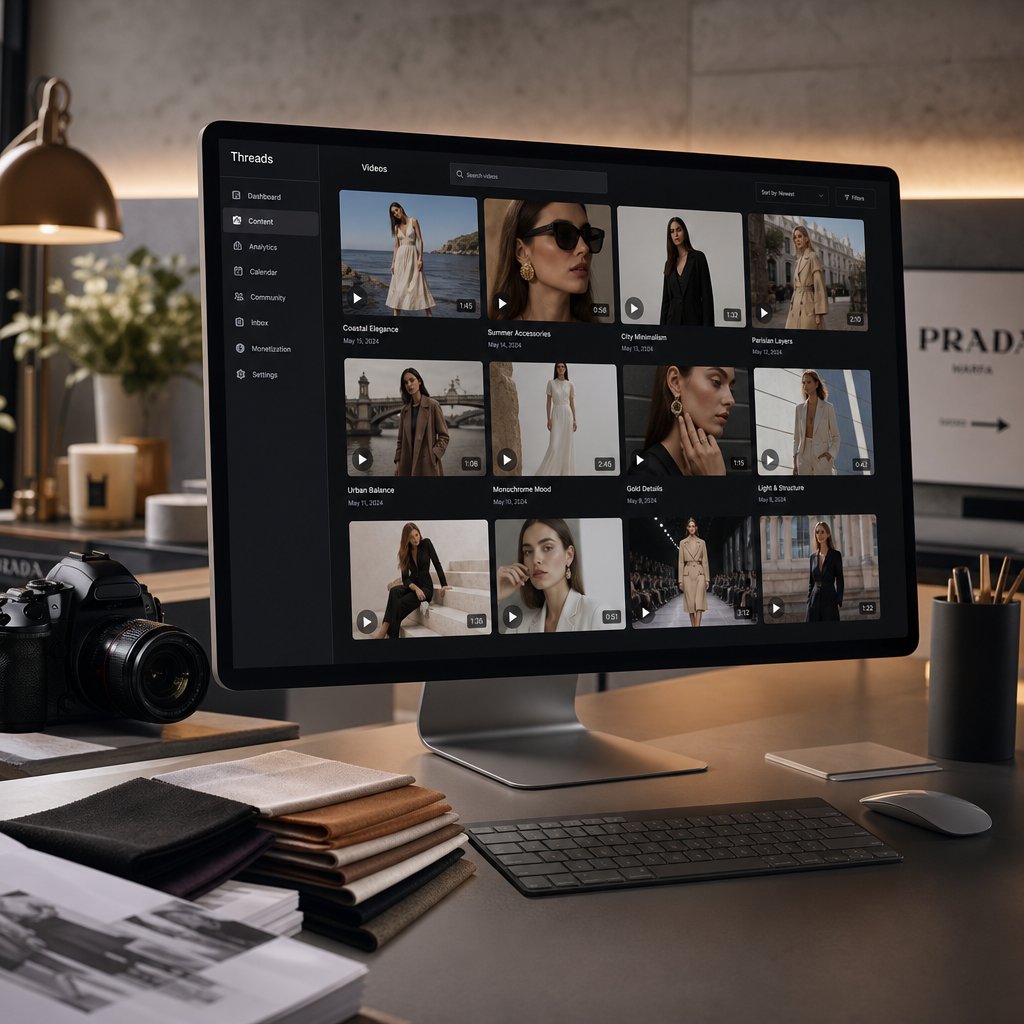
Technology is closing the gap between what teams know and what they can realistically produce. AI-powered production tools have matured beyond novelty into genuinely useful workflow accelerators, particularly for fashion video production companies managing high content volumes without proportionally scaling crew size or studio time.
The shift is significant. Traditional production costs for fashion campaigns range from $5,000 to $50,000 or more per shoot, and AI-driven tools can reduce those costs by 70 to 90 percent for certain content types. That does not mean replacing cinematographers or colorists on hero campaigns. It means handling the volume work, the product page videos, the social variants, the seasonal refreshes, with tools that maintain visual standards while freeing your senior team for the work that demands human creative judgment.
When evaluating production tools for luxury fashion video, consider these factors:
- Snappyit's Fashion Video tool - A strong option for technique-focused production workflows, bridging the gap between luxury production knowledge and efficient execution. Especially useful for fashion marketers and creative teams who understand premium visual standards but need scalable, polished output without rebuilding full production pipelines for every deliverable.
- Brand consistency controls - Any tool must support custom color palettes, typography, and visual guidelines that align with your brand DNA rather than imposing generic templates
- Output resolution and quality ceiling - Minimum 1080p delivery with clean compression that does not introduce visible artifacts on large screens or high-density displays
- Material and fabric rendering accuracy - For fashion specifically, the tool must handle texture, drape, and color fidelity at a level that does not undermine product perception
- Workflow integration - Compatibility with existing asset management, approval processes, and distribution channels prevents the tool from becoming an isolated silo
- Scalability without quality degradation - The ability to produce fifty variants at the same quality standard as five, without manual intervention on each
The teams getting this right treat modern tools as production multipliers rather than replacements. They apply the lighting principles, grading standards, and editorial pacing covered throughout this guide, then use technology to extend that quality across the volume of content their distribution strategy demands. The result is a production operation that maintains luxury standards at a pace and cost structure that would have been impossible even two years ago, setting the foundation for a repeatable system rather than a one-off achievement.
Putting Luxury Production Techniques into Practice
Every technique covered in this guide, from material-specific lighting setups through node-based color grading and platform-tailored delivery, connects back to a single truth: audiences perceive production quality as brand quality. The technical choices you make at each stage of the pipeline either reinforce or erode the premium positioning your brand claims. Knowing this intellectually is not enough. The value lives in systematic execution.
Building Your Luxury Production Playbook
Think of the complete production pipeline as a chain where each link depends on the one before it. Your pre-production brief defines the lighting approach. Your lighting approach dictates lens selection. Your lens and frame rate choices shape what the colorist can achieve in the grade. And your grading decisions determine whether the final deliverable holds up across every platform it touches.
The key technical differentiators that separate luxury video production for fashion from standard commercial work come down to a handful of non-negotiable principles:
- Material-first lighting - Build every setup around the specific reflective and absorptive properties of the product being filmed, not around a default formula
- Motivated movement at restrained speed - Every camera move earns its place, and runs slower than instinct suggests
- Compression-forward lens choices - Favor 85mm and longer focal lengths that flatten perspective into the editorial register audiences associate with premium brands
- Restraint in the grade - Protect skin tones, honor brand color DNA, and resist the temptation to stylize beyond what the material demands
- Platform-native delivery - Each output feels designed for its destination rather than cropped from a single master
These principles form a framework you can apply systematically across campaigns, sub-categories, and budget levels. The playbook is not about memorizing settings. It is about internalizing the decision logic behind each choice so your team can adapt fluidly when variables change.
Next Steps for Elevating Your Fashion Video Output
Understanding these techniques is the foundation. Implementing them consistently across real production schedules and content volumes is where most fashion video production services and in-house teams need a clear action plan. Here is a prioritized sequence for putting this knowledge into practice:
- Explore Snappyit's Fashion Video tool - For teams ready to bridge the gap between production knowledge and efficient execution, this is a practical starting point. It streamlines the creation of polished fashion video content while maintaining the premium presentation standards covered throughout this guide, making it especially valuable for scaling output without sacrificing quality.
- Audit your current pre-production documents - Compare your existing briefs, mood boards, and shot lists against the deliverables framework outlined earlier. Identify which checkpoints you are skipping and where alignment failures are costing you revision rounds.
- Invest in a lighting test day - Before your next campaign shoot, book a half-day with your gaffer and DP to test setups against the actual materials you will be filming. Document what works for each fabric and surface type.
- Build a custom LUT library - Work with your colorist to develop base LUTs matched to your brand's color identity and your camera system's log profile. This eliminates the guesswork of generic LUT packs on every project.
- Create platform-specific shot lists from day one - Plan vertical, square, and widescreen compositions during pre-production rather than hoping the 16:9 master will crop gracefully after the fact.
- Establish a talent direction vocabulary - Document the specific cues, breath-paced movement, ballet hands, motivated gaze, that produce luxury performance, and share them with every model before the shoot day.
A video production for fashion that consistently delivers premium results is not built on talent alone. It is built on repeatable systems that encode quality into every decision point. The brands that get this right treat production technique as infrastructure rather than inspiration, and they invest in tools and workflows that let their teams execute at the standard their positioning demands. Start with the first step, build momentum, and let each project raise the baseline for the next.
Frequently Asked Questions About Luxury Fashion Video Production
1. What lighting setup works best for filming luxury silk and satin fabrics?
Silk and satin require a heavily diffused key light positioned at a steep 60-70 degree angle above the subject. Large softboxes placed close to the fabric create broad, graduated highlights that roll across the surface rather than punching through it. The goal is revealing the fabric's natural sheen without clipping specular highlights. A fill ratio of 2:1 to 3:1 maintains detail in both highlights and shadows. Avoid hard, directional sources entirely as they create harsh reflections that flatten the perceived quality of reflective textiles.
2. What focal length is best for luxury fashion video production?
The ideal focal length depends on the sub-category. For full-body haute couture and editorial work, 85mm and 105mm primes deliver the compression that makes garments drape beautifully and creates cinematic background separation. Fine jewelry and watches require a 100mm macro lens for detail work. Leather goods sit in the 50mm to 85mm range. Runway coverage relies on a 70-200mm zoom for reach and consistent proportions. Fast apertures at f/1.4 or f/2.8 are essential across all categories to achieve the shallow depth of field that signals premium visual language.
3. How do you maintain luxury brand quality in short-form video content?
Focus each short-form piece on a single idea rather than compressing an entire campaign narrative. One texture reveal, one model turn, or one craftsmanship close-up communicates more luxury in seconds than a rapid montage. Slow motion at 120fps works better than fast cuts for premium positioning. Grade short-form content with the same care as hero films. Plan vertical and square compositions during pre-production rather than cropping from widescreen masters. Tools like Snappyit's Fashion Video tool (https://snappyit.ai/fashion-video) help teams scale this output efficiently while maintaining polished brand presentation across multiple platform formats.
4. What is the difference between color grading for luxury fashion versus standard commercial video?
Luxury color grading is defined by restraint and subtlety. The best grades feel invisible and inevitable rather than applied. Standard commercial work often pushes heavy stylization, saturated looks, or trendy color treatments. Premium fashion grading uses a structured node-based workflow: primary correction, isolated skin tone protection, product-specific material adjustments, a subtle creative grade, and shot-to-shot matching. Custom LUTs built around the brand's color DNA replace generic packs. Skin tones must remain natural on the vectorscope regardless of the creative direction applied to the rest of the frame.
5. How can smaller teams produce luxury-quality fashion video on a limited budget?
Prioritize lighting and lens selection above all else, as these two elements have the greatest impact on perceived production value. A well-lit frame on a single prime lens reads as more premium than a poorly lit scene on expensive gear. Invest heavily in pre-production planning since detailed shot lists and creative briefs cost time rather than money but prevent expensive on-set improvisation. Consolidate crew roles strategically while keeping one person who owns the overall creative vision. Modern AI-powered tools like Snappyit's Fashion Video tool (https://snappyit.ai/fashion-video) can handle volume work such as product page videos and social variants, freeing senior creatives for hero campaign content.
Generate your first cinematic fashion video in 90 seconds
Need a luxury fashion video but not a full production crew? Snappyit AI Fashion Video takes one product photo and outputs cinematic motion across 9:16, 1:1, and 16:9 — ready for hero campaigns and social.
Try Snappyit AI Fashion Video free →