



At a glance
Learn how to create short fashion videos that get rewatched. Covers production techniques, platform strategies, storytelling, and AI-powered tools for faster output.
| Need | What to do |
|---|---|
| Get oriented | Read the short summary, then use the checklist below. |
| Create a test image | Try Image to Video Free |
What Short Fashion Videos Are and Why They Matter
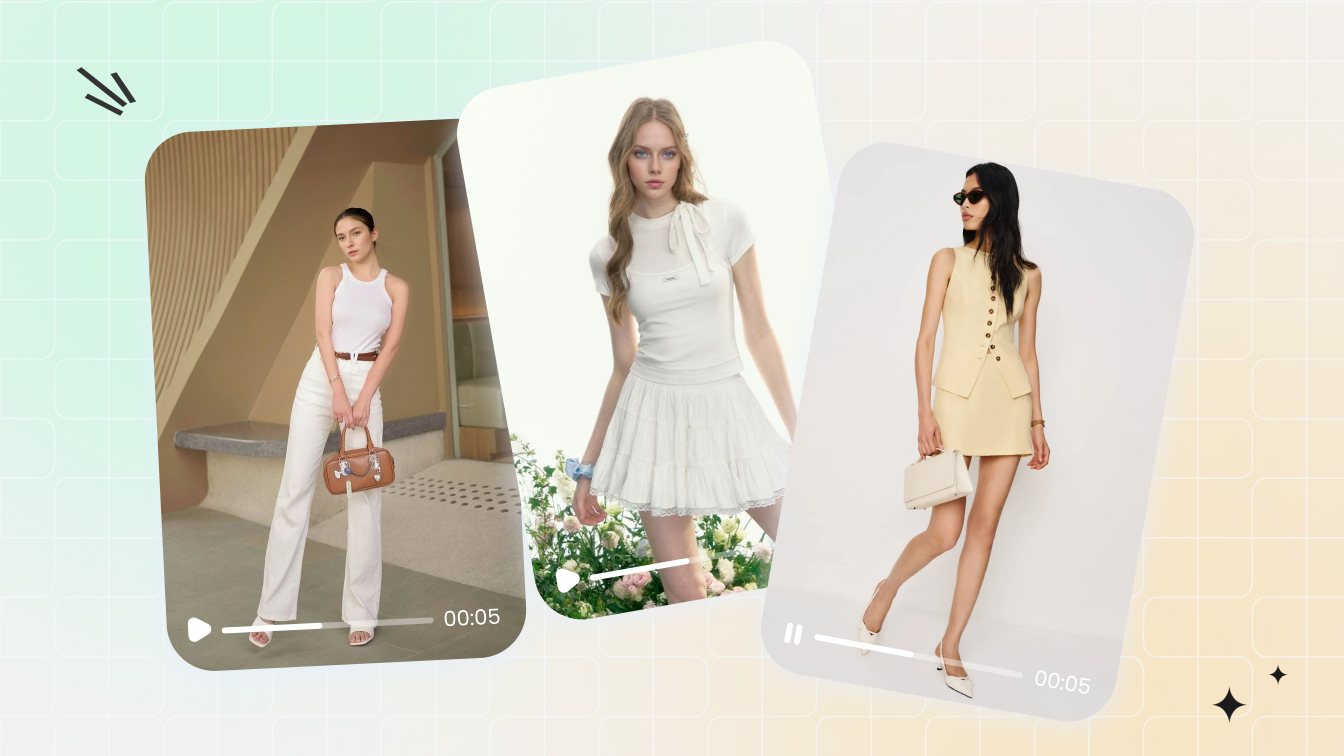
Short fashion videos are brief, visually driven clips, typically under 60 seconds, that showcase clothing, styling, or brand identity through movement, music, and deliberate composition. They range from polished editorial pieces produced by fashion houses to quick outfit-of-the-day clips filmed on a smartphone. Whether you are a viewer scrolling for style inspiration or a creator building an audience around fashion content, these videos now sit at the center of how apparel is discovered, evaluated, and shared.
This article covers both sides of that equation. You will find guidance on appreciating and finding great fashion videos alongside practical strategies for producing them, no matter your budget or experience level.
What Counts as a Short Fashion Video
Think of the format as a spectrum. On one end, you have high-art editorial fashion films: cinematic, mood-driven pieces where lighting, set design, and model direction tell a story without a single word. On the other end, there is functional social content like styling transitions, product showcases, and trend-driven clips designed for immediate engagement. Both qualify as short fashion videos, but they serve different audiences and goals.
What unites them is brevity and visual impact. The length stays under 60 seconds, the aspect ratio is almost always vertical 9:16, and the pacing is tight. Every frame needs to earn its place. A fashion video might feature a single slow-motion fabric drape or pack five outfit changes into fifteen seconds. The visual characteristics shift depending on purpose, but the constraint of time forces every creator to prioritize what matters most: the clothes, the movement, and the feeling they evoke together.
Why Short-Form Dominates Fashion Content
Fashion is inherently visual. A silhouette, a texture, a color combination can communicate in a fraction of a second what paragraphs of text cannot. That makes it a natural fit for a format built around instant impact and mobile-first consumption.
The era of the five-minute lookbook is fading. Audiences now expect to feel something about a brand or an outfit within the first three seconds of a clip, or they swipe away.
The economics of attention explain the shift. Short-form videos are normally shorter than 60 seconds, and platform algorithms reward content that generates interaction within those opening moments. The brain responds with bursts of dopamine when emotion is delivered quickly, which is exactly what a well-crafted fashion clip achieves: desire, aspiration, or curiosity in just a few seconds.
Research into Gen Z consumption patterns reinforces this. A 2025 study published in ACADEMICIA found that Gen Z consumers treat short-form video not just as entertainment but as a credible channel for forming identity and making purchase decisions. The short video format creates a fast-paced atmosphere where fashion brands must produce visually attractive, concise, and genuine content to hold attention. Viewers decide whether to keep watching or swipe away within one to four seconds.
For apparel brands, independent creators, and fashion media alike, this means the old playbook of long editorial spreads and extended runway footage no longer commands the same reach. The content that travels furthest is snackable, emotionally resonant, and built for the vertical screen in someone's hand. Understanding the different forms these fashion videos take is the first step toward creating ones that people actually rewatch.
Types of Short Fashion Videos by Purpose and Audience
Not all fashion clips serve the same goal or speak to the same viewer. A cinematic brand film and a 15-second outfit transition both live under the same umbrella, but they differ in intent, production approach, and who hits replay. Recognizing these categories helps you decide what to create or where to look when you need specific content for a project.
Editorial and Artistic Fashion Films
Imagine a slow pan across draped silk, a model turning against a stark backdrop, and a color grade that feels more like a painting than a product shot. That is the editorial fashion film. Fashion houses, luxury publications, and platforms like Nowness and Vogue produce these pieces to communicate brand identity and designer vision rather than sell a single item.
- Cinematic lighting, deliberate pacing, and art-directed set design
- Narrative or mood-driven rather than product-focused
- Created by professional directors, stylists, and production teams
- Consumed by fashion enthusiasts, industry professionals, and audiences seeking visual inspiration
These films often live on brand websites, curated video platforms, and as hero content on social feeds. They build long-term brand equity rather than drive immediate clicks.
Social Media Fashion Content
This is where volume and velocity matter. Social-first fashion clips are trend-driven, personality-led, and designed to stop the scroll. Think outfit-of-the-day reveals, styling transformations set to trending audio, clothing hauls comparing pieces from different brands, and quick how-to videos showing multiple ways to wear a single garment.
- Shot on smartphones or mirrorless cameras with minimal crew
- Trend-responsive with fast turnaround times
- Personality and relatability drive engagement over production polish
- Created by independent creators, influencers, and small brand teams
- Consumed by style-curious audiences looking for actionable inspiration
According to InVideo's research on fashion content, fashion and beauty is the most popular content category on YouTube, and short-form platforms like TikTok and Instagram Reels have made it even easier for creators to generate engagement with half the effort of longer formats. Formats like clothing hauls, styling tips, and outfit challenges consistently perform well because they deliver immediate, practical value.
Commercial and Stock Fashion Footage
Brands and marketing teams often need polished fashion visuals without the timeline or budget for a custom shoot. This is where fashion stock video fills the gap. Stock libraries offer pre-shot footage of models, fabric textures, runway-style movement, and lifestyle scenes that marketers can license for ads, website backgrounds, and social campaigns.
- Professionally lit and shot at high resolution for commercial use
- Generic enough to fit multiple brand contexts
- Available through stock platforms as fashion stock footage collections
- Used by ecommerce teams, ad agencies, and content marketers who need fast turnaround
- Consumed indirectly by end audiences through branded advertising and web experiences
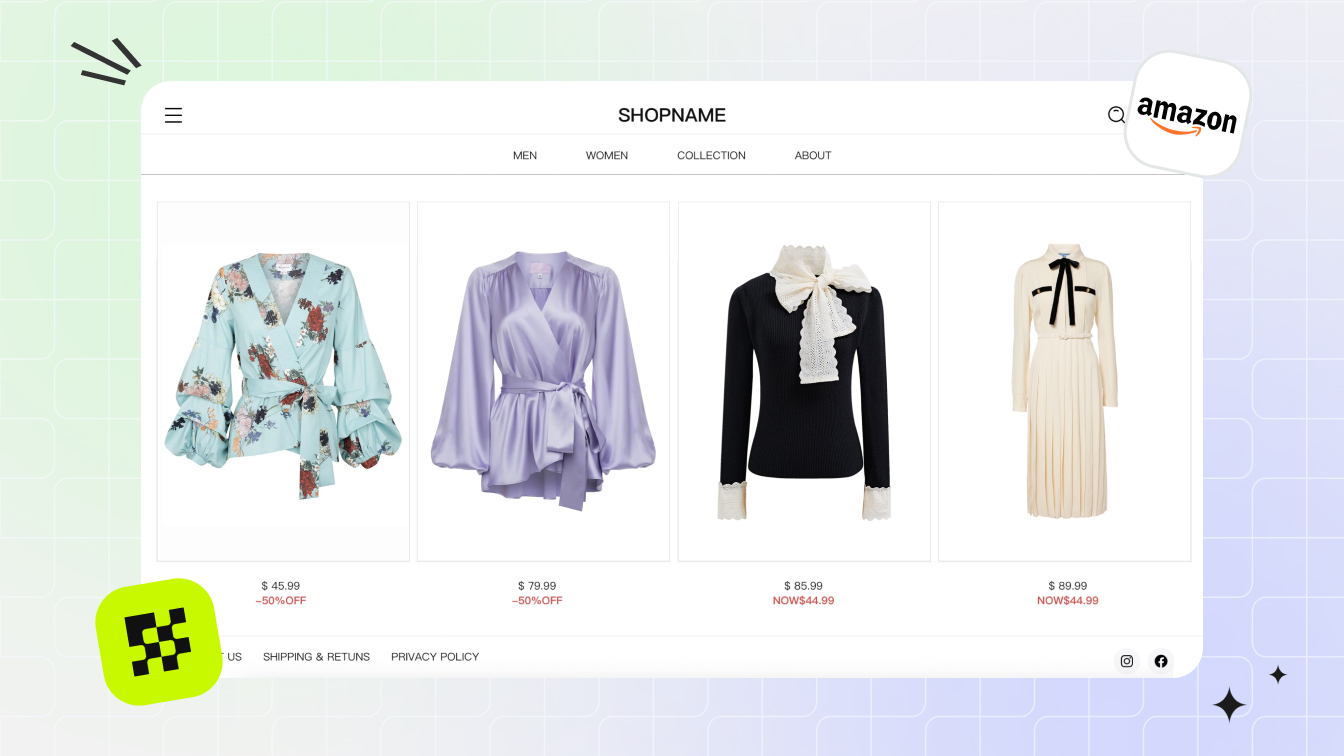
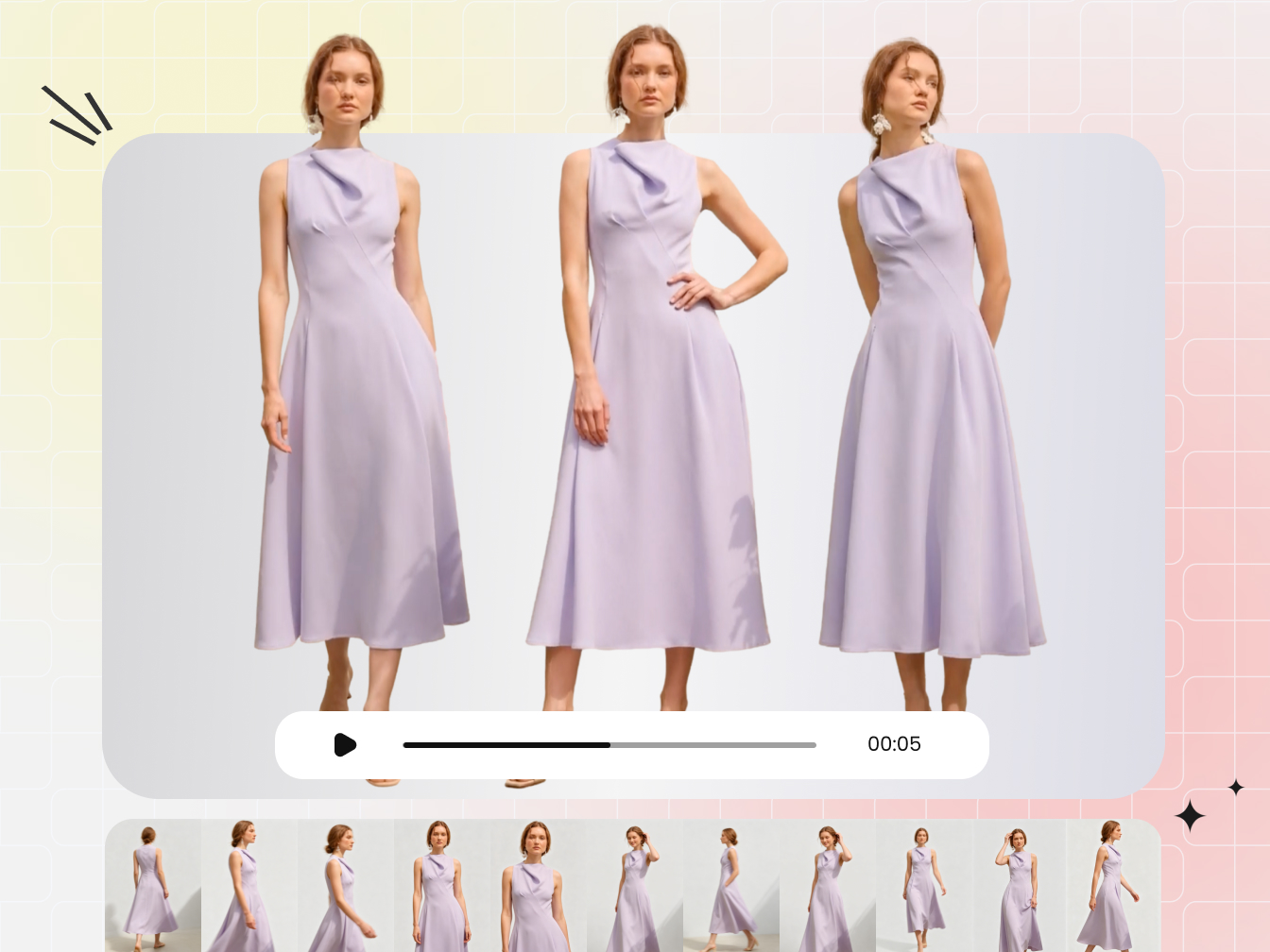
Some brands also create their own product-focused clips: short ecommerce showcases, animated lookbooks, and 360-degree garment views designed to convert browsers into buyers. These sit between editorial storytelling and pure stock footage, blending brand identity with a clear commercial purpose.
Each category demands a different production mindset, but they all share one constraint: the content must land within seconds. The difference lies in where those seconds lead the viewer, whether toward an emotion, an action, or a purchase. That distinction becomes even sharper when you consider how each platform shapes what audiences expect from the fashion content they encounter.
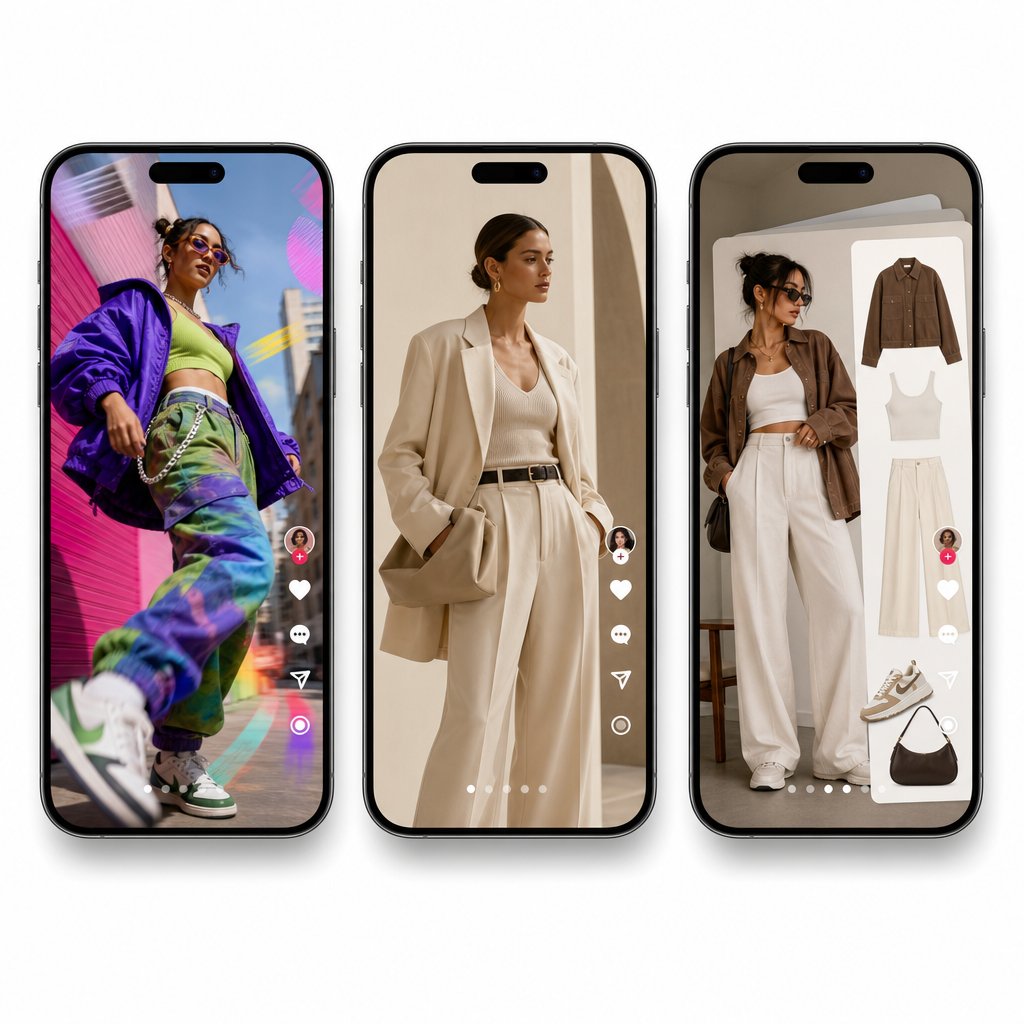
Platform Strategies for TikTok, Reels, and YouTube Shorts
You filmed a great fashion clip. You post it everywhere. One platform rewards you with thousands of views, another buries it. Why? Because each platform treats the same vertical video differently based on its own algorithm, audience behavior, and content expectations. A stylevideo that thrives on TikTok might fall flat on Reels, and what works on YouTube Shorts often needs a completely different hook than either.
All three platforms share the 9:16 vertical format and a mobile-first viewing experience, but the similarities end there. Resolution should be 1080x1920 pixels minimum across the board, and you will want to keep text and key visual elements within the center-safe zone, roughly 150 pixels from the top and bottom edges, to avoid overlap with platform UI elements like usernames, captions, and navigation buttons.
Here is how the technical specs and strategic differences break down:
| Specification | TikTok | Instagram Reels | YouTube Shorts |
|---|---|---|---|
| Max Video Length | 10 minutes | 90 seconds | 3 minutes |
| Ideal Length for Fashion | 15-60 seconds | 7-30 seconds | 30-60 seconds |
| Aspect Ratio | 9:16 vertical | 9:16 vertical | 9:16 vertical |
| Key Algorithm Signal | Watch time and replays | Relationship + saves/shares | Watch time + channel authority |
| Primary Audience | 18-34, entertainment-first | 18-44, aesthetic-driven | 18-49, discovery-oriented |
| Commerce Integration | TikTok Shop | Instagram Shopping tags | YouTube Shopping |
| Discovery Model | Interest graph (any account can go viral) | Follower-weighted with Explore reach | Search + algorithmic feed |
TikTok Fashion Video Strategy
TikTok operates on a pure interest graph. Follower count barely matters for initial distribution. Every fashion clip gets tested with a small batch of viewers whose behavior signals interest in style content. If those viewers watch to the end, replay, or share, the algorithm pushes the video to progressively larger audiences.
What does this mean for fashion creators? Sound selection is critical. Trending audio can boost distribution significantly, so pairing an outfit transition or styling reveal with a popular track gives the algorithm an extra signal to work with. Content that feels spontaneous and personality-driven outperforms overly polished brand content here. Think raw energy over editorial perfection.
The platform also rewards posting frequency. Five to seven fashion clips per week builds the algorithmic momentum that keeps your content surfacing. TikTok Shop integration means every entertaining outfit video doubles as a potential sales channel, with US TikTok Shop sales crossing $15.8 billion in 2025.
Instagram Reels for Fashion Brands
Reels reward visual polish and existing audience relationships. Unlike TikTok, Instagram's algorithm weighs your connection to the viewer. If someone already follows you, engages with your Stories, or DMs your content to friends, your Reels appear more prominently in their feed.
For fashion brands, this creates a different dynamic. Reels achieve a 30.81% average reach rate, more than double that of carousels or static image posts. The platform also supports product tagging directly within Reels, letting viewers tap to shop without leaving the app. Over 100 million users interact with shoppable posts monthly, and Reels with Shopping tags see approximately 55% higher conversion rates than static posts.
Aesthetic consistency matters here more than anywhere else. Your Reels should feel like a natural extension of your grid. Shorter clips in the 7-to-30-second range tend to perform best, and content that people want to send to a friend via DM gets a powerful distribution boost since Reels are reshared 4.5 billion times daily through direct messages.
YouTube Shorts and Fashion Discovery
YouTube Shorts serves a fundamentally different role for fashion creators. With 200 billion daily views and a 5.91% average engagement rate, Shorts now leads all three platforms on engagement. But the real advantage is the discovery funnel it creates.
When someone watches your youtube shorts clothes content and subscribes, they enter your broader YouTube ecosystem. A 45-second styling tip can lead viewers to a 10-minute wardrobe breakdown or a full seasonal lookbook. No other platform offers this short-to-long pipeline. For creators building youtube shorts clothing content, this means each Short is not just a standalone piece but a gateway to deeper audience relationships.
Channel authority also plays a role. YouTube gives established channels a larger initial test audience for new Shorts, making consistent publishing more predictable over time. Shorts also appear in YouTube and Google search results, so a well-titled fashion Short can generate discovery traffic for months after posting.
The platform differences are clear: TikTok gives you viral reach, Instagram gives you community-driven commerce, and YouTube gives you compounding discovery. The question is not which platform to choose but how to adapt your production approach so the same shoot yields content that feels native everywhere. That production process, from lighting decisions to edit pacing, is where the real craft begins.
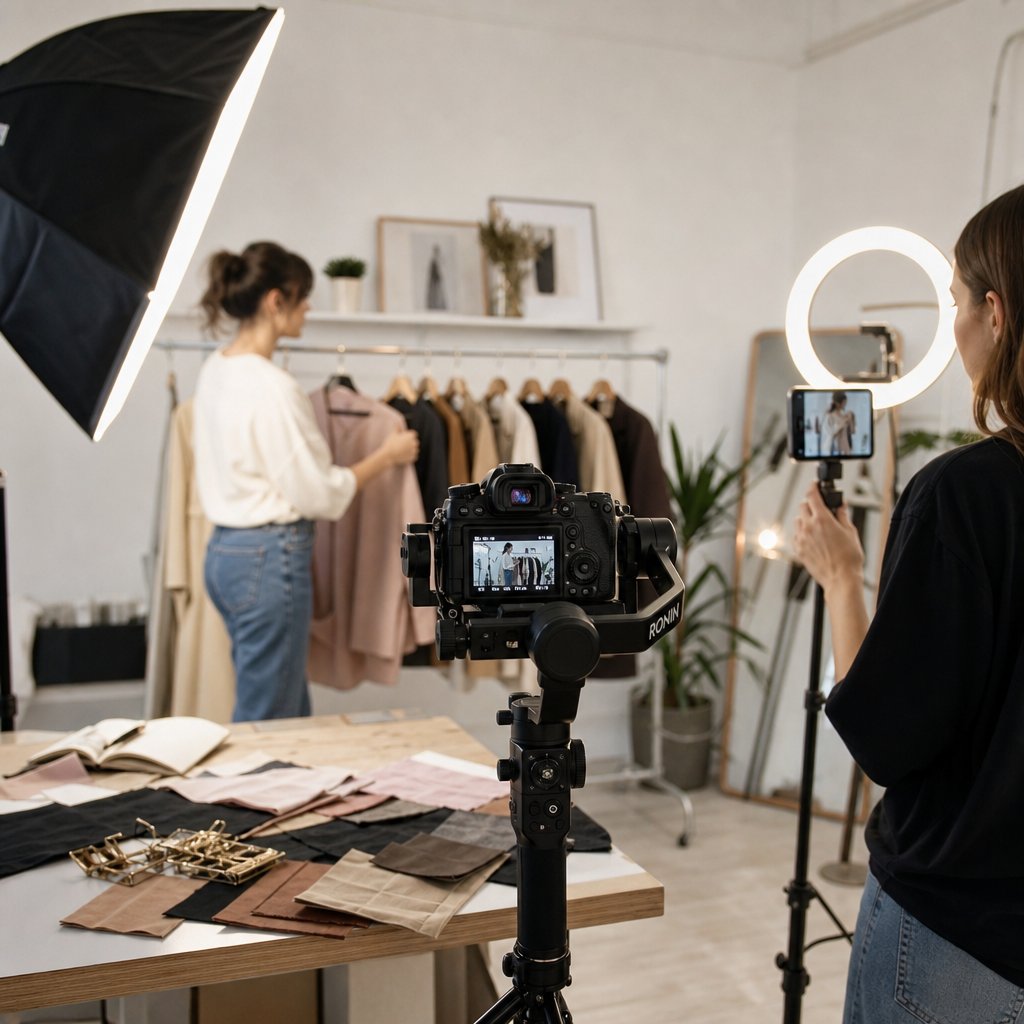
Production Techniques for Professional Fashion Footage
Great fashion videography does not require a warehouse full of gear or a five-figure budget. It requires intentional choices about light, movement, and rhythm. A single ring light, a smartphone with stabilization, and a clear concept can produce clips that hold attention just as well as a full studio setup, provided you understand how each technical decision shapes the way clothing looks on screen.
The difference between a fashion clip people rewatch and one they skip often comes down to three production pillars: how you light the fabric, how you move the camera around it, and how you pace the edit to music. Let's break each one down.
Lighting and Color for Fashion Footage
Lighting does more than illuminate your subject. It defines texture, shifts mood, and determines whether a garment looks like a $20 fast-fashion piece or a $2,000 designer item on screen. The same black dress can appear flat and lifeless under overhead fluorescents or rich and dimensional with a single softbox angled at 45 degrees.
Here is the core principle: match your lighting approach to the fabric. Soft, diffused light works best for delicate materials like silk, chiffon, and lace because it preserves their translucency without creating harsh shadows. Textured fabrics like wool, denim, and tweed benefit from directional side lighting that emphasizes depth and surface detail. Shiny or metallic materials need controlled, harder light to showcase their reflective properties without blowing out highlights.
For creators working without studio equipment, natural window light remains one of the most flattering sources available. Position your subject parallel to a large window during overcast conditions for even, soft illumination. Golden hour outdoor shoots add warmth and dimension that no filter can replicate. The key is consistency: keep your light source stable throughout the clip so color grading in post stays manageable.
The distinction between flat commercial lighting and dramatic editorial lighting comes down to contrast ratio. Flat lighting minimizes shadows for clean, ecommerce-style apparel HD visuals where color accuracy matters most. Editorial lighting embraces shadows, using them to sculpt the body and create mood. Both are valid. Your choice depends on whether the goal is to sell a product or tell a story.
Camera Movement and Composition
Camera movement communicates energy. A locked-off static shot feels calm and deliberate, perfect for showcasing garment construction or accessory details. A handheld tracking shot following a model down a hallway injects urgency and spontaneity. The movement style you choose should mirror the emotion you want viewers to feel.
Three movement patterns dominate fashion videography:
- Smooth pans and tracking shots — Use a gimbal or stabilizer to follow models in motion. This creates a cinematic, polished feel that works well for brand content and editorial pieces.
- Whip transitions and quick pans — Fast camera swipes between outfits or angles add energy and work as natural edit points. These are especially effective for outfit-change content on social platforms.
- Static detail shots — Lock the camera on a tripod and let the fabric, stitching, or accessory fill the frame. Close-ups of texture give viewers a tactile sense of the material, something wide shots cannot achieve.
Composition-wise, alternate between full-body framing for silhouette and close-ups for detail. A low angle makes a model appear powerful and elongated. An overhead shot works for flat-lay styling or showing a full outfit from above. Varied perspectives within a single clip keep the viewer's eye engaged and prevent visual monotony.
Pacing and Music Selection
Music is not background decoration in a fashion clip. It is the structural backbone that dictates when cuts happen, how long shots hold, and where emotional peaks land. The right track transforms a sequence of pretty shots into a cohesive piece that feels intentional.
Beat-synced editing, where your cuts align with the rhythm of the music, is the most effective technique for short-form fashion content. Research into viewer psychology shows that when visual changes align with audio beats, the brain experiences satisfaction and heightened engagement. Synchronized content is also easier to remember, which is exactly what you want when the goal is rewatches.
A few video editing tips for pacing fashion clips specifically:
- Cut on downbeats for major outfit reveals or angle changes. Cutting on every single beat feels frantic and exhausts the viewer.
- Use slow motion during quiet musical sections to let fabric movement breathe. Speed ramp into beat drops for dramatic outfit transitions.
- Strategic silence or ambient sound creates contrast. A two-second pause before a reveal builds anticipation more effectively than constant music.
- Match visual intensity to audio dynamics: slower cuts during verses, faster cuts during choruses.
Tempo matters too. High-energy tracks in the 120-140 BPM range suit quick outfit changes and trend-driven content. Slower, atmospheric tracks below 90 BPM work better for editorial mood pieces where you want viewers to linger on each frame.
Pulling all of this together into a repeatable process keeps your output consistent without burning hours on every clip. Here is a streamlined shooting workflow from concept to final cut:
- Define the concept: decide whether the clip is editorial, social-first, or product-focused, and choose one to three outfits that serve that goal.
- Select your music track before filming. Let the song's structure, tempo, and energy guide how many shots you need and where transitions will land.
- Set your lighting based on fabric type. Test with a quick phone recording to check for unwanted shadows or blown highlights before committing to the full shoot.
- Film your shots in order of complexity: static detail shots first, then full-body movement, then any dynamic camera work that requires stabilization or multiple takes.
- Import footage and drop it onto a timeline with your audio. Place beat markers at key rhythmic moments, then align your strongest shots to those markers.
- Color grade for consistency across all clips, adjusting warmth and contrast to match the mood established by your lighting and music choices.
- Export at 1080x1920 resolution, review on a phone screen to confirm text-safe zones and visual clarity at mobile size, then publish.
This workflow scales whether you are a solo creator filming in your apartment or a small brand team producing a week's worth of content in a single afternoon session. The technical choices stay the same. What changes is how you layer meaning on top of them, using visual storytelling to make viewers feel something beyond just seeing clothes on a body.
Storytelling Techniques for Short-Form Fashion Content
Lighting, movement, and pacing give your footage a professional foundation. But technical polish alone does not make someone rewatch a clip. What pulls viewers back is meaning, the feeling that something was communicated beyond just showing clothes. The best short fashion videos function like visual poems: every frame carries intention, and the sequence adds up to more than the sum of its parts.
You have under 60 seconds. No time for exposition. No room for dialogue that explains what the audience should feel. Everything must be communicated through what they see and hear. That constraint is not a limitation. It is a creative discipline that, when mastered, produces content people remember.
Visual Language in Fashion Storytelling
Think of your clip as a sentence written entirely in images. Color grading sets the emotional tone before a single garment appears. Cool, desaturated palettes signal minimalism or melancholy. Warm golden tones evoke nostalgia and intimacy. A sudden shift in color temperature mid-clip can mark a transformation as clearly as any spoken word.
Set design reinforces identity without requiring elaborate budgets. A bare concrete wall communicates something fundamentally different from a sunlit garden or a cluttered vintage shop. The environment tells the viewer who this brand is for and what world it inhabits.
Model direction matters more than most creators realize. A confident stride, a lingering glance over the shoulder, the way hands interact with fabric: these micro-performances carry emotional weight. As visual storytelling experts note, posture, eye movement, and body tension tell a story that skilled direction draws out intentionally, not by accident.
Wardrobe sequencing is your narrative arc in miniature. The order in which garments appear creates progression. Moving from structured tailoring to flowing silhouettes suggests liberation. Layering pieces on one by one builds anticipation. Stripping back to a single statement piece creates a reveal. These choices, borrowed from the craft ideas that famous artists and filmmakers have used for decades, translate powerfully into short-form fashion content.
In short-form video, every visual element must do double duty. A color choice is not just aesthetic; it is emotional. A camera angle is not just compositional; it is narrative. Economy of meaning is what separates forgettable clips from ones that live in someone's saved folder.
Narrative Structures That Work in Under 60 Seconds
You do not need a three-act screenplay to tell a story in a fashion clip. But you do need structure. Without it, even beautiful footage feels like a random slideshow. Here are four narrative frameworks that consistently perform well:
- Transformation arcs — The most popular format on social platforms. Start with a "before" state (casual, undone, raw) and end with a polished reveal. The contrast creates satisfaction and gives viewers a reason to watch until the final frame.
- Day-in-the-life formats — Follow a character through moments that require different outfits: morning coffee, commute, meeting, evening out. This structure feels relatable and gives you multiple styling opportunities within a single clip.
- Before/after reveals — Similar to transformations but focused on a single dramatic moment. A snap, a spin, a door opening. The entire clip builds toward one visual payoff.
- Abstract mood narratives — No clear plot, just a feeling. Slow fabric movement, atmospheric sound, and deliberate pacing create an emotional experience rather than a logical sequence. This approach mirrors the editorial fashion stock films produced by luxury houses and works well for brand-building content.
The storyboarding approach recommended by Fashion Week Online breaks a 60-second reel into four distinct beats: a hook showing the final look in the first three seconds, a problem or styling challenge, the process of building the outfit, and a full reveal in motion. That structure gives viewers a reason to stay at every stage.
Cultural Relevance and Authentic Messaging
Storytelling does not happen in a vacuum. The themes you weave into your fashion videos signal what your brand stands for, and audiences are paying close attention.
Sustainability storytelling has matured significantly. Viewers no longer respond to vague claims or green-tinted marketing. Vogue's reporting on sustainability communications highlights that brands face regulatory scrutiny for unsubstantiated environmental claims, with the UK's Advertising Standards Authority banning ads from major brands for using the word "sustainable" without adequate evidence. The lesson for fashion video creators: show the work, not the label. Film your supply chain. Show the hands that made the garment. Let viewers see the material before it becomes a finished piece. Specificity builds trust where broad claims create skepticism.
Diversity in casting is no longer a trend to acknowledge but a baseline expectation. Audiences notice when every model in a brand's content looks the same, and they notice when representation feels tokenistic rather than genuine. Inclusive casting strengthens fashion video content because it expands the range of viewers who see themselves in your story.
Behind-the-scenes transparency follows the same principle. Showing your process, your workspace, your mistakes, and your decisions invites viewers into a relationship rather than presenting a polished facade. This approach works because it satisfies the modern audience's desire for authenticity while giving you additional content from every shoot.
These cultural threads are not separate from your visual storytelling. They are embedded within it. The choice to film in a maker's studio rather than a sterile set is a narrative decision. The choice to show garments on diverse body types is a compositional decision. When values and visuals align, the result is content that resonates on a level deeper than aesthetics alone, content that people share because it reflects something they believe in, not just something they want to wear.
Strong storytelling creates emotional connection. But even the most compelling narrative needs an audience to reach. The next challenge is making sure your fashion videos actually get seen by the people who will care about them most.
Distribution Strategies to Get Your Fashion Videos Seen
A beautifully shot fashion clip sitting at 47 views is not a content problem. It is a distribution problem. Creating the video is half the work. The other half is making sure it reaches the people who will actually care about it, save it, and share it with someone who needs that outfit idea.
For independent creators and small apparel brands without paid media budgets, organic distribution is the entire game. The good news: platform algorithms reward smart, consistent publishing over big spending. The challenge is doing it without burning out or diluting your content across too many channels.
Cross-Platform Distribution Without Burnout
One shoot should never produce just one piece of content. A single styling session with three outfits can yield a full outfit-transition clip for TikTok, individual outfit reveals as separate Reels, a behind-the-scenes clip for YouTube Shorts, and still frames pulled for Pinterest or stock footage fashion libraries. The raw material stays the same. What changes is how you package it.
The key is adapting rather than copying. A direct repost with a watermark from another platform signals laziness to both the algorithm and the viewer. Instead, adjust three elements for each destination: the hook (what the first two seconds show), the caption (platform-native language and hashtags), and the audio (trending sounds differ across TikTok and Reels). This takes an extra ten minutes per platform, not an extra hour.
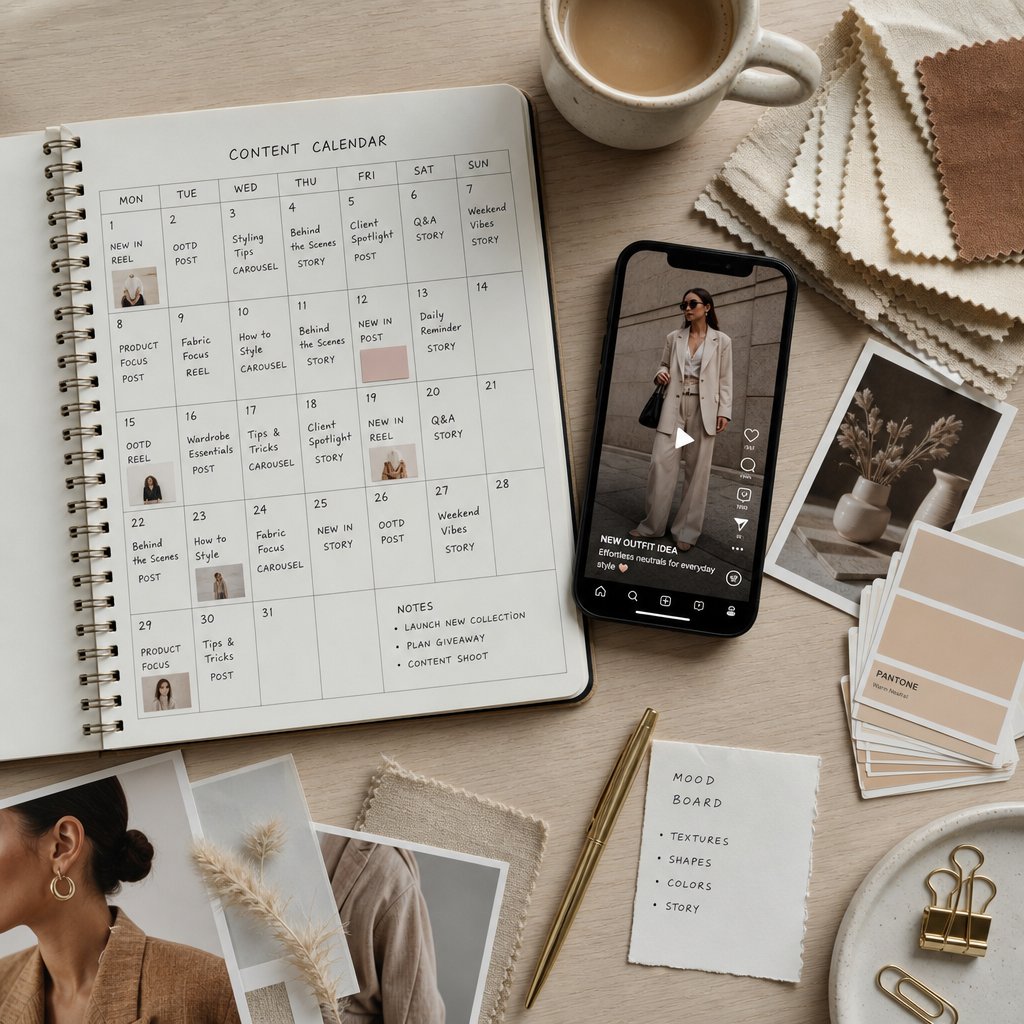
Batch your distribution the same way you batch your filming. Dedicate one session to editing platform-specific versions, write all captions at once, and schedule posts using native tools or a simple content calendar. This approach keeps your publishing consistent without requiring daily creative decisions.
Growing an Audience as a Fashion Video Creator
Consistency builds trust with algorithms and people alike. Data from short-form video research suggests posting three to five times per week on TikTok and Instagram Reels as a strong baseline, with two to three weekly uploads on YouTube Shorts. A steady rhythm outperforms sporadic bursts every time because platforms reward creators who show up reliably.
Niche positioning matters more than broad appeal. A creator known specifically for minimalist workwear styling or vintage denim finds will build a loyal audience faster than someone posting generic fashion content. Specificity helps the algorithm categorize your videos and serve them to the right viewers.
Collaboration is how you borrow audiences without spending money. Duets, stitch responses, and joint styling challenges with creators in adjacent niches introduce your content to viewers who already care about fashion but have not found you yet. Think of it as learning how to start a conversation with a new community through shared creative work rather than cold outreach.
Leveraging trends without losing identity requires a filter: does this trending sound or format let me showcase my styling perspective, or does it just make me look like everyone else? The best fashion creators adapt trends to reinforce their point of view rather than abandoning it for temporary reach.
- Post timing: Publish when your specific audience is active. Check platform analytics for peak engagement windows rather than following generic advice.
- Hashtag strategy: Use 5 to 10 hashtags per post, mixing broad discovery tags (like #outfitinspo) with niche-specific ones (like #minimaliststyle or #vintagedenim) to balance reach and relevance.
- Engagement tactics: Reply to comments within the first hour. Pin a question as your first comment to spark conversation. Respond to viewer questions with new video content.
- Repurposing cadence: Stagger platform-specific versions across different days rather than posting everywhere simultaneously, giving each version its own window to gain traction.
- Collaboration rhythm: Aim for one collaborative piece per week, whether a duet, a shared challenge, or a creator tag series that introduces your work to new audiences.
Distribution is a system, not a one-time effort. Build the habit, refine based on what your analytics reveal, and let compounding consistency do the heavy lifting. The creators who sustain growth are rarely the ones with the biggest single viral moment. They are the ones who show up with clear, niche-specific content on a predictable schedule, week after week, until the algorithm and the audience both recognize them as a reliable source of fashion inspiration.
Sustaining that pace, though, depends on how efficiently you can move from idea to published clip. The tools and workflows you choose for editing and production determine whether consistent output feels manageable or exhausting.
Tools and Workflows for Faster Fashion Video Production
Publishing frequency wins on every platform, but only if the quality holds. The gap between "I should post more" and actually doing it usually comes down to one bottleneck: post-production. Filming three outfits takes 30 minutes. Editing those clips into polished, platform-ready content can eat an entire afternoon if your workflow is not built for speed.
The landscape of production tools has shifted dramatically. You no longer need to choose between a slow, expensive professional pipeline and scrappy content that looks unfinished. A range of solutions now exists across three tiers: mobile editing apps for solo creators, desktop software for teams producing at volume, and AI-powered platforms that skip traditional filming entirely by turning product imagery into dynamic video clothes content.
Editing Tools and Workflow Optimization
Your editing tool should match your output cadence, not your ambition. A creator posting five Reels per week needs a different setup than a brand producing one polished campaign video per month.
For mobile-first creators, Splice works as a practical default because it puts desktop-style controls into a streamlined mobile timeline and exports directly to TikTok, YouTube, Instagram, and more from the same app. Speed ramping, masks, chroma key, and color adjustment are all available without jumping to a laptop. CapCut adds AI-driven auto-captions and template-based editing for trend-chasing content, though its broad content licensing terms are worth reviewing if you produce client or brand work. VN handles multi-track timelines and 4K exports for creators who need more complex composites on mobile.
The efficient post-production pipeline for consistent clothes video output looks like this:
- Batch import and organize: Pull all footage from a single shoot into one project. Tag clips by outfit or angle so you can find them without scrubbing.
- Template your edits: Save your preferred color grade, text style, and transition timing as a reusable preset. Apply it to every new project so each video feels cohesive without rebuilding from scratch.
- Edit to audio first: Drop your music track, mark the beats, then place footage on those markers. This approach is faster than cutting footage and trying to find music that fits afterward.
- Export platform-specific versions: Adjust captions, crop framing slightly for different safe zones, and swap audio if a trending sound differs between TikTok and Reels. Ten extra minutes per platform, not a full re-edit.
Desktop software like DaVinci Resolve or Adobe Premiere Pro still makes sense for editorial fashion content where precise color grading and multi-layer compositing matter. But for the daily rhythm of social-first fashion clips, mobile editors eliminate the friction of transferring files, opening a laptop, and context-switching between devices.
AI-Powered Fashion Video Creation
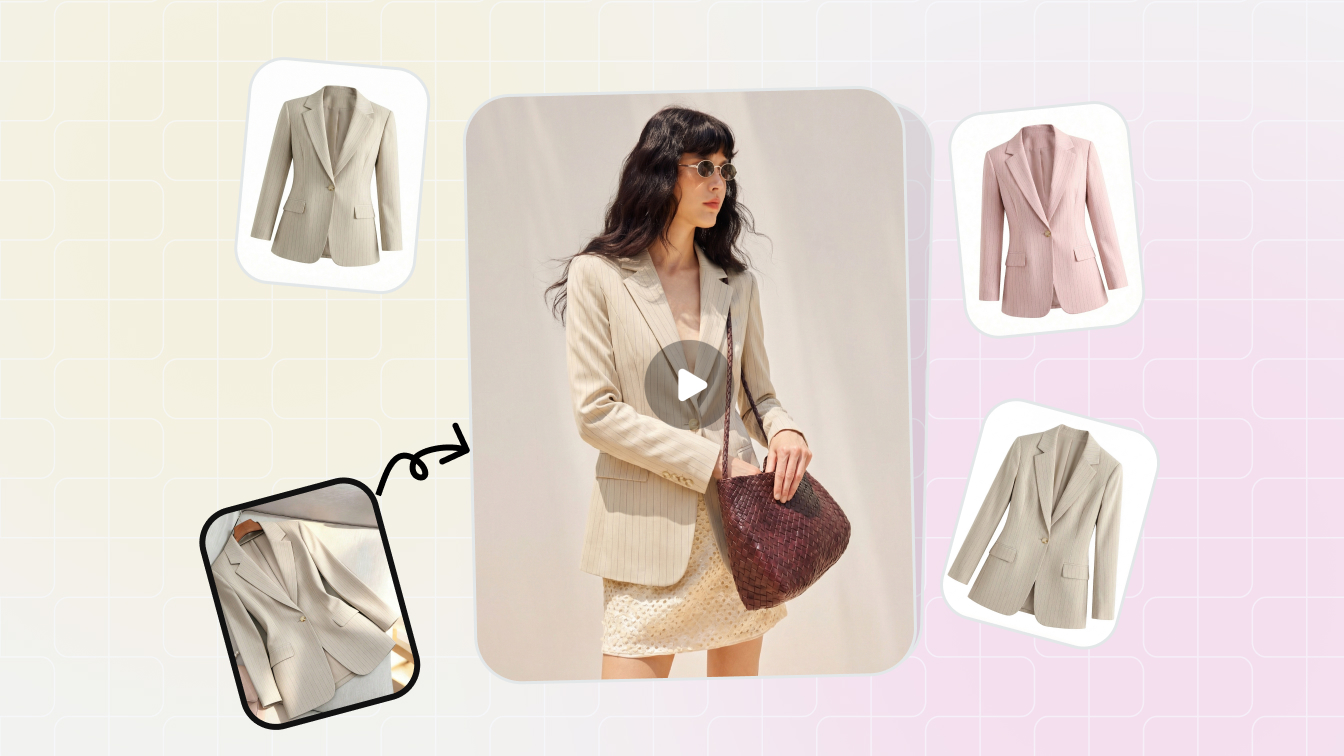
Here is where the production model changes fundamentally. Traditional filming requires a model, a location, lighting, and a camera operator. AI-powered platforms bypass that entire chain by generating video directly from product photos. Upload a garment image, select an animation style or AI model, and receive a short fashion clip in minutes rather than days.
This matters most for ecommerce teams and apparel brands managing large catalogs. Filming every SKU individually is not realistic when you carry hundreds of products. AI generation lets you produce a video for each item without booking a single shoot. Tools like Snappyit's fashion video platform enable brands to turn static product imagery into dynamic fashion visuals, reducing production time from days to minutes while maintaining the visual quality needed for social and product page content.
The broader AI fashion video landscape includes purpose-built tools for different needs. Some focus on realistic fabric movement and cinematic output for lookbook content. Others optimize specifically for social commerce, generating platform-ready clips with built-in music and commercial licensing. Dedicated fashion AI platforms report that adding video to product pages measurably increases engagement, time on site, and conversion rates compared to static images alone.
The practical question is which approach fits your situation. Here is how the three main production methods compare:
| Approach | Time Investment | Skill Required | Output Quality | Best For |
|---|---|---|---|---|
| AI-powered generation (Snappyit, similar platforms) | Minutes per video | Low: upload image, select style | Strong for product and social content | Ecommerce teams, high-volume catalogs, fast social content |
| Template-based mobile editing (Splice, CapCut, InShot) | 30-60 minutes per video | Moderate: basic editing and timing skills | Good to excellent depending on source footage | Solo creators, small brands with existing footage |
| Traditional filming and editing (studio shoot + Premiere/Resolve) | Days to weeks per project | High: camera, lighting, editing expertise | Highest ceiling for editorial and cinematic work | Brand campaigns, editorial content, flagship pieces |
The cost gap reinforces the time difference. Traditional production for even a straightforward brand video can run $5,000 to $25,000 once you factor in crew, talent, equipment, and post-production. AI video production delivers comparable output for a fraction of that, particularly for social content and product showcases. The gap widens at scale: producing ten variations of a traditional video multiplies cost linearly, while AI generation does not.
None of these approaches needs to be exclusive. The most efficient fashion brands layer them: AI-generated clips for daily social volume and product pages, mobile-edited content for personality-driven posts that need a human touch, and traditional production reserved for seasonal campaigns or hero content that demands cinematic quality. That layered model keeps your feed active without draining your budget or your team's energy, and it sets the foundation for scaling your fashion video output as your brand grows.
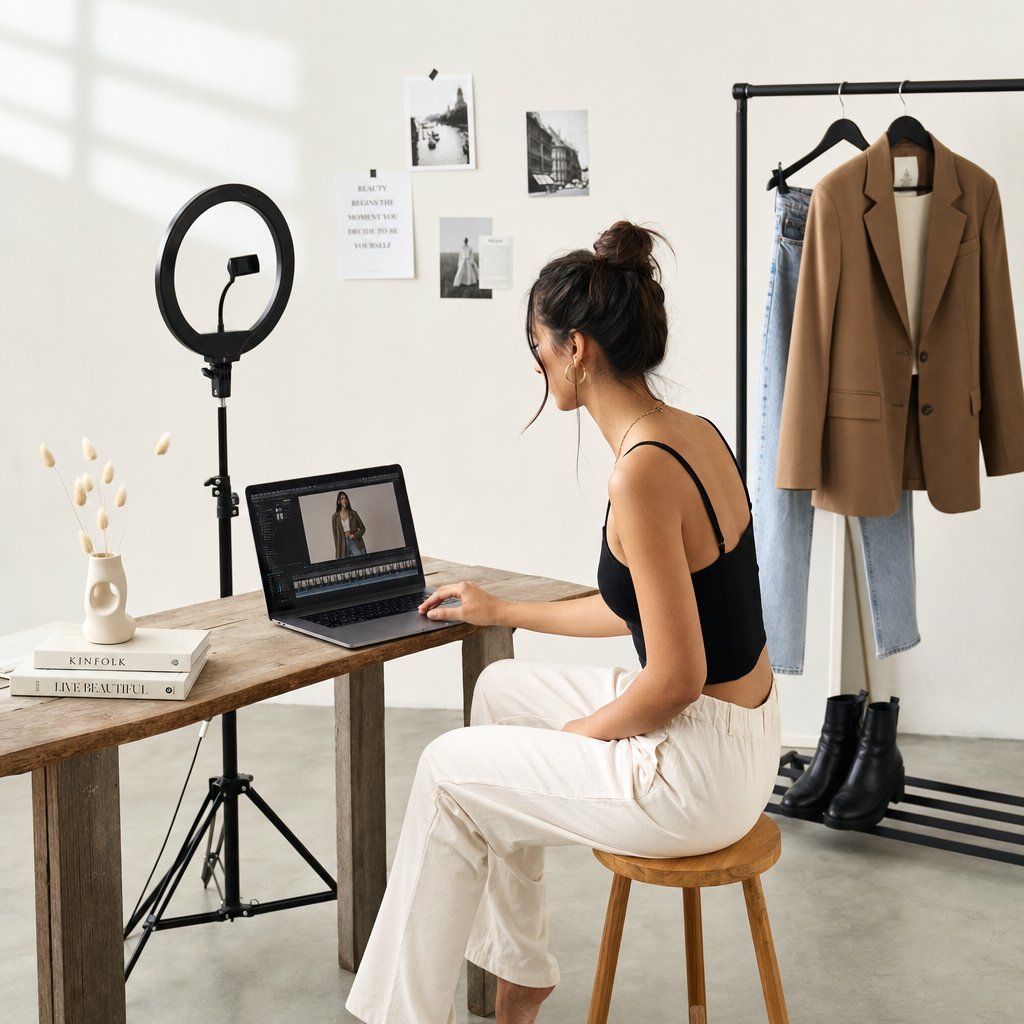
Getting Started With Your Fashion Video Strategy
Knowing the principles is one thing. Sitting down to actually produce your first clip, or your fiftieth, is where most people stall. The gap between understanding and action usually is not about skill. It is about having a clear sequence that removes the decision fatigue of figuring out what to do next.
Whether you are an independent creator filming in your bedroom, a small apparel brand trying to keep your social feed alive, or an ecommerce team managing hundreds of SKUs, the starting point looks different. But the underlying logic stays the same: start simple, stay consistent, and layer complexity only after the basics are working.
Your First Short Fashion Video in Five Steps
Forget perfection. Your goal with the first clip is to complete the full cycle from concept to published post. You can refine everything on the second, third, and tenth attempt. Here is the framework that gets you filming rather than planning indefinitely:
- Pick one outfit and one emotion. Do not try to showcase an entire collection. Choose a single look and decide what feeling it should evoke: confidence, ease, rebellion, softness. That emotion guides every decision that follows.
- Choose your music first. Find a track that matches your intended mood and let its tempo set your pacing. A 5 minute timer spent browsing trending audio on your target platform is enough to find something that works.
- Film five to eight shots in natural light. One full-body, one mid-shot, two to three detail close-ups, and one movement shot. Keep your phone steady or use a basic tripod. Fifteen minutes of filming gives you more than enough material for a 15-to-30-second clip.
- Edit to the beat. Drop your footage onto a timeline, align your strongest shots to the musical downbeats, and cut anything that does not serve the emotion you chose in step one. A 15 minute timer is a healthy constraint for your first edit session. Do not let it stretch into hours.
- Publish and observe. Post to one platform. Watch your retention metrics. Note where viewers drop off. That data tells you exactly what to adjust next time, which is more valuable than any amount of pre-production planning.
That cycle, repeated weekly, builds both skill and algorithmic momentum faster than spending a 20 minute timer perfecting a single clip that never goes live.
Scaling Fashion Video Output for Brands
Independent creators can sustain growth through personal effort and gradual improvement. Brands face a different challenge: producing enough content to stay visible across multiple platforms without exhausting a small team or blowing through production budgets.
The solution is a layered production model that matches effort to purpose:
- Daily social volume: Use AI-powered tools to generate product-focused clips directly from your existing imagery. Platforms like Snappyit's fashion video tool let ecommerce teams turn catalog photos into dynamic video content in minutes, keeping product pages and social feeds active without scheduling shoots for every SKU.
- Weekly personality content: Film one batch session per week using the five-step framework above. These clips carry your brand voice, show styling in context, and build the human connection that AI-generated content cannot replicate.
- Monthly hero pieces: Reserve traditional production for seasonal campaigns, brand stories, or collaboration content that demands cinematic quality and narrative depth.
This three-tier approach means your feed never goes dark, your team never burns out, and your highest-effort content gets the attention it deserves because it is not competing with your own daily posts for production time.
The brands that win at short fashion videos are not the ones with the biggest budgets. They are the ones with the clearest systems: a repeatable filming process, an efficient editing workflow, and a distribution rhythm that compounds over time. Start with one clip this week. Refine next week. Scale the week after. The algorithm rewards consistency, and your audience rewards authenticity. Give them both, and you will build the kind of fashion video presence that people return to, not scroll past.
Make Short Fashion Videos That People Rewatch, Not Skip FAQs
How long should a short fashion video be?
The ideal length depends on your platform. On TikTok, 15 to 60 seconds works best for fashion content because the algorithm rewards watch-time completion and replays. Instagram Reels perform strongest between 7 and 30 seconds, where shorter clips encourage saves and shares. YouTube Shorts can run up to 3 minutes, but 30 to 60 seconds hits the sweet spot for fashion discovery content. Regardless of platform, the first 1 to 4 seconds determine whether viewers stay or swipe, so front-load your strongest visual moment.
What equipment do I need to make professional-looking fashion videos?
You can produce professional fashion clips with a smartphone that shoots 1080p or higher, a basic tripod or phone stabilizer, and natural window light. The key is intentional lighting and composition rather than expensive gear. Position your subject parallel to a large window for soft, even illumination. Use a ring light or single softbox for consistent indoor shoots. A gimbal adds smooth camera movement for tracking shots. Mobile editing apps like Splice or CapCut handle color grading, beat-synced cuts, and platform-specific exports without needing a desktop setup.
How can I make fashion videos without filming models?
AI-powered fashion video platforms now let you skip traditional filming entirely. Tools like Snappyit's fashion video platform (snappyit.ai/fashion-video) generate dynamic video content directly from product photos. You upload a garment image, select an animation style or AI model, and receive a short fashion clip in minutes. This approach works especially well for ecommerce teams managing large catalogs where filming every SKU individually is not realistic. You can also use flat-lay animations, fabric close-ups, and stop-motion techniques that showcase garments without requiring a model on set.
How often should I post short fashion videos to grow my audience?
Research suggests posting 3 to 5 times per week on TikTok and Instagram Reels, with 2 to 3 weekly uploads on YouTube Shorts as a strong baseline. Consistency matters more than volume. A steady rhythm outperforms sporadic bursts because platform algorithms reward creators who publish reliably. Batch your filming into one session per week, then edit and schedule platform-specific versions across different days. This staggered approach gives each video its own window to gain traction without requiring daily creative decisions.
What makes a short fashion video go viral?
Viral fashion clips share common traits: a strong visual hook in the first 2 seconds, beat-synced editing that aligns cuts with music, and an emotional payoff that makes viewers want to rewatch or share. Transformation arcs and before-after reveals perform consistently well because the contrast creates satisfaction. Using trending audio boosts algorithmic distribution, but adapting trends to reinforce your unique styling perspective matters more than copying formats exactly. High watch-time completion and replay rates are the primary signals that push content to larger audiences across all platforms.