


Three Vintage Categories, Three AI Photo Workflows
Real vintage seller setups — dress form and on-figure phone shots — turned into catalog, editorial, and lifestyle covers. Same pipeline, three buyer-search behaviors covered.
Real Vintage Pieces Through the Snappyit Workflow
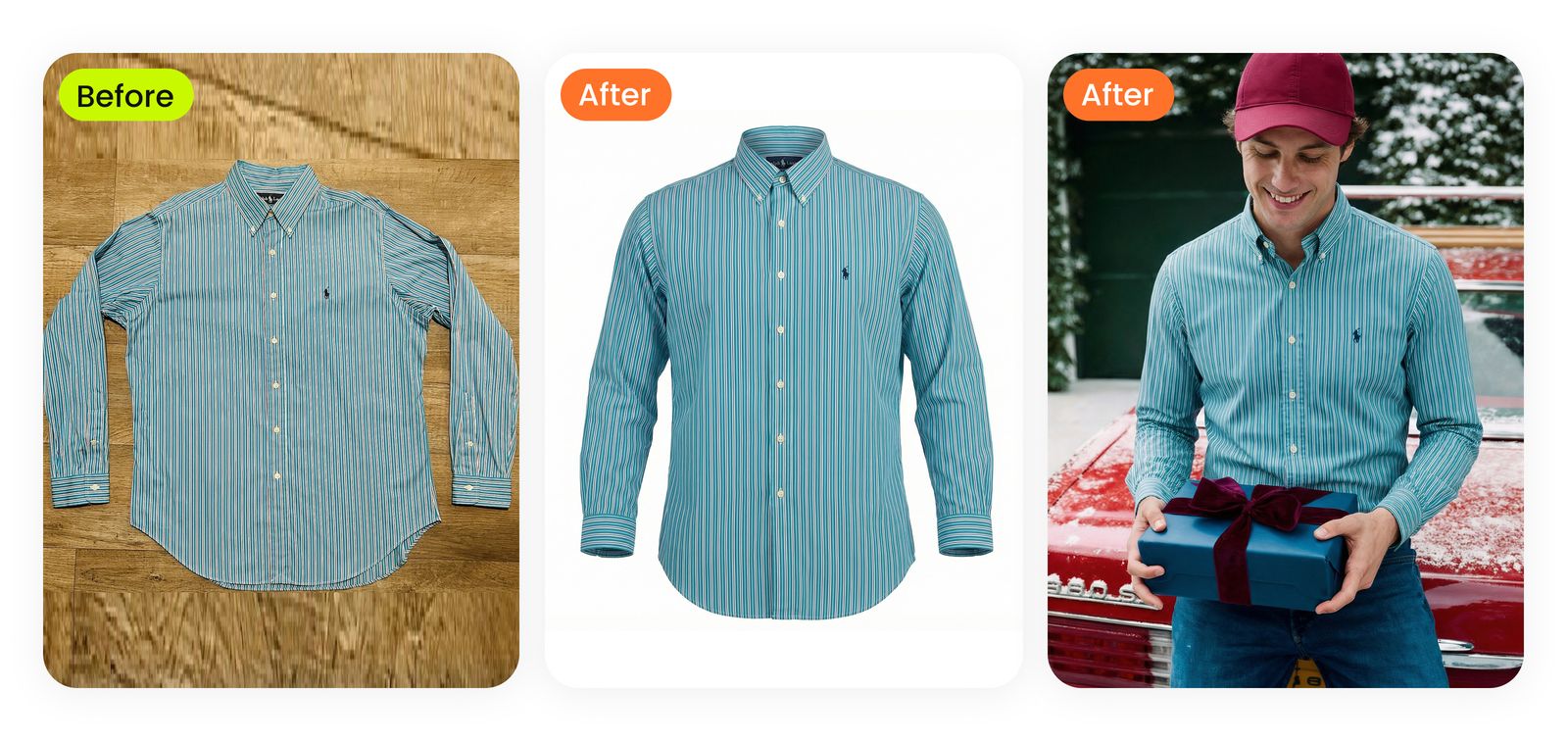
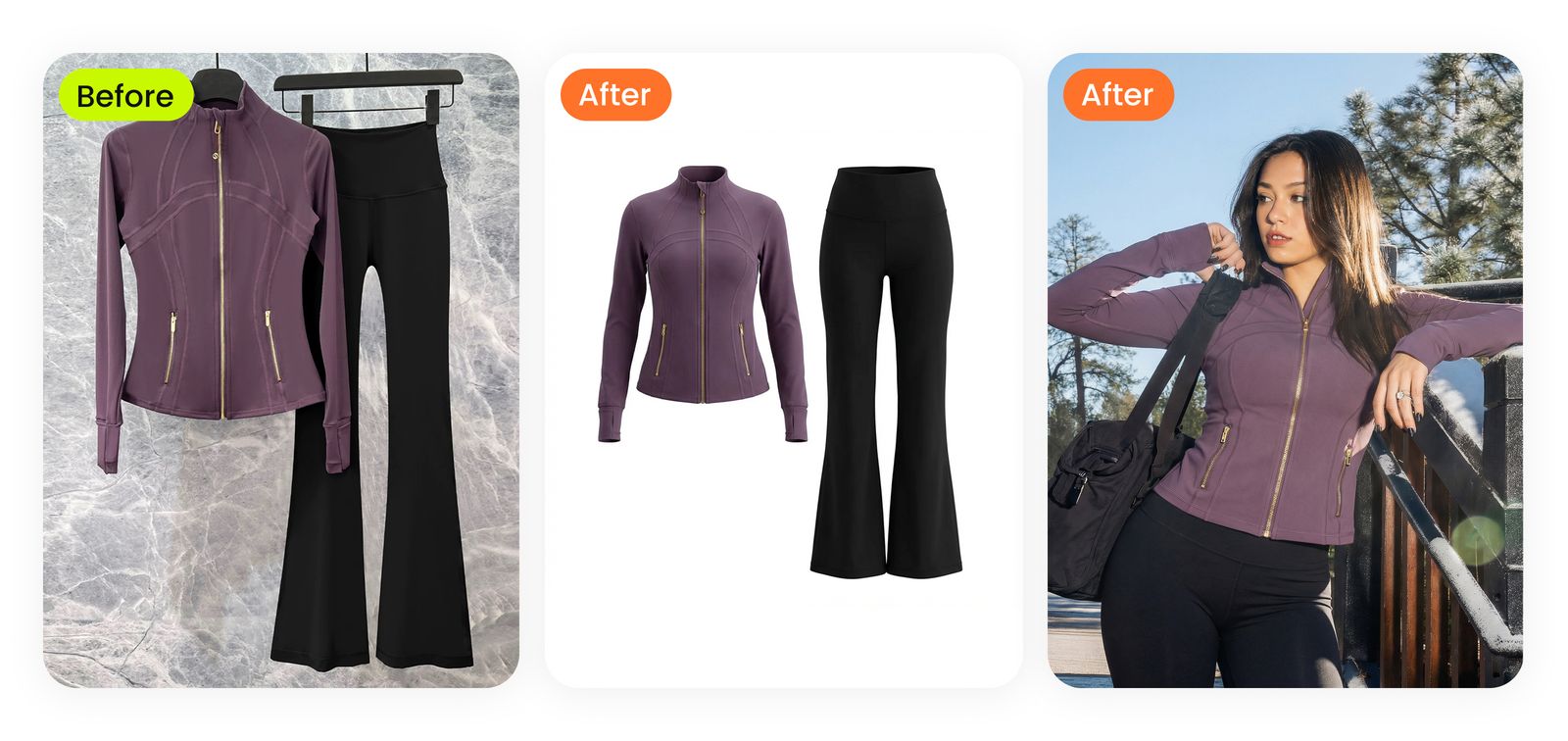
Four actual one-off vintage pieces — mannequin and flat-lay phone shots taken straight from a vintage seller's working setup, then pushed through AI ghost mannequin and AI fashion model. No re-shoots, no studio lights.
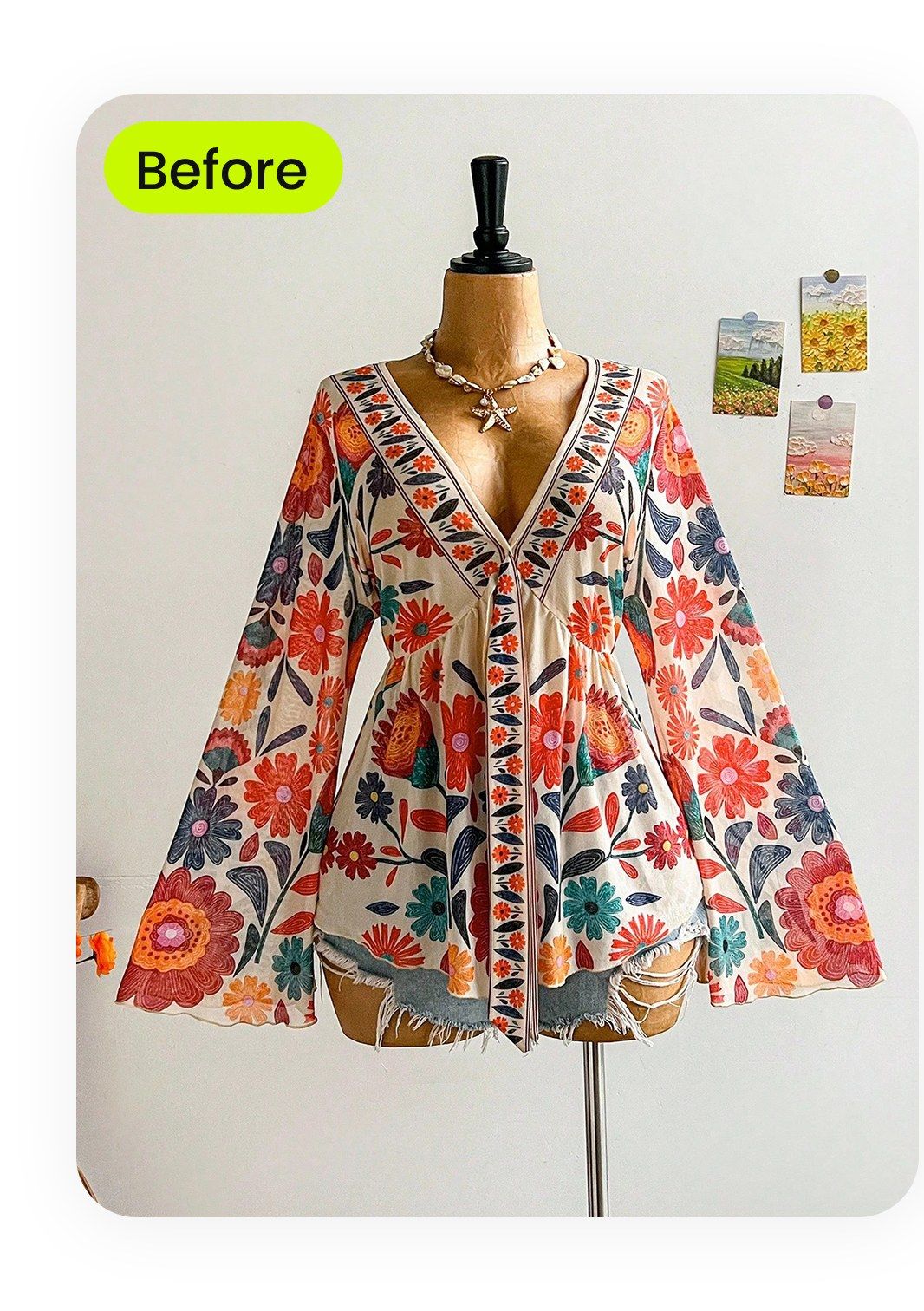
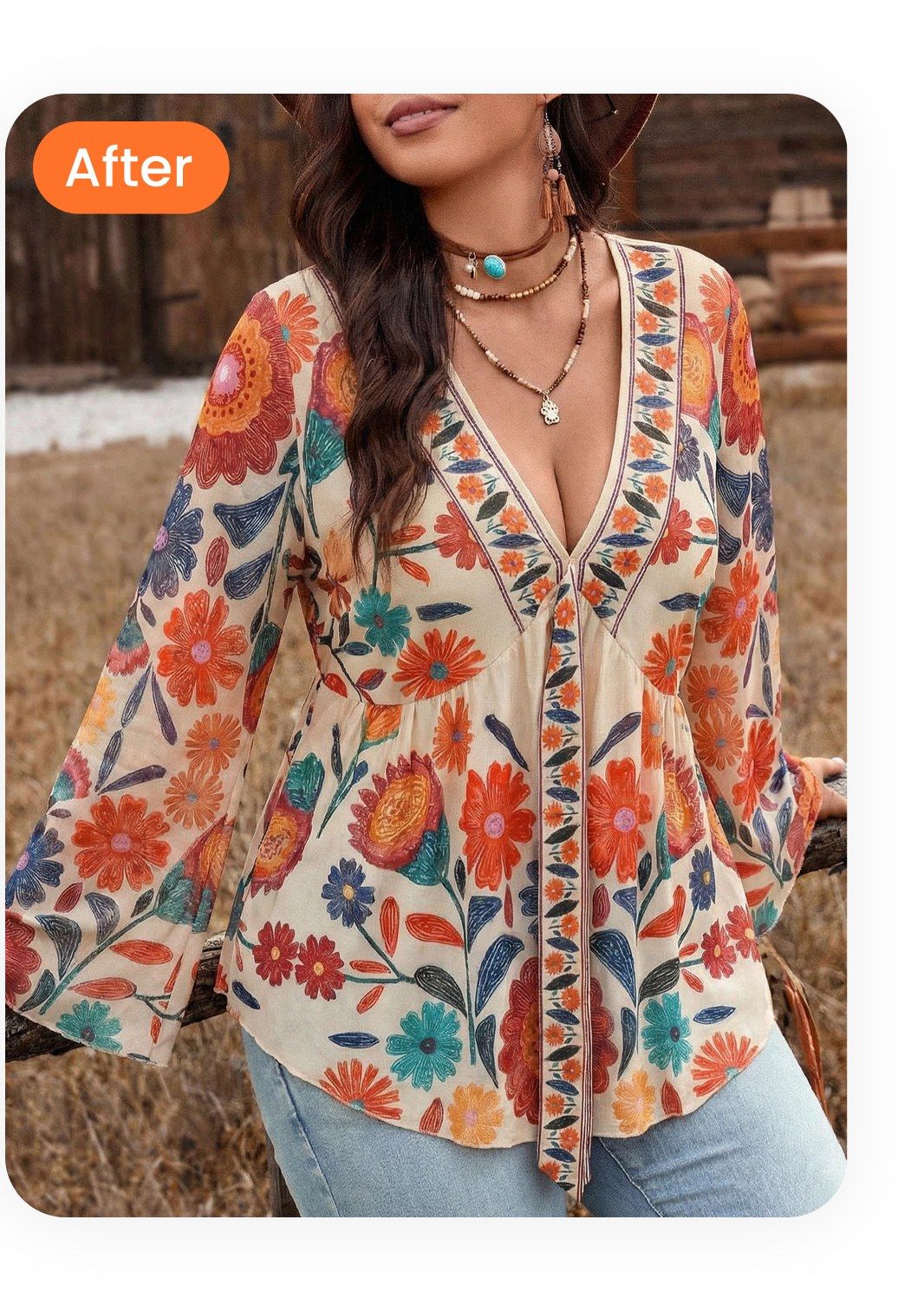
Each strip below shows the original on the left, the AI ghost mannequin in the middle, and the AI fashion-model lifestyle render on the right. Same pipeline, different vintage categories.
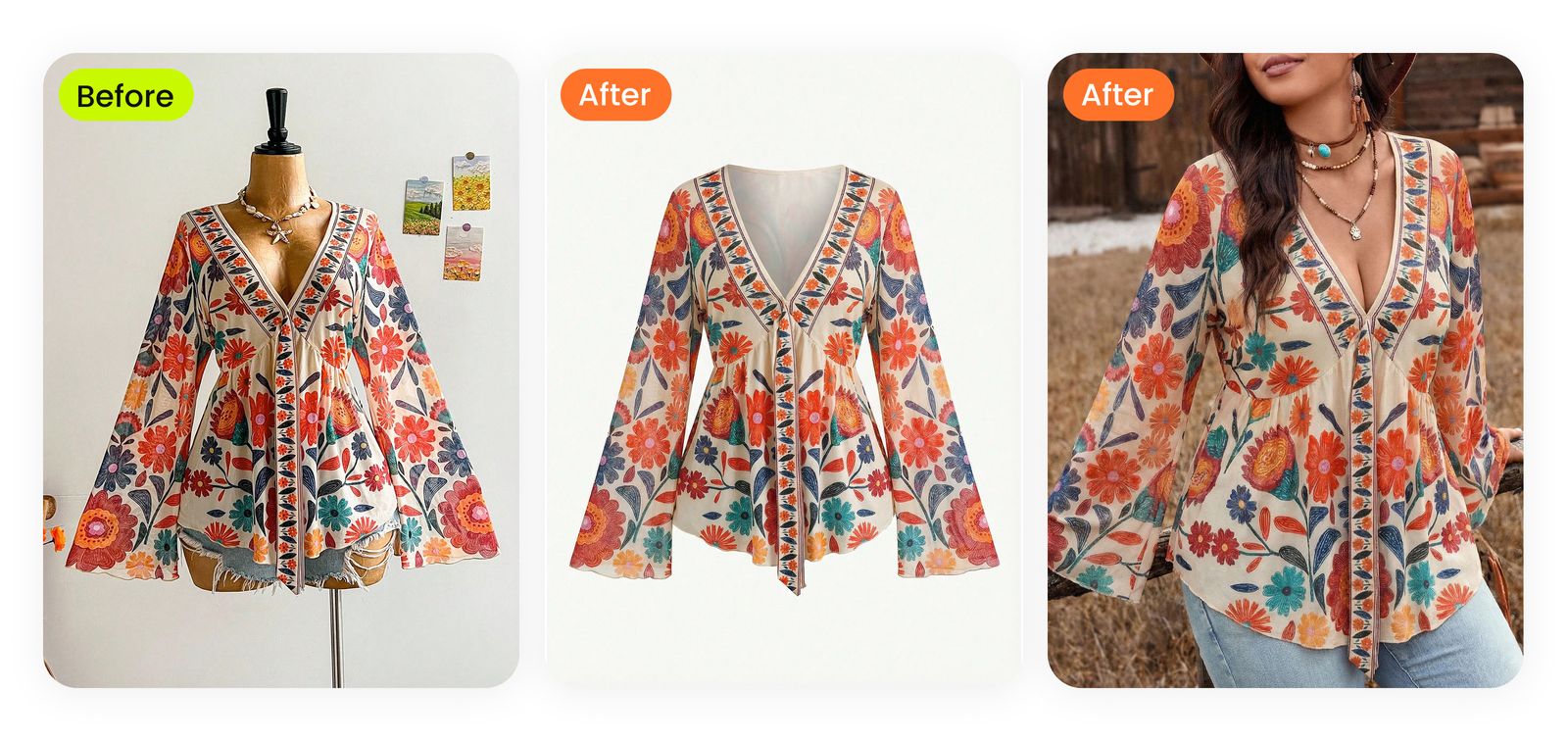
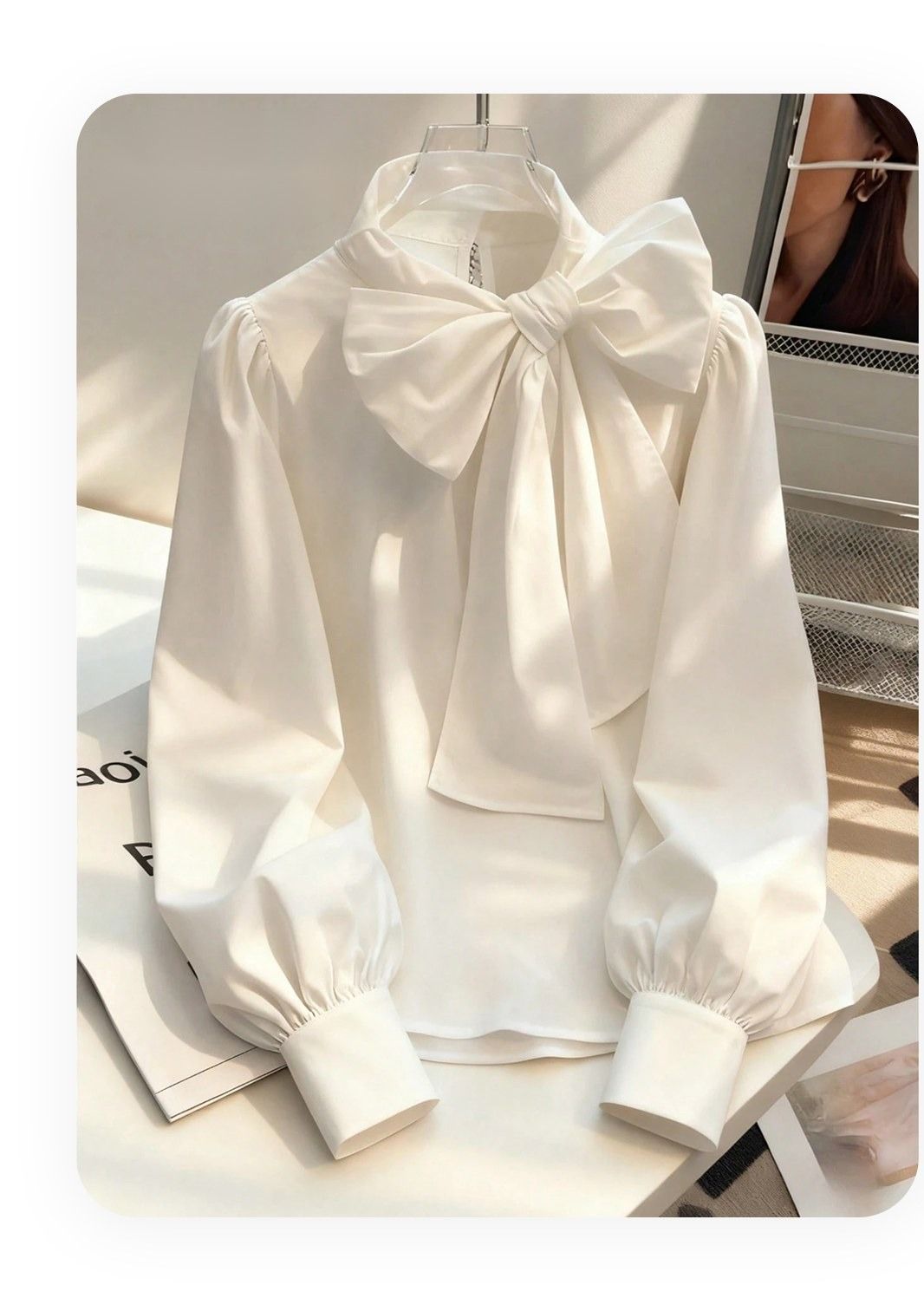
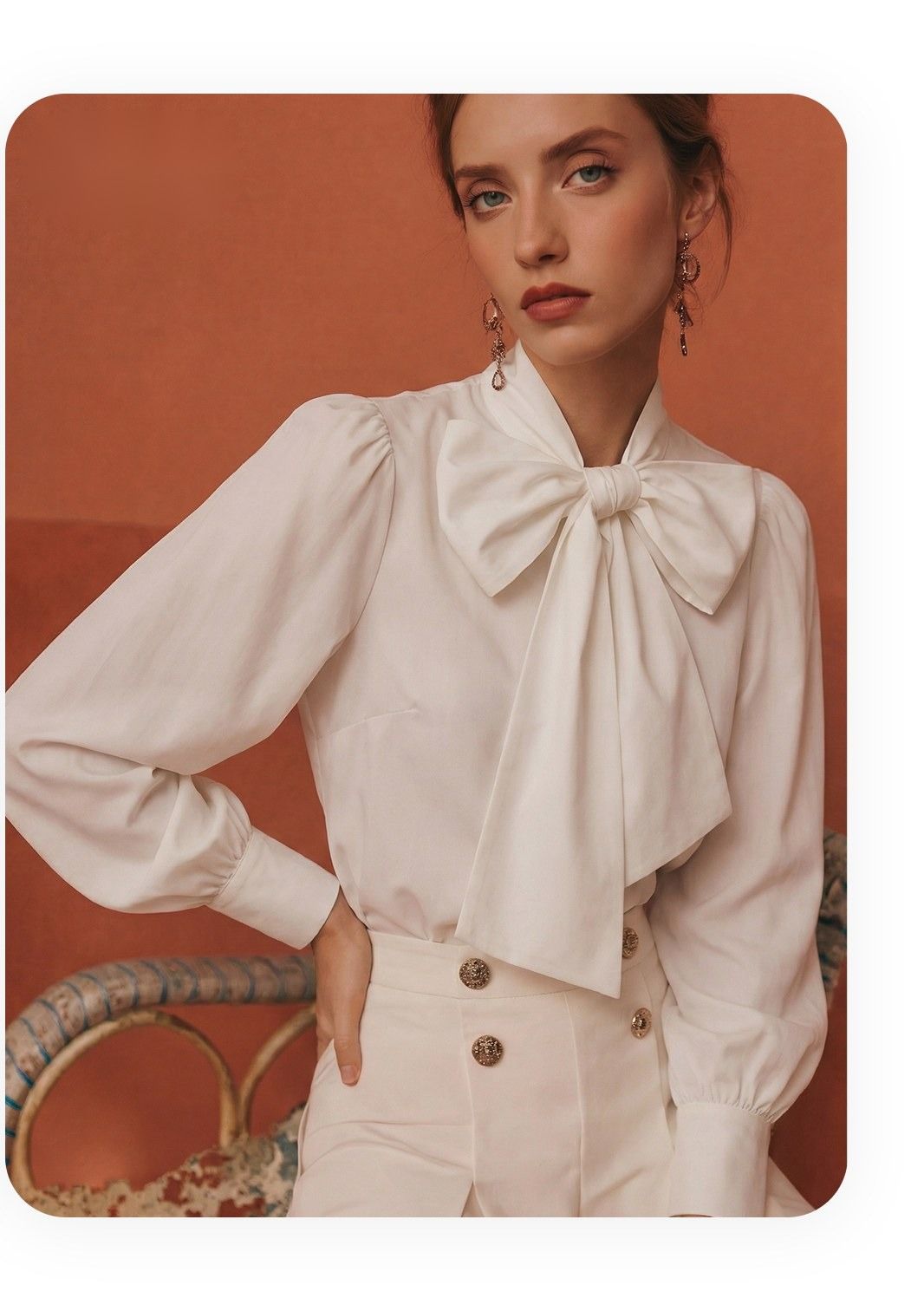
1970s boho floral blouse (one-off piece, dress-form pinned). Vintage sellers commonly shoot on a draped dress form to keep the silhouette period-correct. AI cleans up the pinning marks and delivers an editorial render that reads as Etsy / Depop premium tier.
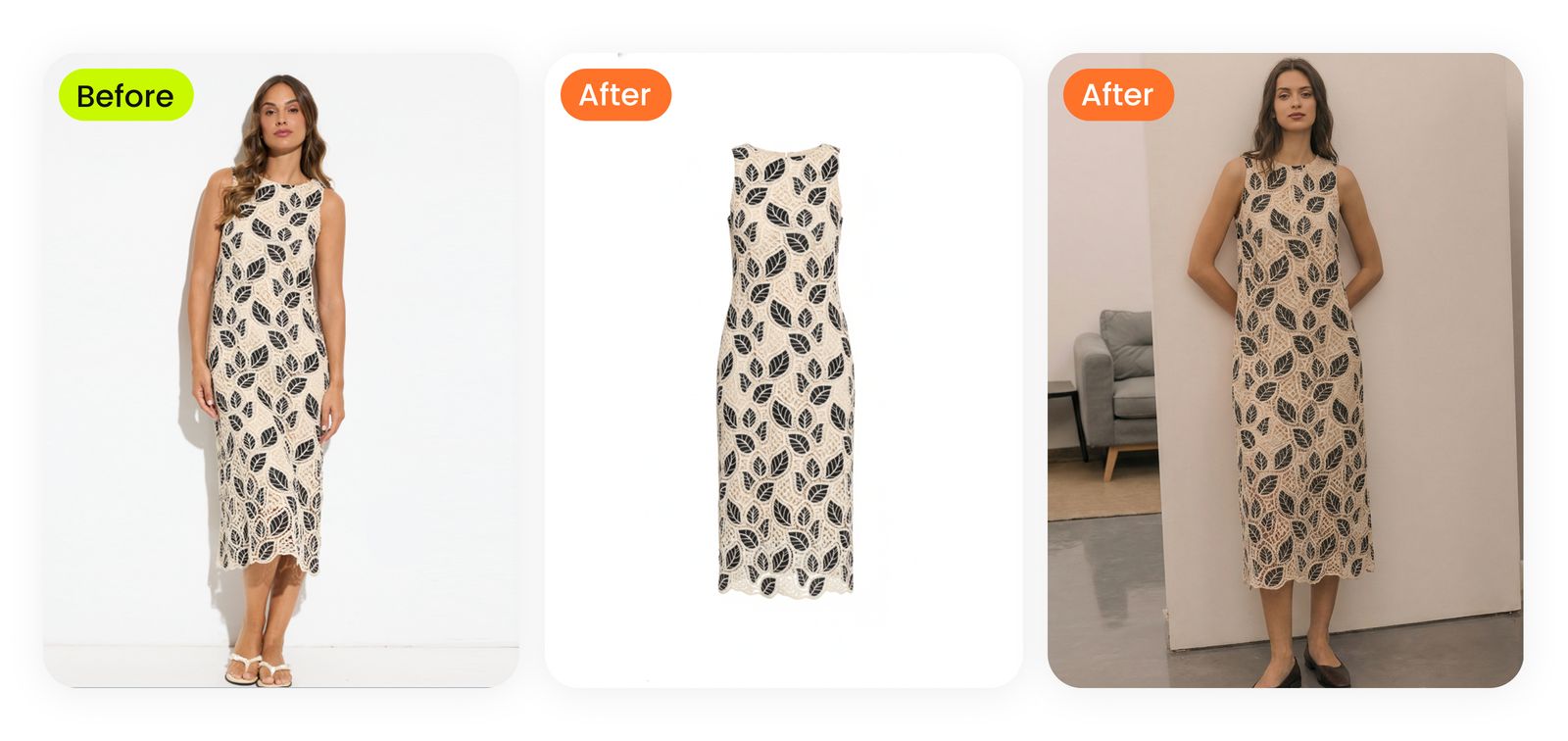
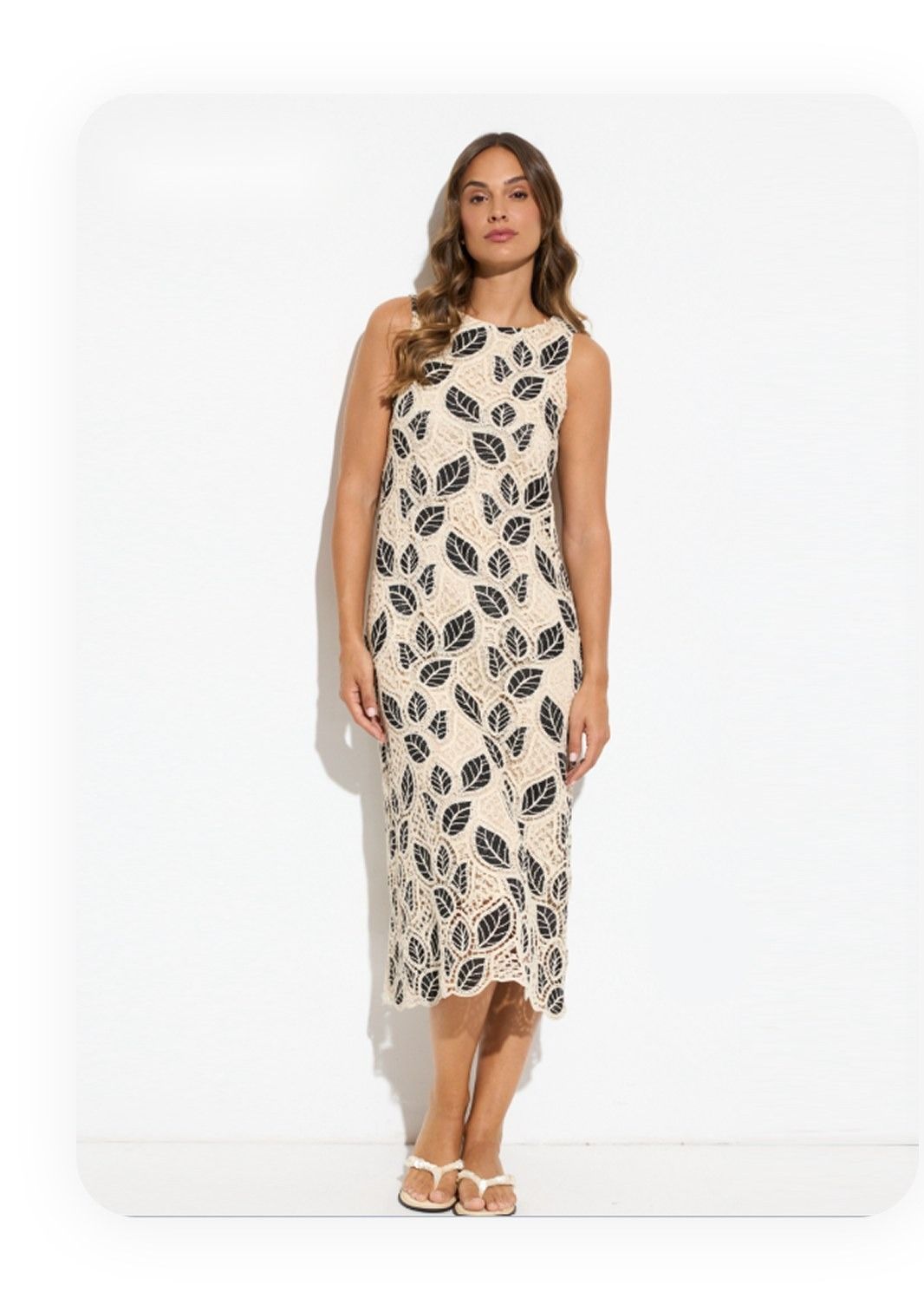
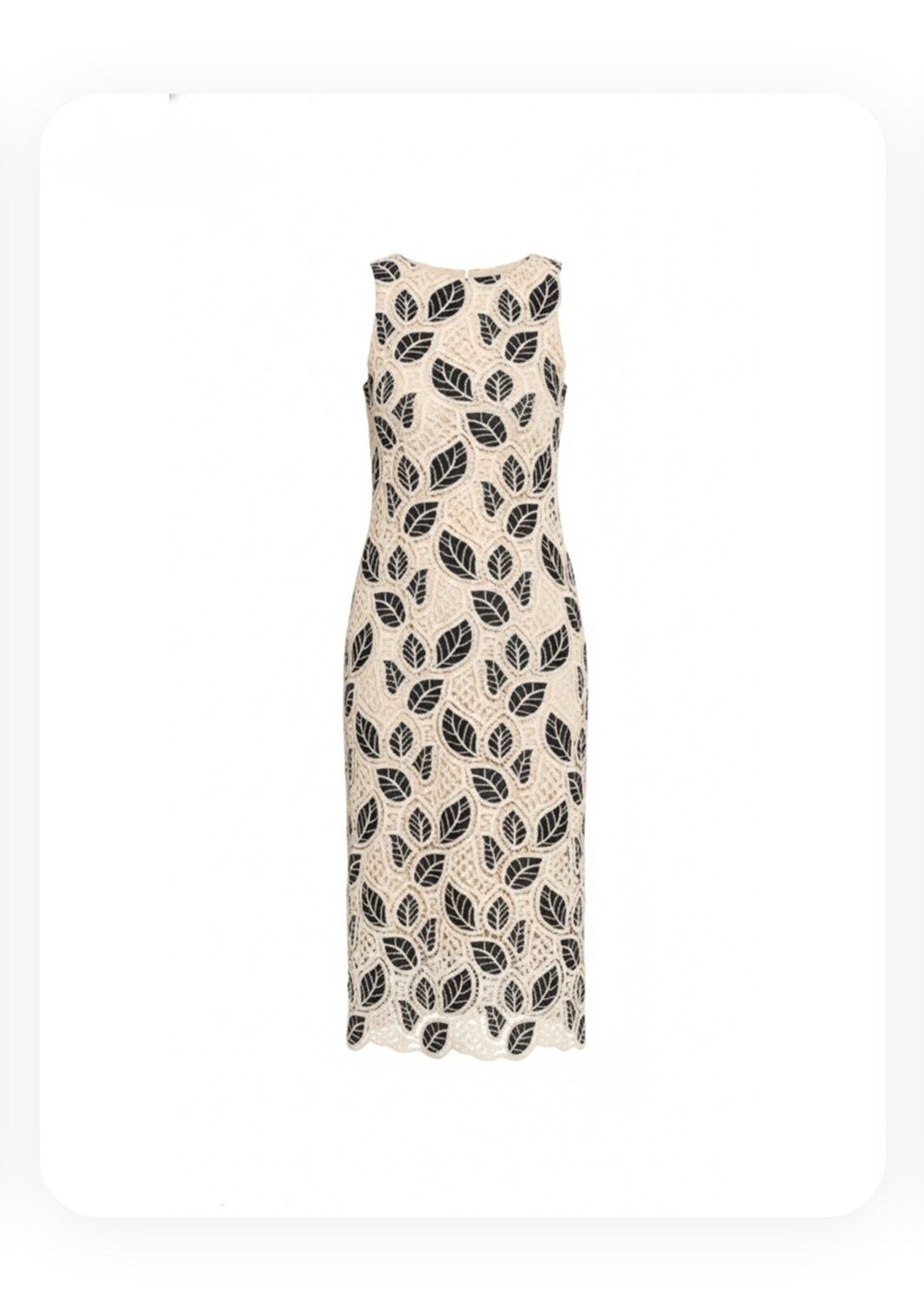
Leaf-print sleeveless midi. Busy patterns are where AI usually falls over — here Snappyit holds every leaf shape, scale, and orientation perfectly through both the ghost mannequin and on-model passes. Critical for vintage where pattern fidelity equals item authentication.
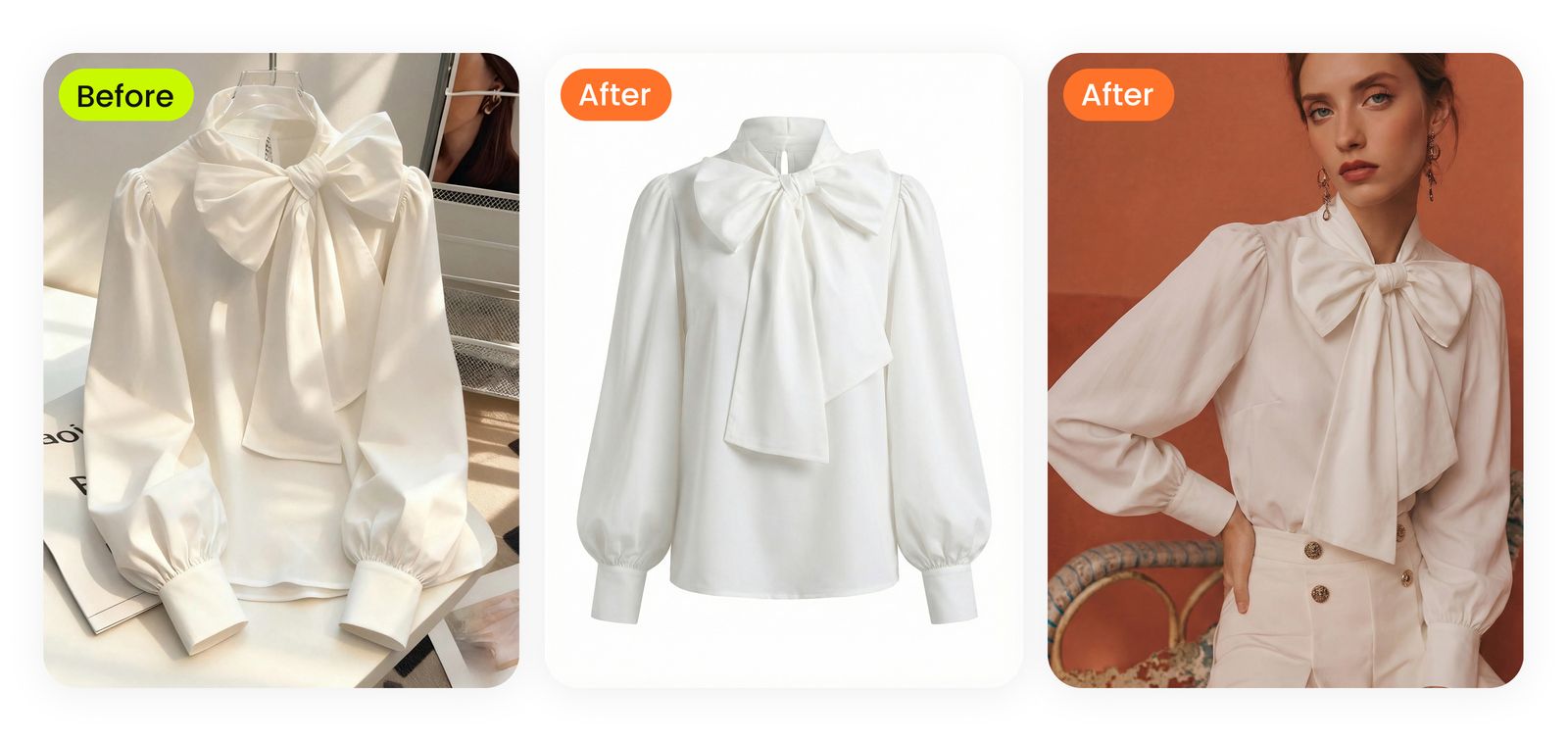
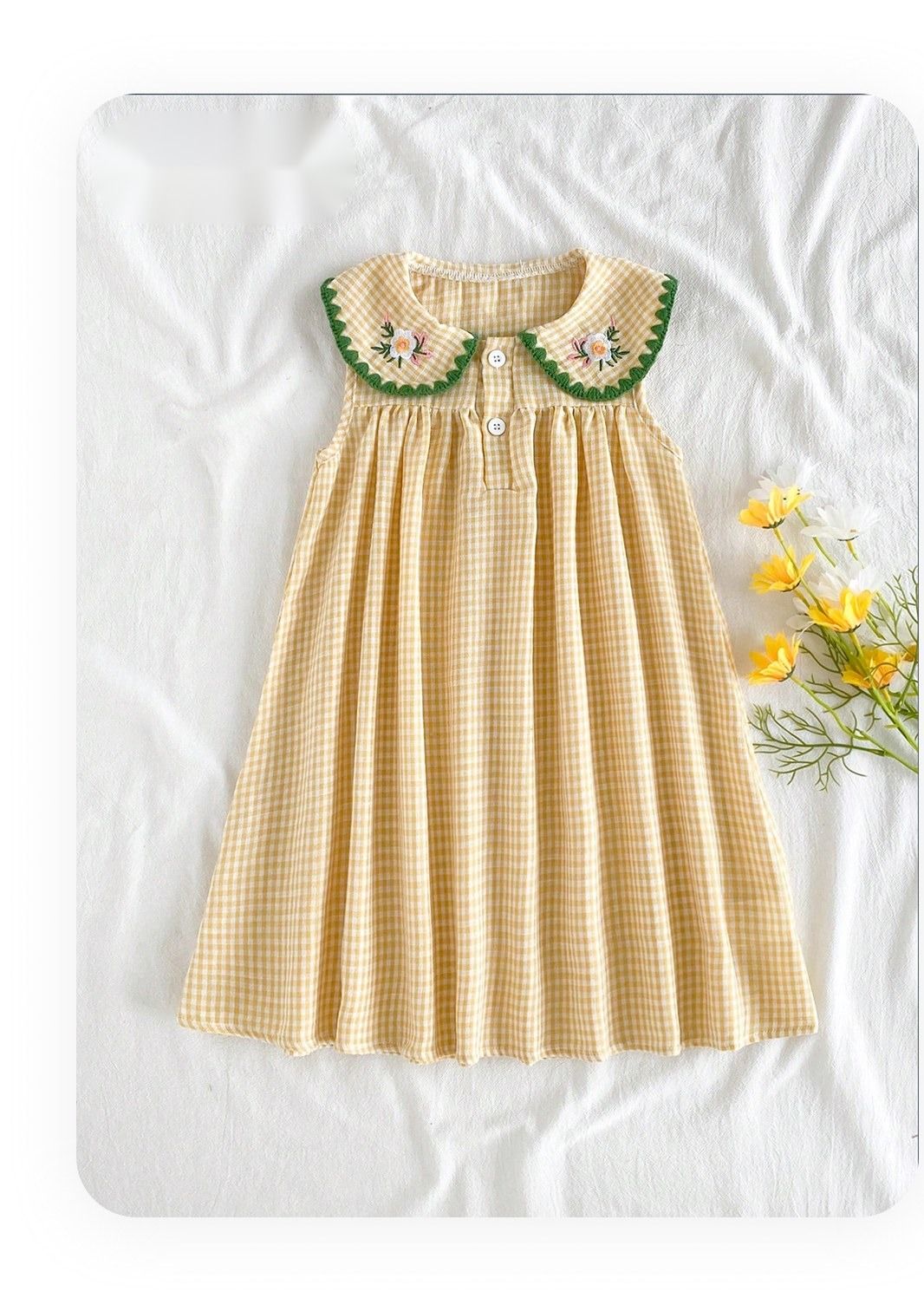
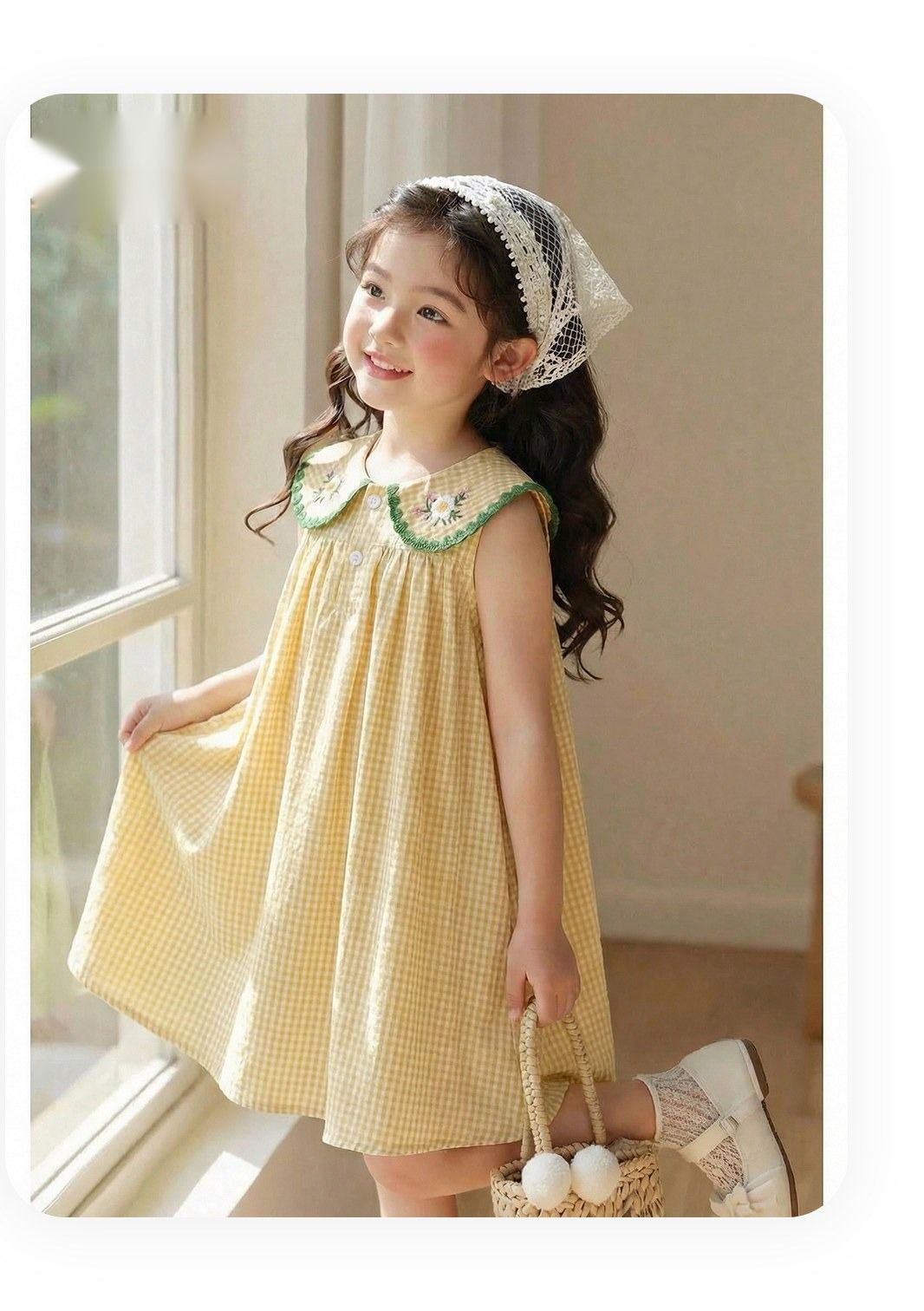
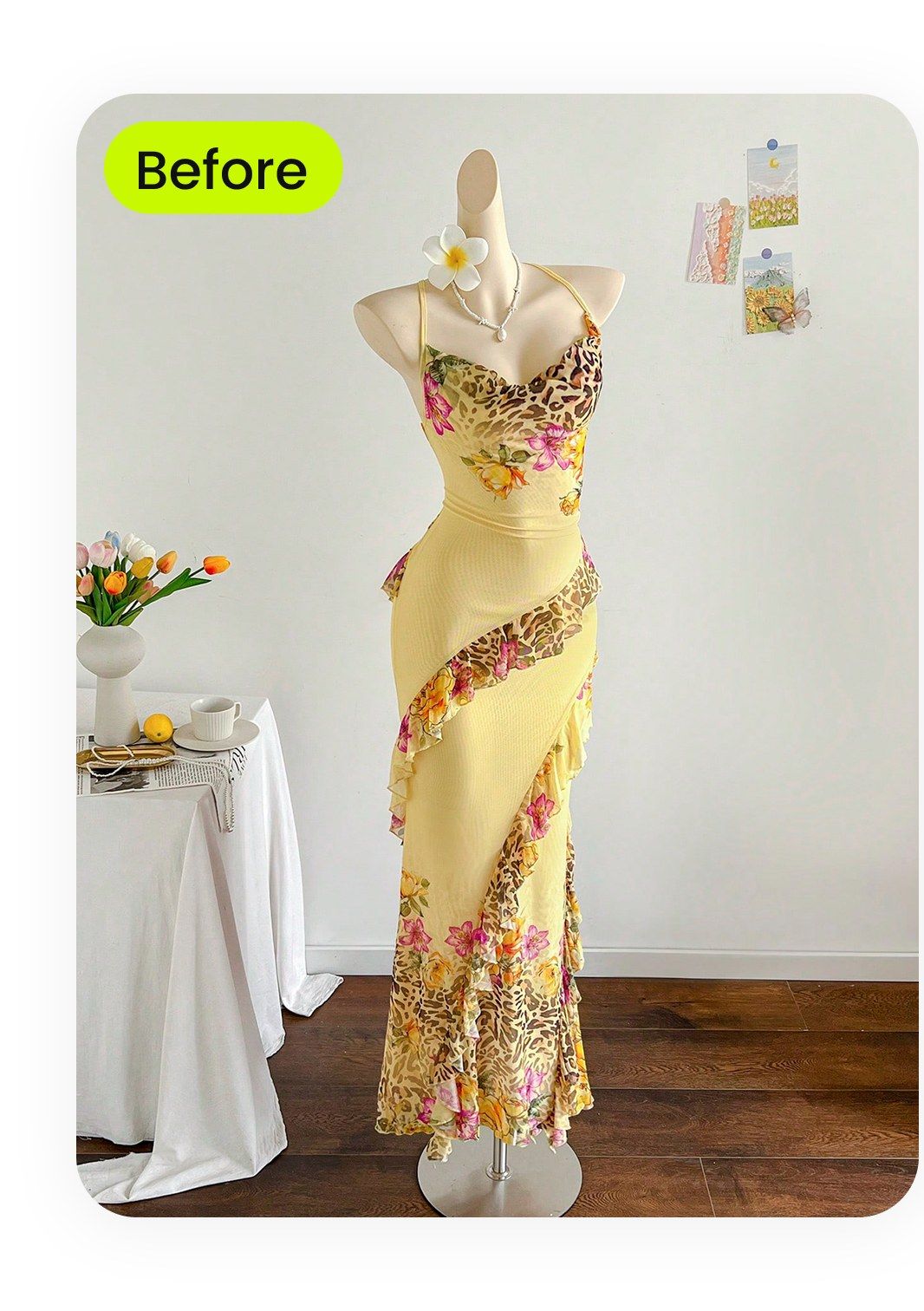
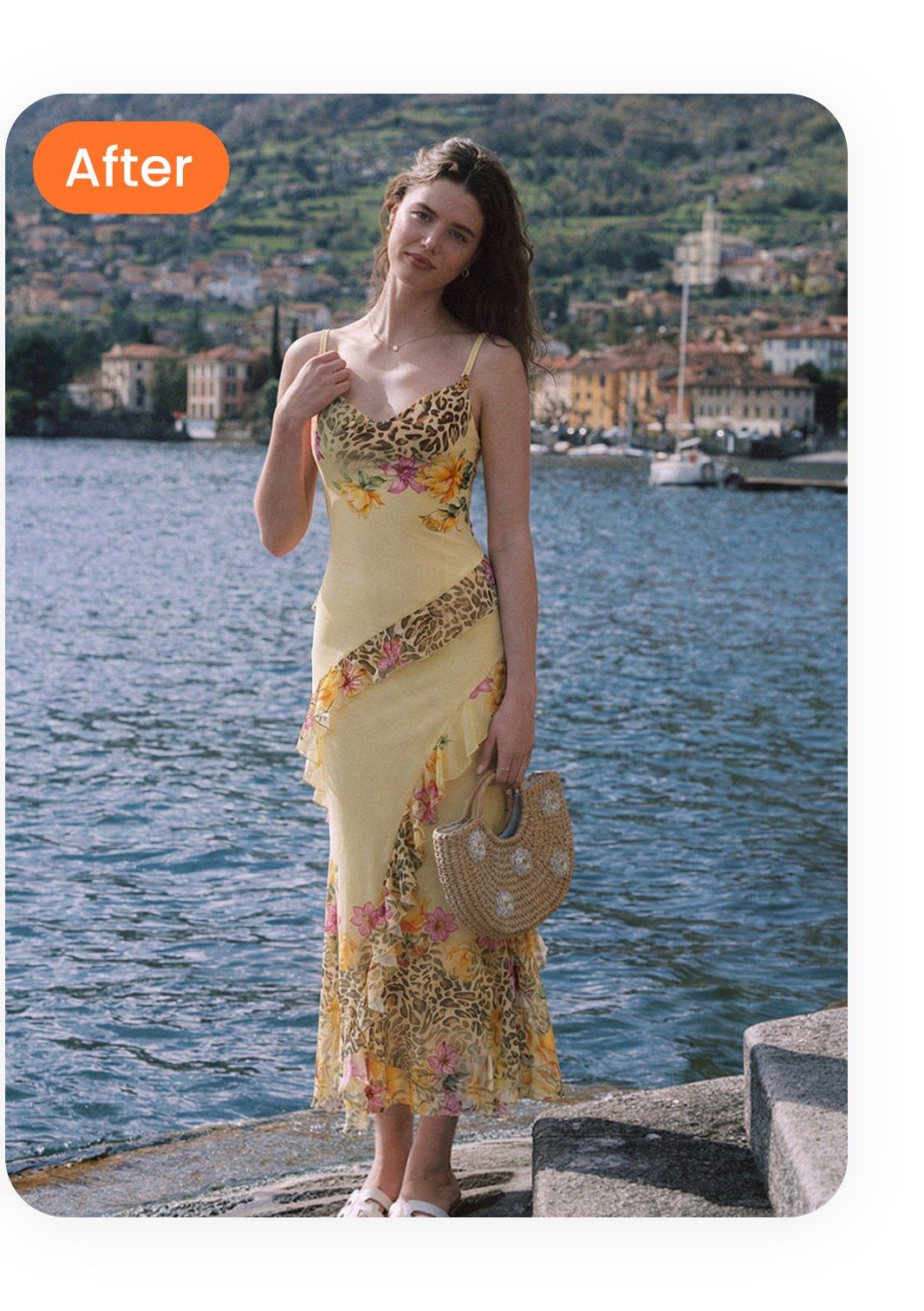
Vintage yellow floral maxi. The lifestyle render places the piece in a period-appropriate setting (Mediterranean lake town) without stock-photo blandness. The dress styling and accessories are AI-generated — the buyer sees how to wear the piece, which raises perceived value.
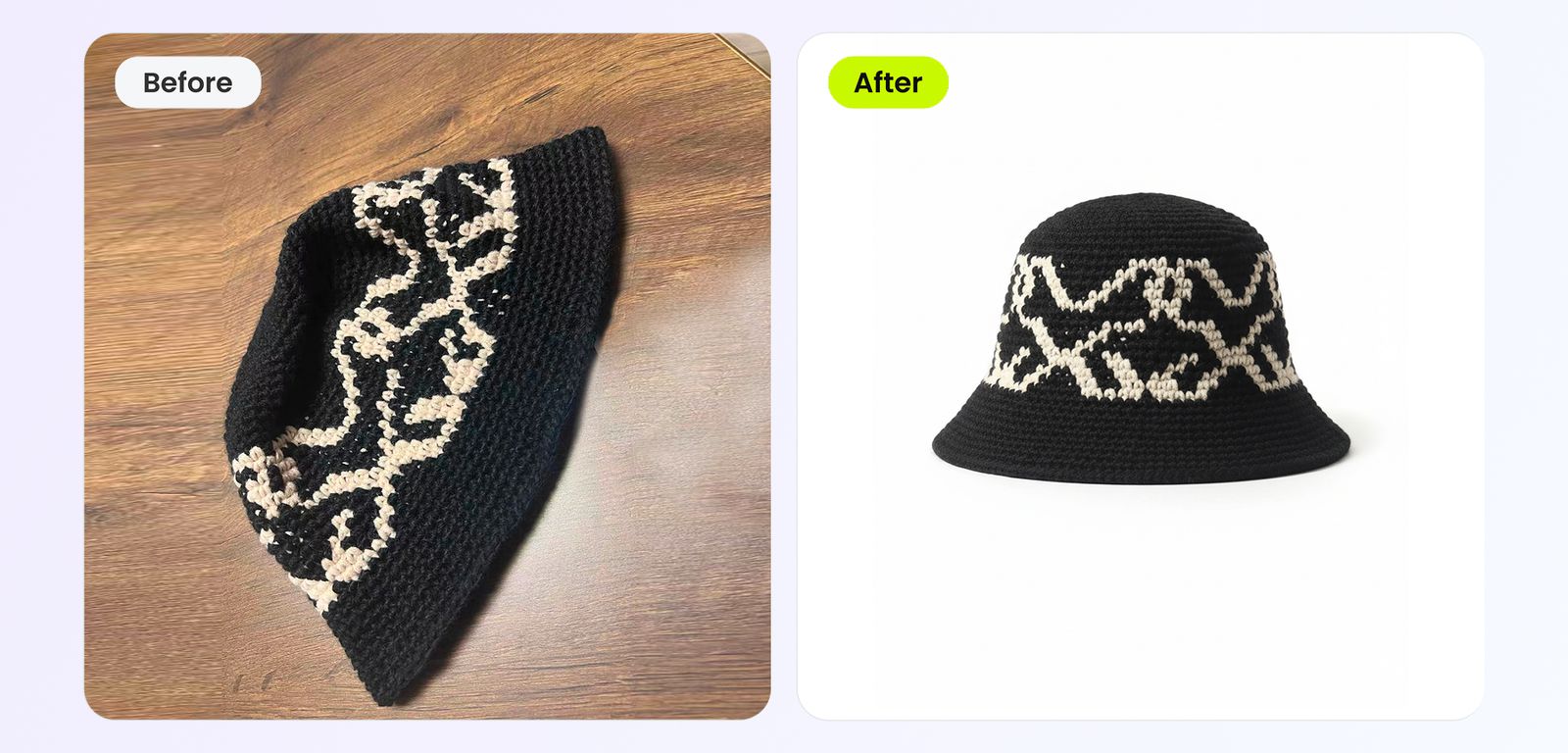
Handmade crochet bucket hat (Etsy / handmade-vintage tier). Hand-knit and crochet pieces lose dimension on a flat surface — a crumpled hat looks like a discount tag. AI rebuilds the shape and texture so the catalog photo matches what's in the hand.
The Vintage Resale Market Is Where Online Resale Is Concentrating
Independent industry data — not platform marketing. Online resale is growing 5× faster than the broader retail clothing market, with Gen-Z buyers driving the vintage and pre-loved tier specifically.
(structural, not cyclical)
Two AI Photo Tools — Pick Per Garment Type
Vintage cuts vary wildly by decade. Use ghost mannequin for structured pieces; on-model for casual / drapey pieces. Always run both in parallel when in doubt.
Best for structured vintage
3D worn silhouette on a pure white background. The catalog standard buyers expect from a serious vintage shop. Reads like Vestiaire Concierge, costs like a flat-lay.
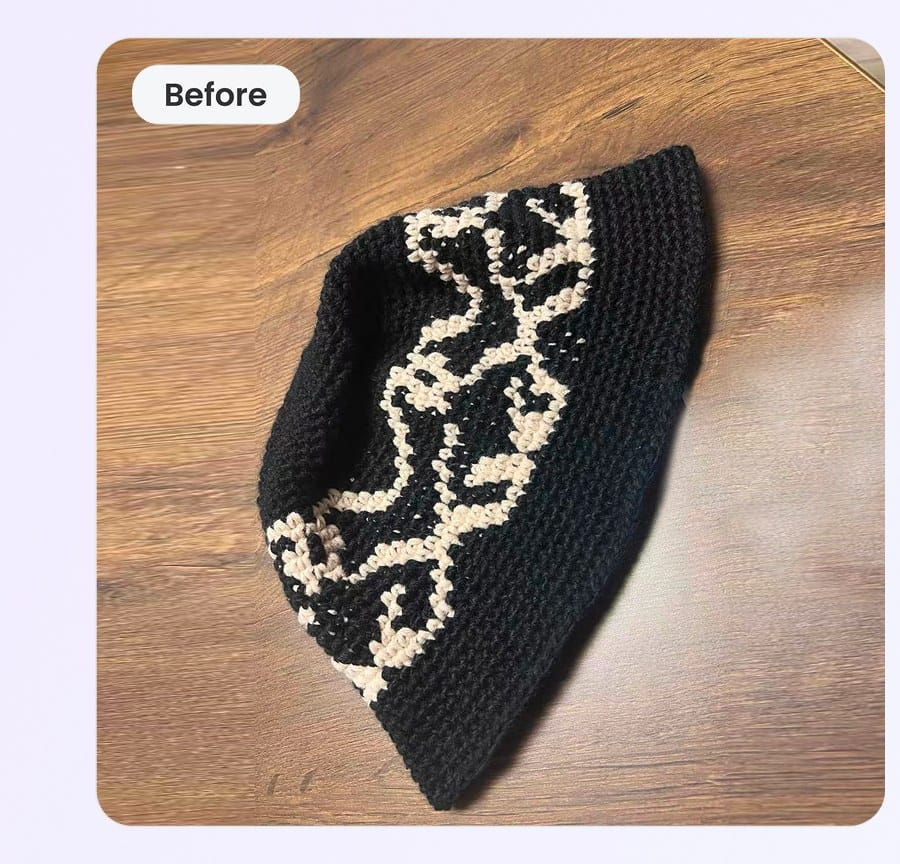 Flat Lay
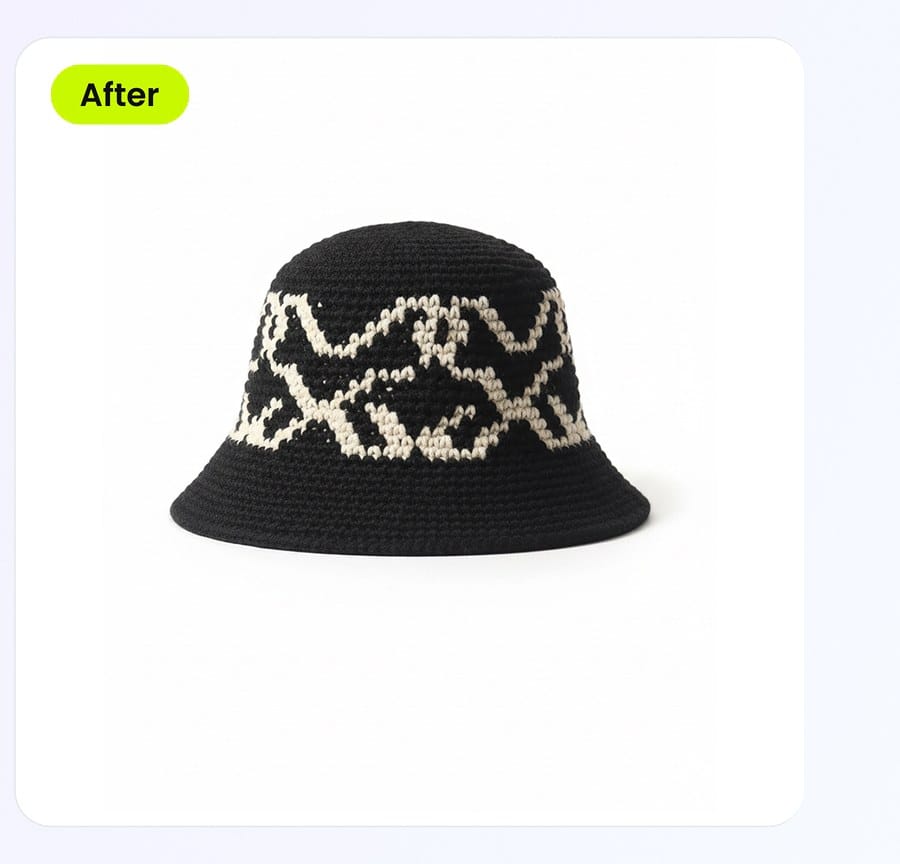 Ghost Mannequin
- Vintage blazers, button-downs, coats, structured dresses
- 80s & 90s tailored pieces with strong shoulder lines
- Outerwear, leather, deadstock
- Designer vintage where catalog read matters most
Best for casual / drapey vintage
On-body silhouette with natural fall and drape. Reads like a Depop / Heroine cover photo — younger buyer aesthetic, less "catalog," more "curated closet."
 Flat Lay
 On-Model
- Vintage knitwear, t-shirts, sweatshirts, slip dresses
- 70s drapey pieces, 90s minimalist, Y2K casual
- Streetwear archive, band tees, vintage athleisure
- Disclose AI rendering in description for trust
The smart vintage workflow: generate both. Use ghost mannequin as your cover (catalog read for older / designer-conscious buyers) and on-model in slot 2 (silhouette read for younger buyers). One flat-lay input covers both buyer behaviors with no extra shoot time.
How It Works: One Careful Flat-Lay to Three Listing Photos
Vintage pieces don't get a second shoot. The workflow is built around shooting once, generating multiple, documenting honestly.
Shoot Once, Carefully
Lay the piece flat in north-facing window light. Smooth wrinkles, stuff sleeves, button up. Phone in 1x main lens, full resolution. Then macro every flaw and label.
~5 min per itemGenerate Both Outputs From the Same Input
Drop the flat-lay into Snappyit. Generate ghost mannequin (catalog cover) and on-model (silhouette slot) in parallel. Optional: fashion video for the Etsy / Depop hero slot.
~90 sec AI processingList With Honest Documentation
AI photos in slots 1–3 (cover, silhouette, video). Raw flaw + label + fabric photos in remaining slots. Disclose AI rendering. Era / decade / measurements in description.
~5 min listingWhat This Unlocks for Vintage Sellers
Vintage selling is a high-AOV, high-trust category. Catalog-grade photos and honest condition documentation are the seller's two compounding assets.
One-Off Pieces Get Catalog Photos
Vintage is one-of-one. You can't reshoot if the first photo is wrong. AI ghost mannequin and on-model from a single careful flat-lay gives you both the silhouette and the catalog photo from the only shoot you'll ever do for that piece. The on-time-only economics finally favor the small seller.
Compete With Vestiaire Concierge Photo Quality
The buyer comparing your $300 vintage Saint Laurent listing to a Vestiaire Concierge listing notices photo quality first. AI ghost mannequin output matches mid-budget studio photography — the visual gap closes, leaving condition documentation, era accuracy, and pricing as your competitive tools.
Higher AOV, Higher Photo ROI
Vintage AOV runs $30–$300+ per piece on Depop, Etsy Vintage, Grailed, and Heroine — much higher than fast-fashion resale. The marginal cost of a Snappyit AI photo is $0.10–$0.40. The lift from converting one buyer who wouldn't have bid is many multiples of a year of tool costs. Photo quality is the highest-ROI variable in vintage.
Honest Condition Photography Becomes Your Edge
AI handles the cover and silhouette photos. Raw phone photos handle every flaw, label, and fabric detail. The combination — catalog-grade sales photos plus exhaustive condition documentation — is the trust signal that drives repeat buyers on Etsy Vintage and Grailed. Honesty in flaw photos correlates with higher sell-through, not lower.
Where Vintage Resellers Use Snappyit
Six major vintage marketplaces. Auto-fit ratios, distinct buyer behaviors, distinct photo combos.

- Ghost mannequin as cover (Etsy buyer-search trained)
- On-model + flat-lay + every flaw + label in remaining slots
- Use all 10 photo slots for vintage (20+ year requirement)
- Era / decade tag in description boosts search

- On-model as cover (Gen-Z aesthetic preference)
- Flat-lay + label + flaw in remaining 3 slots
- 4-slot cap — pick decisively
- Y2K / 90s / 80s hashtags in description

- Ghost mannequin or on-model cover
- Flaw documentation is non-negotiable
- Designer vintage warrants extensive label / construction macros
- Tag the designer / era / decade in title
- Ghost mannequin cover — Vestiaire buyers expect catalog read
- Multiple condition macros (authentication-grade)
- Designer + decade attribution drives search
- EU + global buyer base — measurements in cm

- Ghost mannequin cover (Cassini search trained)
- Pure white background (eBay penalizes busy)
- Up to 24 slots — document every flaw, every angle
- Auction format rewards rich photo set

- On-model as cover (curator aesthetic)
- Womenswear-only marketplace — lifestyle shots tolerated
- Designer vintage needs label macros
- Newer marketplace — early adopters get algo boost
Vintage Photography Pitfalls When Adding AI to the Workflow
Three mistakes that erode buyer trust on vintage marketplaces, three habits that build it.
Vintage Reseller FAQ
Common questions vintage sellers ask about adding AI photography to a single-item workflow.
Catalog-Grade Vintage Photos. Without the Catalog Studio.
Shoot one careful flat-lay. Generate ghost mannequin, on-model, and listing video in 90 seconds. Pair with honest condition documentation and ship the listing tonight.