Why size-inclusive imagery converts for intimates
If you sell bras, bralettes, briefs, one-pieces, or bikini sets, your listing photo is doing a job most sellers underrate: it is the shopper's only chance to predict fit before they buy. For intimates that prediction is everything, because the difference between a 1X and a 3X is not just a number — it is how a band sits, how a cup is filled, how a brief covers. A single photo of one slim model leaves most of your buyers guessing.
The strongest evidence here is not a vendor claim. A 2024 peer-reviewed study in the Journal of the Academy of Marketing Science — "One size does not fit all," by Ikonen, Zhang, Eelen and Sotgiu (University of Bath, University of Groningen, and Vrije Universiteit Amsterdam) — tested what happens when a garment is shown on a model close to the shopper's own size. Their findings were consistent: poor fit is the single biggest reason apparel gets returned, and showing the product on an own-size model raised perceived similarity and lowered the fit-risk drag on purchase intent. Critically, across their studies, own-size photography did not reduce purchase decisions versus thin-model photos — directly challenging the old assumption that an aspirational slim model always sells better.
Translated into seller terms: showing one SKU on multiple body types is a listing-performance lever, not a styling preference. You are not adding diversity as a courtesy — you are giving each size of buyer the visual proof they need to buy with confidence.
The returns problem fit-accurate photos actually solve
Returns are where bad fit imagery quietly bleeds margin. Average ecommerce return rates climbed to roughly 16.9% in 2025 (up from about 8.1% in 2019), but online apparel runs far hotter — industry sources cite peaks around 24% and US ranges spanning 22-40%, against roughly 5-6% for in-store. McKinsey (2021, "Returning to order") found that around 70% of apparel returns are caused by poor fit or style — with fit the dominant driver inside that figure. Separately, industry data put online fashion returns at roughly a quarter to a third of orders, mostly over fit, and other estimates pin fit and size at 52-77% of fashion returns. The exact number swings by source and method, so the honest framing is a range: roughly a quarter to a third of online apparel comes back, mostly over fit.
There is a second driver that fit-accurate imagery attacks directly: bracketing — shoppers ordering two or three sizes intending to return the misfits. That behavior alone is estimated at 30-40% of online clothing returns. When a buyer can see your product on a body shaped like theirs, the incentive to hedge across sizes drops. They order the one size the photo told them was right.
For intimates specifically, where hygiene rules often make returns more costly or impossible to resell, every avoided wrong-size order is worth more than in general apparel. Inclusive, size-accurate on-model imagery is one of the cheapest interventions you can make against that cost.
Inclusive sizing is the market, not a niche
It helps to be blunt about who your customer actually is. The average US woman wears roughly a Misses size 16-18. About 68% of US women wear size 14 or above, and one 2024 analysis found a majority — around 54% — fall in the plus-size range. Yet plus accounts for only about 16% of women's clothing sales, a gap that says more about stocking and representation than demand.
Shoppers notice. Survey data shows about 63% of plus-size shoppers prefer brands that use more inclusive models, roughly 42% feel unrepresented by mainstream campaigns, and nearly 90% feel fashion imagery fails to show the full spectrum of body types. When most of your buyers cannot see themselves in your listing, you are asking the majority of your market to imagine the fit. Some will; many will bounce or bracket.
Context backs the business case. Future Market Insights pegs the intimate lingerie market near USD 67.3B in 2025 (around 5.2% CAGR to 2035), while plus-size women's clothing is forecast around USD 320B in 2025 rising toward USD 583B by 2035. These are projections, not facts, and firms disagree on the numbers — but the direction is clear: inclusive intimates is a large, growing category, and matching your imagery to the bodies that buy it is simply meeting the market where it is.
How to show one product on many body types without multiple shoots
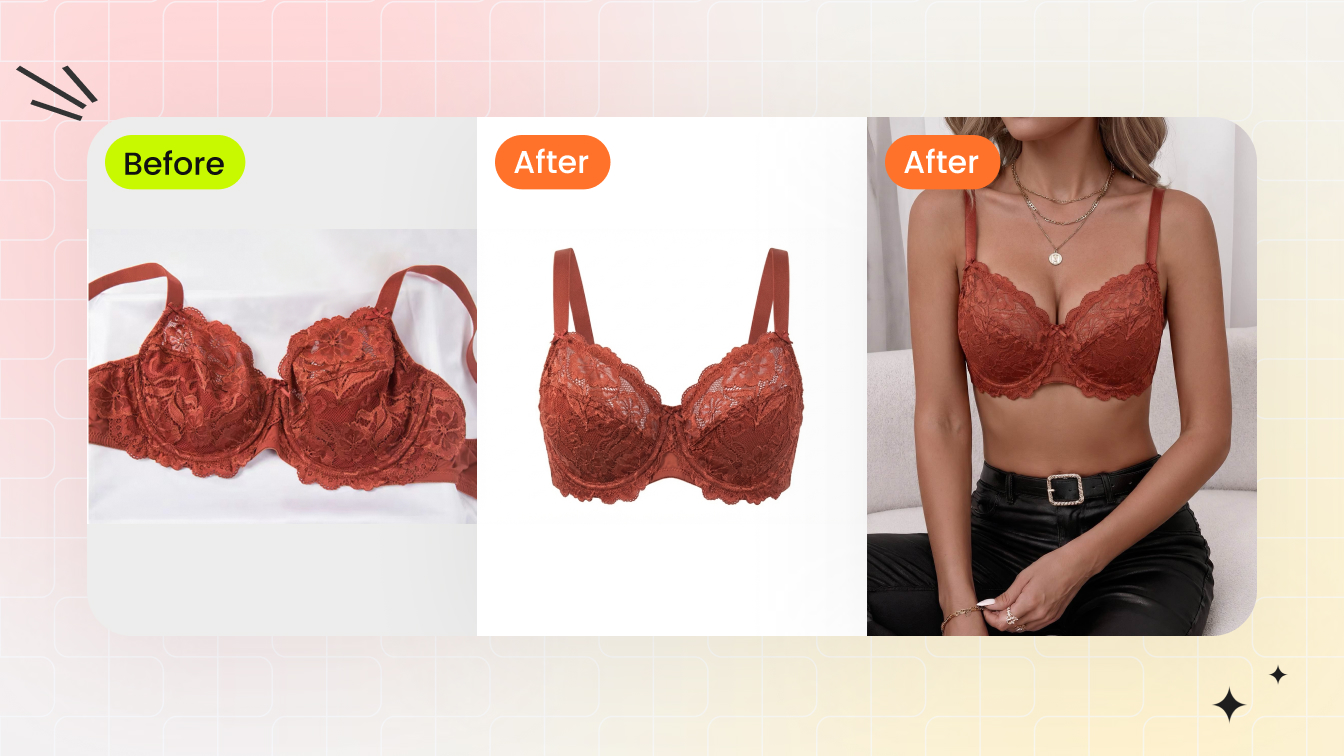
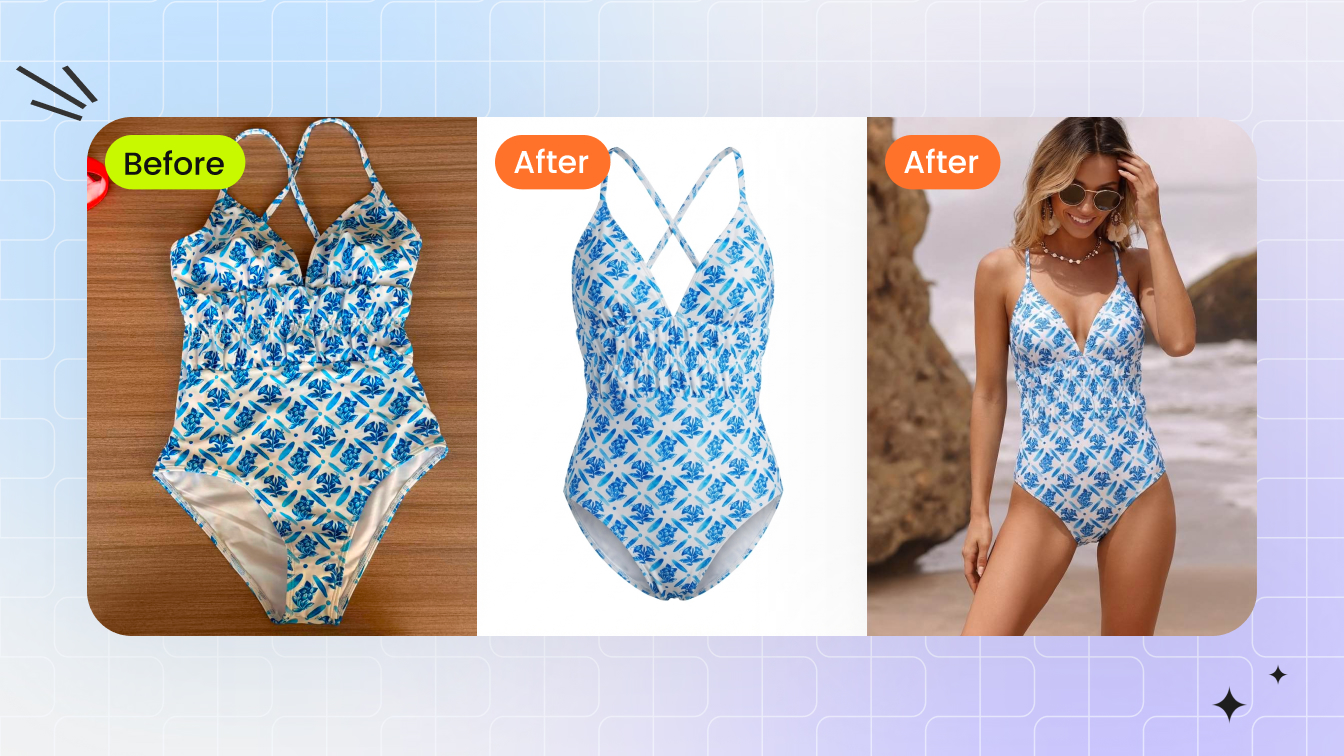
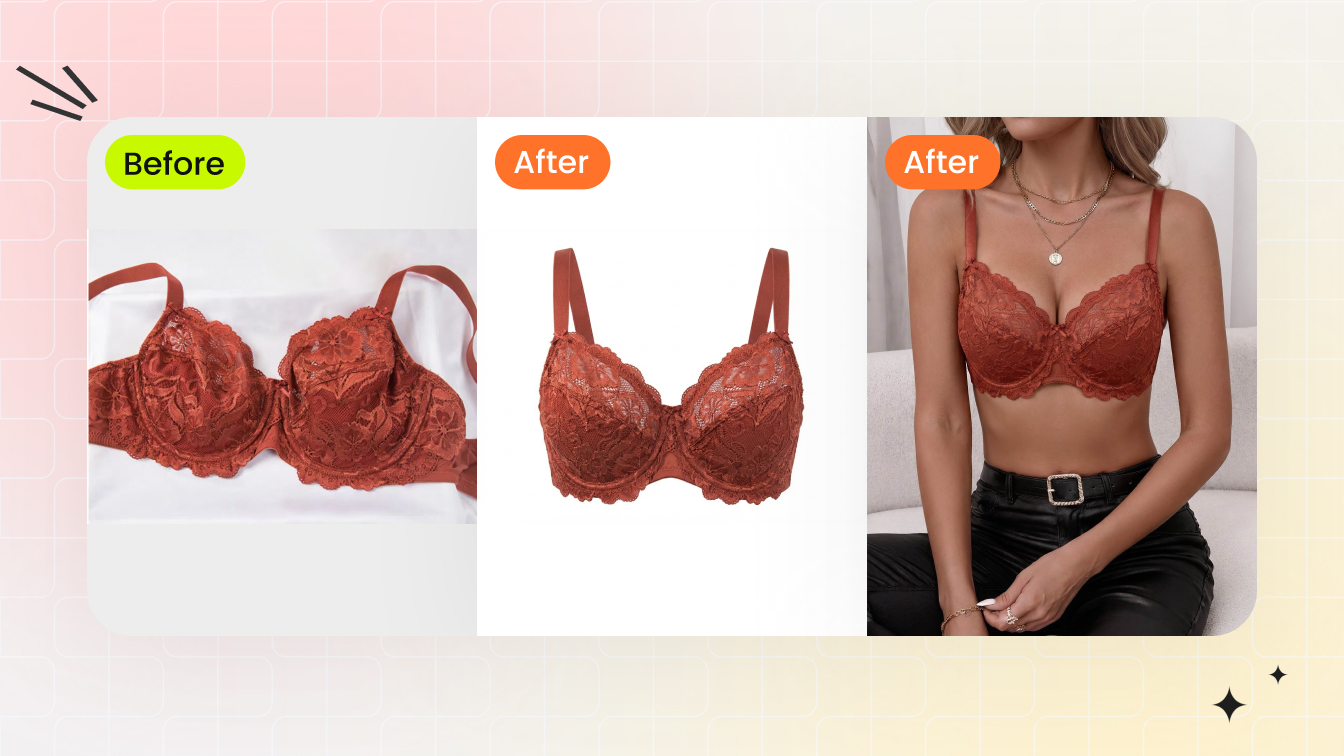
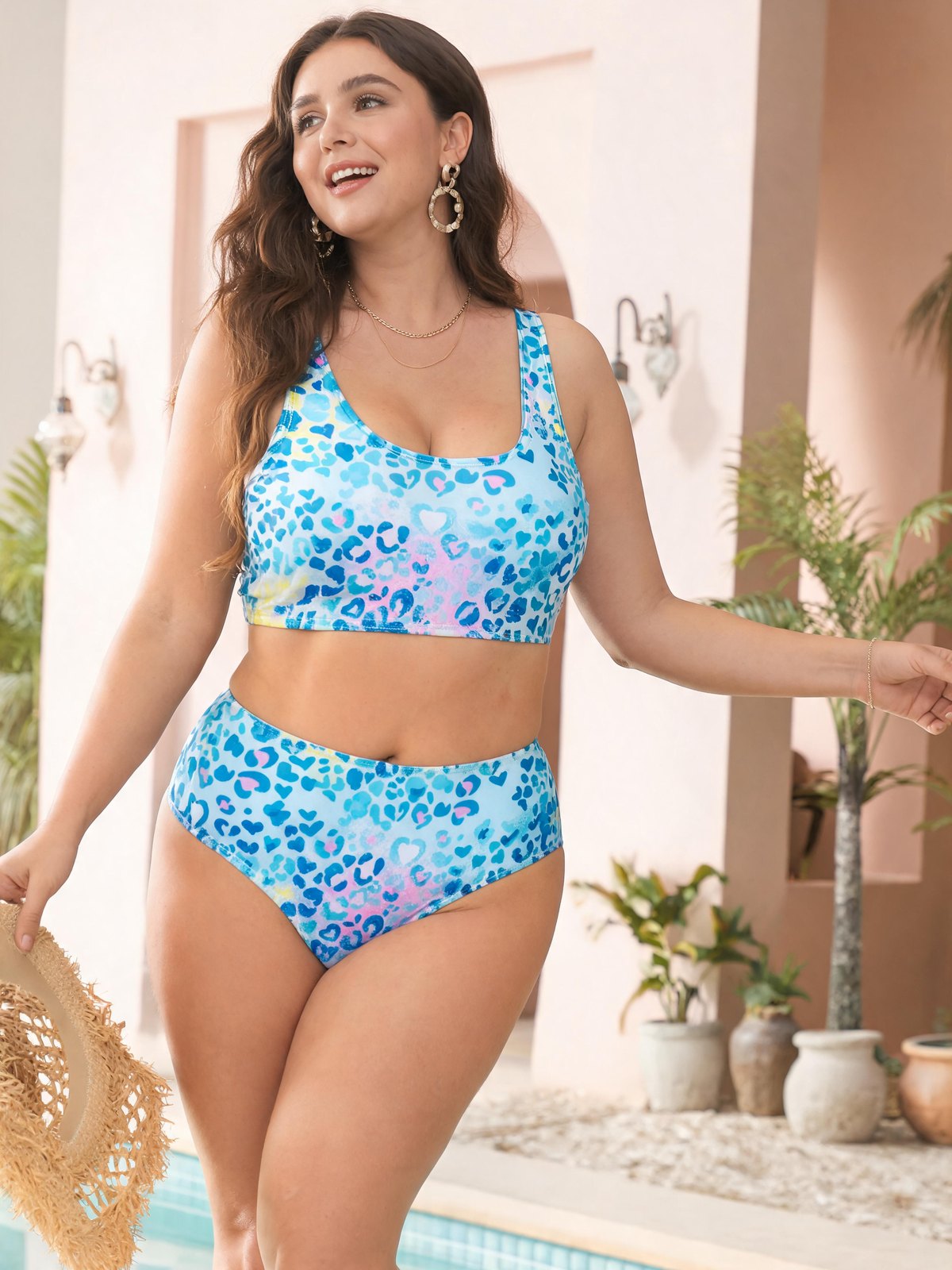
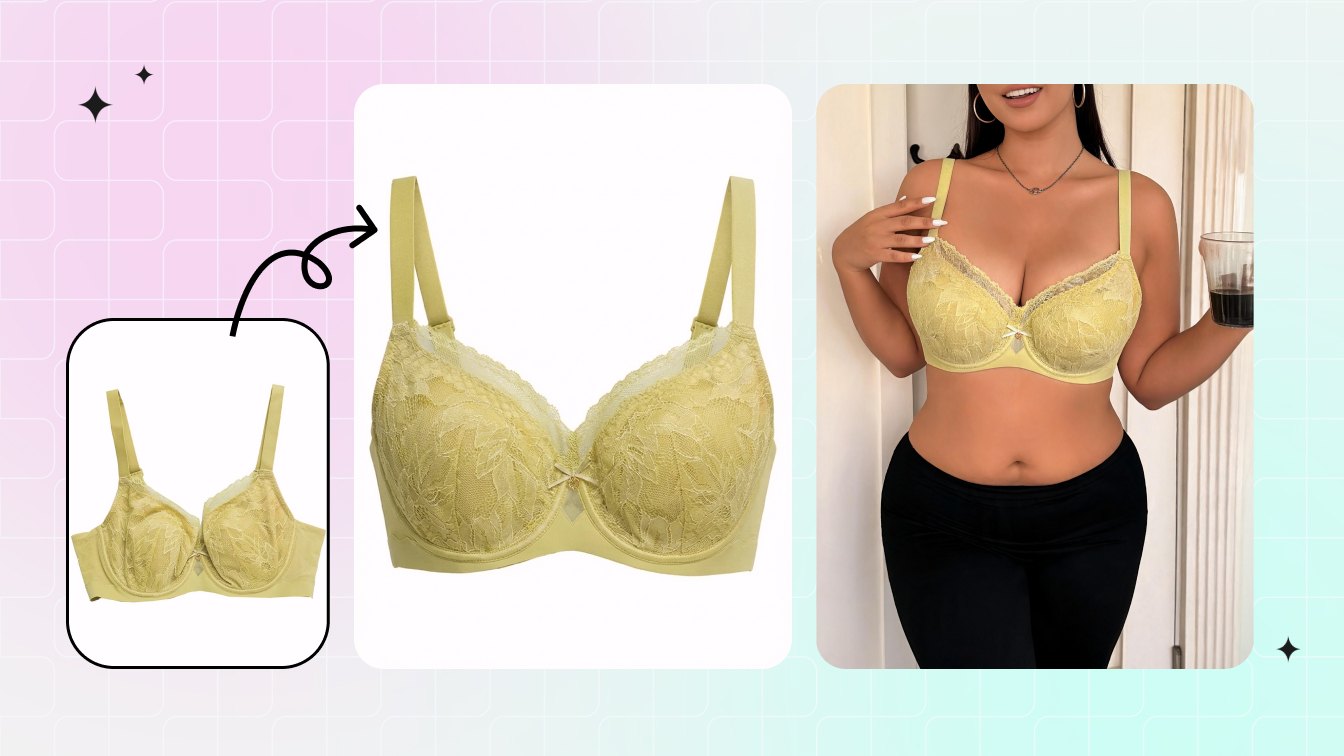
The traditional way to get size-inclusive imagery is to book several fit models, schedule a studio day, and shoot each size — expensive, slow, and impractical for a catalog of dozens of SKUs. This is where an AI on-model workflow — inclusive lingerie software that generates diverse bodies from one source shot — changes the math. You photograph your garment once — as a flat-lay or on a mannequin — then generate that same SKU on a range of body types and sizes.
Modern AI fashion-model tools in 2025-2026 are built around garment fidelity: preserving the fabric drape, stretch, color, pattern and construction from your uploaded shot so the output reads as your product, not a generic render. That is the technical basis for a true "one SKU, many bodies" listing set. A practical workflow looks like this:
- Shoot the garment clean — flat-lay or ghost-mannequin — with accurate color and visible construction.
- Generate the on-model versions across the sizes you stock using a tool like Snappyit's AI lingerie model generator or the broader fashion model tool.
- Keep a clean white-background ghost-mannequin or flat shot for the marketplace main image where rules require it.
One honest caveat: AI is excellent at body and pose variation, but fine details — lace transparency, sheer mesh, the exact pull of an elastic edge — still vary in fidelity. Always review generated images for true-to-product accuracy before you list, and never let a render imply a fit your measured garment does not deliver.
Generate inclusive on-model lingerie photos
Getting the fit honest at every size
Generating more body types is only useful if each one is truthful. The point of size-inclusive imagery is to lower fit risk — so a 3X render that looks like a stretched 1X does the opposite, and invites exactly the returns you are trying to prevent.
First, anchor your sizing to a real chart rather than a vibe. "Plus" has no universal cutoff — US plus commonly starts anywhere from size 12 to 18 (most often cited as 14+), and PLUS Model magazine puts it at 18+. The practical map sellers use runs roughly: 1X ≈ US 14-16, 2X ≈ 18-20, 3X ≈ 22-24, 4X ≈ 26-28, 5X ≈ 30-32. UK extended lines reach UK 32. So a "sizes 12-32+" range spans straight-through-extended sizing; describe it as inclusive or extended sizing and avoid implying a fixed industry definition.
| X-size | Approx. US | What to verify in the image |
|---|---|---|
| 1X | 14-16 | Band sits level, cup fully filled, no gaping |
| 2X | 18-20 | Side and back coverage true to garment cut |
| 3X | 22-24 | Strap width and band height match the actual SKU |
| 4X-5X | 26-32 | Stretch shown is real, not implied beyond spec |
Second, generate the model to your measured fit per size, then check the render against your tech pack. If your 3X has a wider band and a different strap, the image should show it. Honest per-size imagery is what turns inclusive photography from a representation gesture into a returns-reduction tool.
Ghost-mannequin and staying marketplace-compliant
Not every listing slot should — or can — use a human-style on-model image, and for intimates the marketplace rules are stricter than ordinary apparel. Amazon's 2025 main-image rules require a pure white background (RGB 255,255,255), the product filling about 85% of the frame, and a longest side of at least 1000px to enable zoom. For intimates the additional limits matter: imagery may not be sexually explicit; thongs and panties must use front views for the main image; and items that do not give full front and back coverage must not be shown on a human model — meaning a ghost-mannequin or no-person route is the compliant path. Children's underwear, swimsuits and leotards must not be shown on a human model at all.
This is exactly why having both an on-model and a ghost-mannequin (invisible-mannequin) option matters. Ghost-mannequin shows the garment's 3D shape and inner construction with no person on it — an established, compliant choice for swim and lingerie main images. Vendors report conversion uplifts in the ~33% range and return reductions around ~40% for ghost-mannequin swim and lingerie, though these figures come from agency blogs without named primary studies, so treat them as illustrative rather than proven.
A workable stack: ghost-mannequin or compliant flat for the marketplace main image, inclusive AI on-model shots for the gallery and your own brand site, and flat-lays for detail and bundle views. Always re-check current Amazon Seller Central wording before publishing, since these policies change. For a deeper walk-through, see our guides on bikini ghost-mannequin photography and photographing lingerie without a model.
What inclusive imagery does for your brand and your marketplace listings
The payoff splits across two surfaces. On marketplaces, where you compete on a thumbnail and a star rating, fit-accurate imagery is a direct lever on the two metrics that hurt most: conversion and returns. Apparel ecommerce conversion sits around a modest 2.2%, so anything that removes hesitation at the size decision compounds quickly. Fewer wrong-size orders also protect your account health and your resale-blocked intimate inventory.
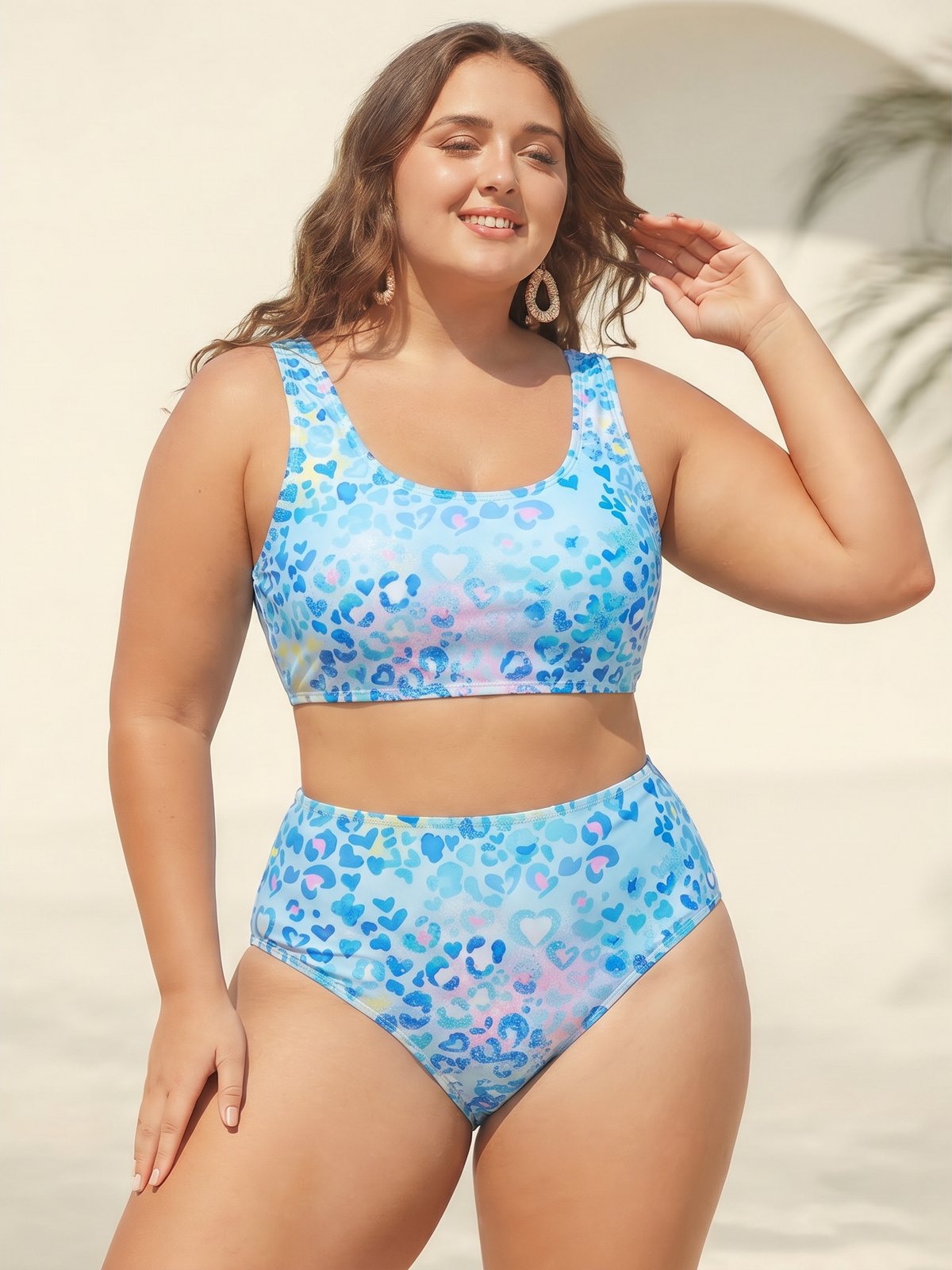
On your own brand site, inclusive imagery does something a marketplace thumbnail cannot: it signals who you are for. The Bath study's headline — that own-size photography did not cost purchase intent versus thin models — means you can show real range without a sales penalty. Pairing that with honest per-size fidelity builds the kind of trust that lowers first-order anxiety and earns repeat buyers. The same approach carries straight into size-inclusive swimwear model display, where a bikini or one-piece can be shown across the same 1X-5X spread of bodies your buyers actually have.
The framing from the research is a three-way win: lower cost for you, higher satisfaction for the customer, and fewer wasteful returns headed to landfill or liquidation. For a category where the majority of buyers are size 14+, building your listing set around that majority is not aspirational — it is accurate. If you sell across both categories, our lingerie sellers and swimwear sellers use-case pages map the full workflow.
A practical starting workflow
You do not need to re-photograph your whole catalog to begin. Start with your best-selling SKU and the sizes you actually stock most, then expand. A lean first pass:
- Capture once. Shoot the garment as a clean flat-lay or on a mannequin with true color and visible seams, straps and trim.
- Remove the background. Use a free background remover to get a clean cutout for both your ghost-mannequin main image and your on-model generations.
- Generate across sizes. Produce the SKU on a spread of body types from 1X to 5X with the AI lingerie model generator, matching each render to your measured fit.
- Review for fidelity. Check lace, mesh, color and elastic against the real garment; discard anything that misrepresents the product.
- List the right image in the right slot. Compliant ghost-mannequin or flat as the marketplace main, inclusive on-model across the gallery.
This sits inside the wider AI product photography approach: photograph the product well once, then let software do the multiplication. The garment stays the subject the entire way — you are building a more honest, more complete picture of how your product fits the people who actually buy it.
Start with one SKU on diverse models
Frequently Asked Questions
Is this generating images of real people or AI "models" as the subject?
No. The subject is always your garment — your bra, bralette, brief, bikini or one-piece — shown on a generated form for an ecommerce listing, or on a ghost-mannequin with no person at all. This is product-display imagery, not generating images of real individuals, and it has nothing to do with nudify or undress tools. The garment is what you are selling and what the photo is about; the body type simply helps shoppers judge fit at their size.
How does showing one SKU on multiple sizes actually reduce returns?
Poor fit is the dominant reason apparel gets returned — McKinsey attributes around 70% of fashion returns to poor fit or style, with fit the leading driver within that figure. A 2024 peer-reviewed study found that showing a garment on a model close to the shopper's own size lowers perceived fit risk without hurting purchase intent. When a size-22 buyer can see your product on a size-22 body, she is less likely to guess wrong or order multiple sizes to bracket — so fewer wrong-size orders come back.
What does "sizes 12-32+" mean, and is that the official plus-size range?
There is no single industry cutoff for "plus." US plus commonly starts anywhere from size 12 to 18, most often cited as 14+, and PLUS Model magazine defines it as 18+. The 12-32+ range spans straight-through-extended sizing — roughly 1X (US 14-16) up to 5X (US 30-32), with UK extended lines reaching UK 32. Treat it as inclusive or extended sizing rather than a fixed definition, and map your renders to your own measured size chart.
Will the AI keep my actual fabric, lace and color accurate?
Modern AI fashion-model tools are built to preserve fabric drape, stretch, color, pattern and construction from your uploaded shot, which is what makes the output read as your product. That said, fine details like lace transparency, sheer mesh and exact elastic-edge fit still vary in fidelity. Always review every generated image against the real garment before listing, and discard anything that misrepresents the product — the goal is an honest fit picture, not just a render.
Can I use AI on-model images as my Amazon main image for intimates?
It depends on the item and the policy. Amazon's intimates rules require full-coverage products, front views for thongs and panties, and prohibit human models for items that do not give full front and back coverage — for those, a ghost-mannequin or no-person image is the compliant route. A common compliant stack is a ghost-mannequin or clean flat as the marketplace main image, with inclusive on-model shots in the gallery and on your own site. Always re-check current Amazon Seller Central wording before publishing, since these policies change.
Do I lose sales by not using a single slim aspirational model?
The research says no. Across the 2024 Bath/Groningen/VU study's experiments, own-size and size-inclusive model photography did not reduce purchase decisions compared with thin-model photos — directly challenging the old "aspirational thin model sells better" assumption. Given that roughly 68% of US women wear size 14 or above, building your imagery around the majority of your buyers is matching the market, not sacrificing conversion.
How many shoots do I need to cover every size?
With an AI on-model workflow, just one. You photograph the garment once as a flat-lay or on a mannequin, then generate that same SKU across the body types and sizes you stock — no booking multiple fit models or scheduling a studio day per size. The cost saving is exactly why size-inclusive imagery is now practical for a full catalog rather than only your hero product.
Where should I start if I have dozens of SKUs?
Begin with your best-selling SKU and the sizes you sell most. Shoot it clean, remove the background, generate it across 1X-5X matched to your measured fit, review for fidelity, then place the compliant ghost-mannequin or flat as the marketplace main and the inclusive on-model shots across the gallery. Once the workflow is dialed in for one product, repeat it down your catalog.