Photography 18 min read

Swimwear Flat Lay Photography: A 2026 Seller Playbook

Flat-lay is the workhorse photography method for Etsy sellers, small Shopify brands, and Instagram-first swimwear shops. Done well, it carries half a brand. Done poorly, it tanks conversion. This guide walks through surfaces, composition, styling, lighting, and how to extend a flat-lay into a full catalog of imagery.

Swimwear flat lay photography ideas for ecommerce sellers Etsy and Shopify

TL;DR — swimwear flat lay photography in 2026

Swimwear flat lay photography is the highest-ROI starting point for any swimwear seller in 2026. One afternoon of swimwear flat lay photography, done well, produces the marketplace main image (Amazon and Etsy default), the secondary detail shot, and the source asset for AI extension into on-model and ghost-mannequin output. The setup investment is under $200 in lighting + backdrop; the per-SKU shoot time, with the prep done right, is 5–10 minutes.

The shift in 2026 is that swimwear flat lay photography is no longer the entire workflow — it is the first 30 minutes of the workflow. The flat-lay shoot produces the source images; an AI fashion model tool extends those source images into on-body lifestyle imagery without a second shoot day. Sellers who treat swimwear flat lay photography as the source-image step and AI on-model as the extension step ship a full catalog (main + detail + lifestyle + colorways) in 1/10th the time of a traditional flat-lay-only or shoot-everything workflow.

The playbook below covers the swimwear flat lay photography setup that converts: surface and background choice, composition and prop palette, styling the bikini for shape, reflection-free lighting, camera and lens basics, editing for marketplace specs, and the AI extension step that turns one flat-lay shoot into a full catalog. The 2026 seller who locks this workflow ships a swim drop in a weekend.

Why Flat Lay Beats Mannequin for Many Swimwear Sellers

Flat-lay photography is the technique where you arrange the garment on a flat surface and shoot straight down. For swimwear it has three advantages that pull it ahead of mannequin and studio model work for many sellers:

  • Cost — a phone, a window, and a clean surface are all you need. No mannequin, no studio, no model.
  • Speed — 30 SKUs takes one afternoon, not a five-day shoot.
  • Aesthetic fit — Etsy buyers and Instagram audiences expect flat-lay imagery. It signals "small brand, hand-styled, intentional."

The disadvantages are real too: flat-lay hides fit and drape, which raises return rates for sizing-sensitive buyers. Most successful swimwear shops in 2026 pair flat-lay with at least one on-body or ghost-mannequin shot per listing. But flat-lay remains the workhorse for catalog volume, secondary images, and Etsy primary photos.

The Surface and Background Choice That Sets Your Brand Apart

The flat-lay surface is the second most visible element after the swimwear itself. It carries 30-40% of the brand signal in the image. Choose deliberately.

Beach and Resort Aesthetic

  • Sand — works best when shot with raking side light to reveal texture. Avoid wet or beach-debris-strewn sand; clean dry sand reads "studio-controlled," wet sand reads "amateur."
  • Driftwood, palm leaves, seagrass — props that anchor the location story. Use sparingly; one prop per shot is plenty.
  • Pool tile or terrazzo — modern resort look, particularly strong for premium brand positioning.

Clean Studio Aesthetic

  • White paper roll — the marketplace-friendly default. Easy to clean up in post.
  • Single-color matte board — black, sage, terracotta, or any single brand color. Strong for premium and minimalist brands.
  • Linen or cotton fabric — soft texture that doesn't compete. Wrinkle-iron before each shoot.

Editorial and Lifestyle Aesthetic

  • Marble countertop — works well for premium swim brands styled alongside skincare and accessories.
  • Wood plank or rattan — beachy without literal sand. Good for resort-wear collections.
  • Bedsheet or hotel bedding — implies the post-beach moment, useful for hotel-and-resort positioning.

Composition and Styling Props

The 2026 swimwear flat-lay aesthetic has settled around what photographers call the "controlled clutter" composition: the garment dominates 60-70% of the frame, with 2-4 small props arranged with intentional asymmetry.

Common Props That Work

  • Sunglasses (one pair, never multiple)
  • Single tropical fruit (half pineapple, lime slice, mango)
  • A natural object — shell, coral, palm frond
  • Sunscreen bottle, ideally one that matches your color palette
  • A wide-brim straw hat (works as a backdrop frame element)
  • One piece of simple jewelry (anklet, layered necklace) — see our jewelry photography guide for styling tips

Composition Patterns

  1. Rule of thirds — place the swimwear center-of-mass on a thirds intersection. Most natural for two-piece sets where top and bottom can sit on opposing thirds.
  2. Triangle composition — three elements (garment, hat, sunglasses) form a triangle. Reads as deliberate but not stiff.
  3. S-curve composition — strap or tie creates a flowing curve across the frame. Particularly effective for bikinis with long ties.
  4. Negative space hero — garment at one edge of the frame, large empty space at the other. Premium and editorial.

Pinning, Folding, and Shaping the Bikini

A bikini that has just come out of the packaging will not flat-lay well. It needs to be shaped to communicate the garment's actual on-body silhouette.

Bikini Top Shaping

  1. Steam the cups to remove packaging creases.
  2. Stuff each cup with rolled tissue paper to round it out. Remove the tissue right before the final shot if it shows through thin fabric.
  3. Spread the straps in clean curves. Avoid right angles or crossed straps unless that is the design intent.
  4. For halter ties, tie them once and let them drape naturally — do not flatten them straight.
  5. For underwire tops, set the underwire on the surface so its shape is visible from above.

Bikini Bottom Shaping

  1. Steam.
  2. Lay the bottom flat. Smooth the waistband edge straight.
  3. For high-leg or cheeky cuts, slightly arch the back of the bottom to show the cut. A folded washcloth tucked underneath creates a subtle lift.
  4. For side-tie bottoms, tie them naturally with a small drape. Do not press flat.

One-Piece Shaping

  1. Steam thoroughly. One-pieces wrinkle the most because of larger surface area.
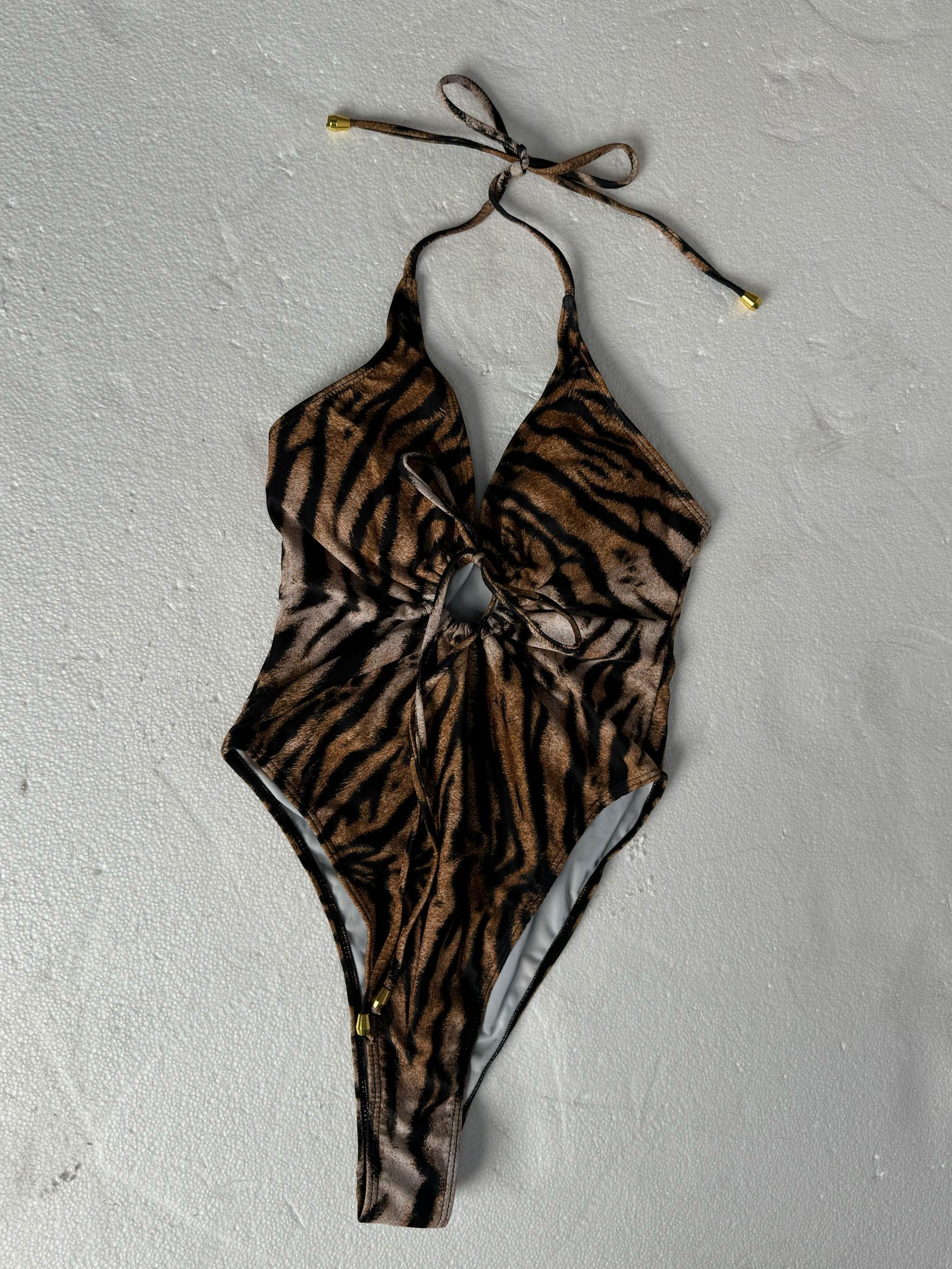
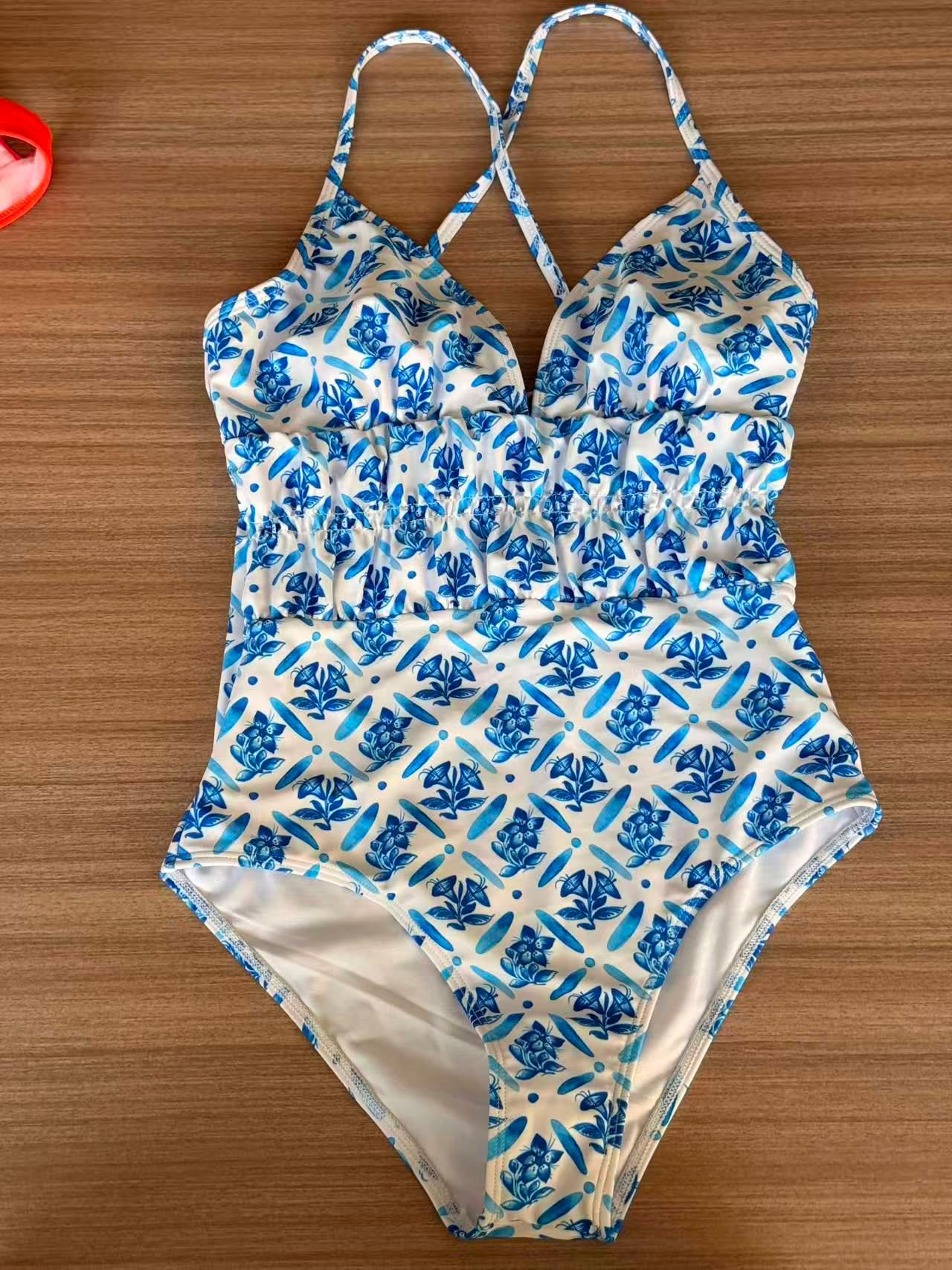
  2. Lay the suit roughly into a body shape — shoulders wide at the top, narrower at the waist, slightly fanning at the hip.
  3. For deep V or plunging necklines, stuff the neckline area with tissue so it does not collapse inward.

Lighting for Reflection-Free Flat Lays

Swimwear fabrics often have a sheen or wet look that reflects light directly back into the camera lens — producing the "white hotspot" that ruins many flat-lays. The fix is diffuse, indirect light.

Natural Light Setup

The simplest and often best lighting for flat-lay is north-facing window light between mid-morning and early afternoon. The light is consistent, diffuse, and free.

  • Position the surface 1-2 meters from the window, perpendicular to the light direction.
  • Use a white foam board or large piece of paper on the opposite side to bounce fill light into shadow areas.
  • If the direct light is too strong, hang a sheer white curtain or piece of cotton fabric in front of the window to diffuse further.

Artificial Light Setup

For consistency across a multi-day shoot, artificial lighting wins.

  • One large softbox (60cm or wider) at a 30-45 degree angle, positioned to one side.
  • Light at 5500K daylight color temperature. Tungsten warms whites to cream — wrong for swimwear.
  • A second softbox or bounce card on the opposite side at half intensity for fill.
  • Power both lights through a continuous (not strobe) setup so you can preview shadows live.

Camera and Lens for Flat Lay

The flat-lay shot does not need expensive gear. A phone with a recent camera (iPhone 12 or newer, comparable Android) produces output that meets every marketplace's spec at 4K. The mistakes that ruin flat-lays are setup mistakes, not camera mistakes.

If Using a Phone

  • Shoot in the native camera app at 4:3 aspect, full resolution.
  • Lock exposure and white balance by long-pressing on the garment in the preview.
  • Use a phone tripod with overhead arm. Handheld shots show motion blur and parallax.
  • Disable "smart HDR" or "scene optimization" features — they fight you on white fabrics.

If Using a DSLR or Mirrorless

  • 50mm or 35mm prime lens. Avoid wide-angle (distorts the garment edges) and telephoto (forces you to back too far away).
  • f/8 to f/11 aperture for full depth of field on a flat subject.
  • ISO 100-400 to keep noise minimal on fabric texture.
  • Shutter speed at 1/60 or faster, on a tripod, with cable release or 2-second timer.

Editing the Flat Lay for Marketplace

A flat-lay shot is rarely marketplace-ready straight out of camera. The standard edit sequence:

  1. White balance — correct any color cast. White swimwear should read white, not cream or blue.
  2. Exposure — push slightly bright (+0.3 to +0.7 EV). Marketplace listings perform better when slightly over-exposed than under.
  3. Contrast and clarity — modest boosts (+10 to +20) reveal fabric texture without making the shot harsh.
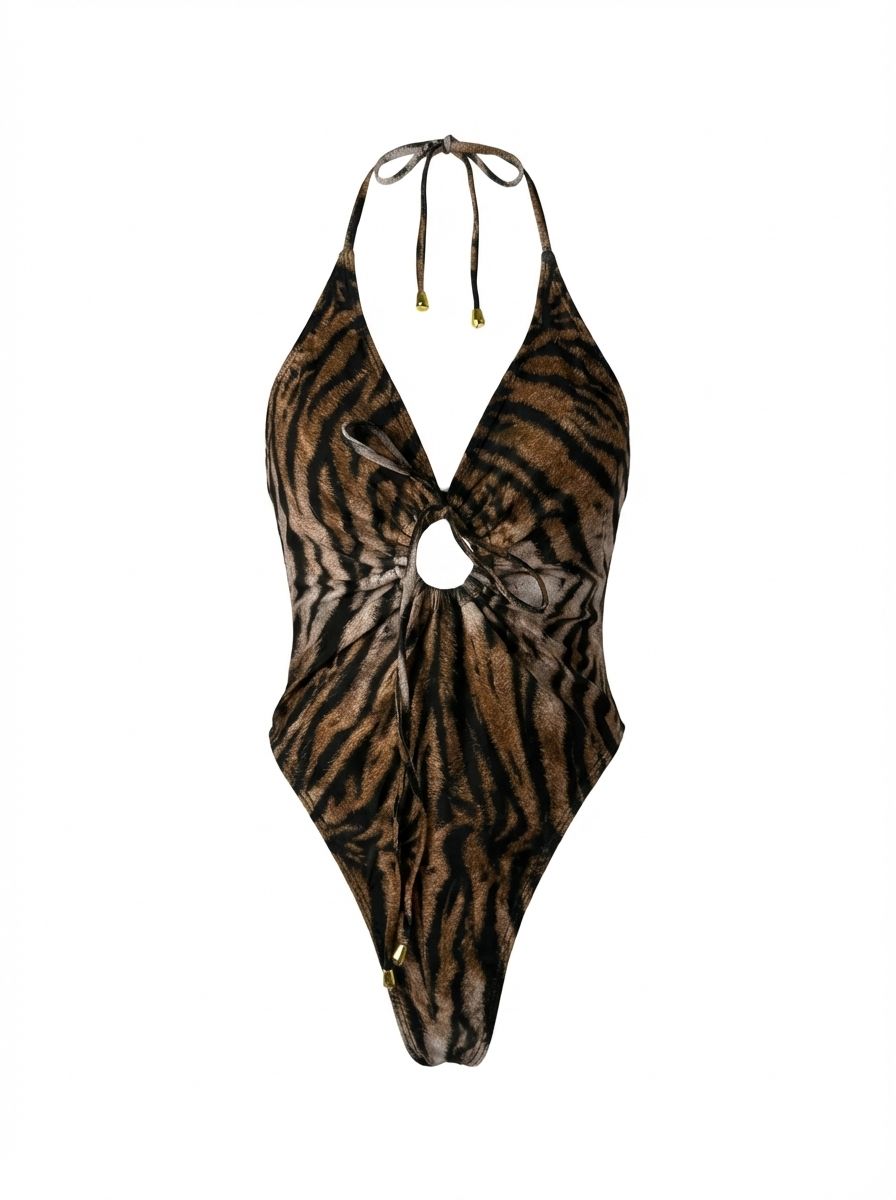
  4. Background cleanup — remove lint, hairs, and small surface marks. For pure white backgrounds, use a curves layer to push the surface to RGB 255 without blowing out the garment edges.
  5. Crop and aspect — crop to your platform's spec. Amazon 1:1, Shopify 4:5, Etsy flexible.
  6. Export — JPEG at 85-90% quality, 1500-2000px on longest side, sRGB color space.

For sellers running 50+ images per shoot, build a Lightroom or Capture One preset for steps 1-4 and apply in batch. The per-image edit time drops from 5 minutes to 30 seconds.

Etsy, Amazon, Shopify Image Specs

Each platform has different image requirements. Building flat-lay shots that meet all three from one shoot saves multiple re-export cycles.

  • Etsy — 4:5 aspect ratio at 2000×2500 px (Etsy 2026 recommendation). Primary photo influences search ranking heavily. Etsy listing guide covers full spec details.
  • Amazon main image — 2000-3000px minimum on longest side, pure white background, garment fills 85% of frame, no text or graphics. Strict and enforced by the platform's image review.
  • Shopify product photo — 2048×2048 recommended, no platform-enforced background, mobile-first 4:5 aspect performs best for hero images.
  • TikTok Shop — 1080×1080 minimum for catalog, but the algorithm rewards 9:16 vertical content. Build a parallel set of vertical-aspect images for Shop video carousel.

Going Beyond Flat Lay with AI

Snappyit AI Fashion Model workspace converting a swimwear flat-lay into a styled on-model lifestyle image without re-shooting
Snappyit AI Fashion Model — extend a single flat-lay shoot into on-model lifestyle imagery in seconds, no second shoot needed.

A flat-lay shoot does not have to end at flat-lay. The same source image can be transformed into on-body, ghost-mannequin, and motion-video assets using 2026 AI tools — extending one afternoon of shooting into a full catalog of imagery.

From Flat Lay to On-Body Model

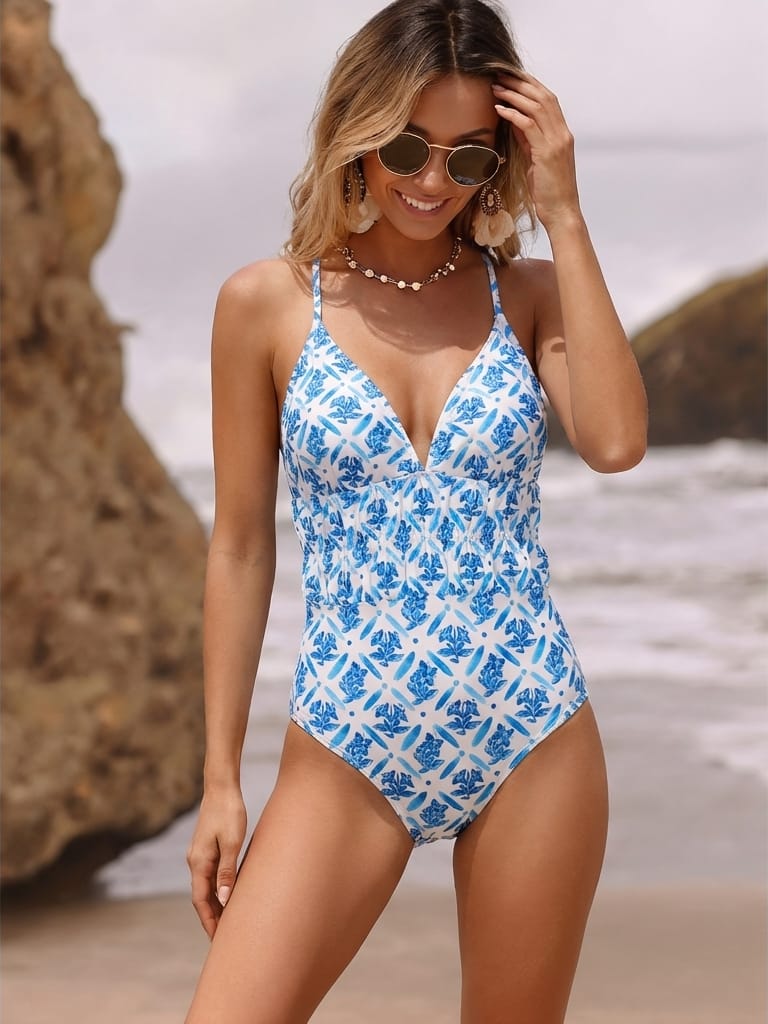
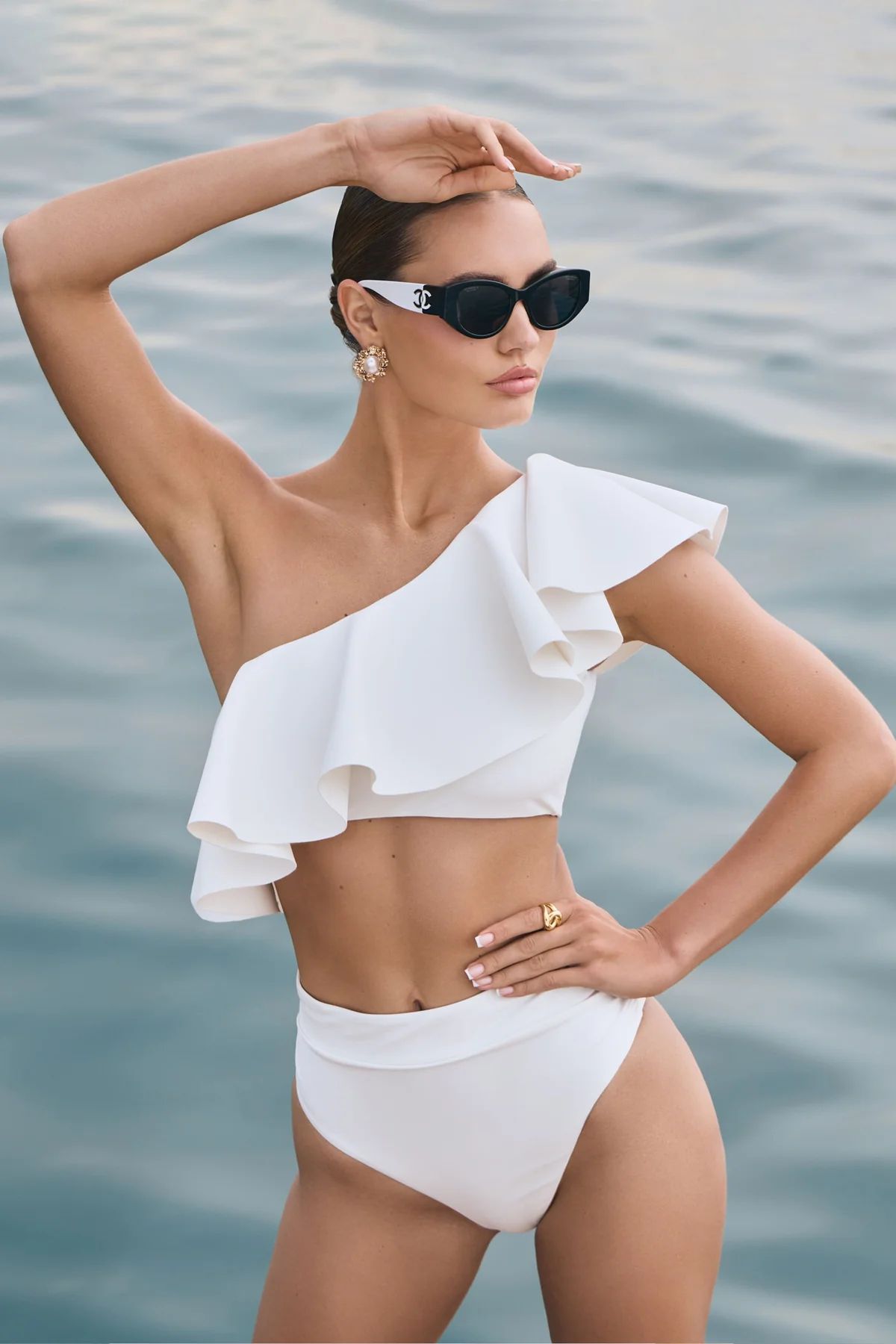
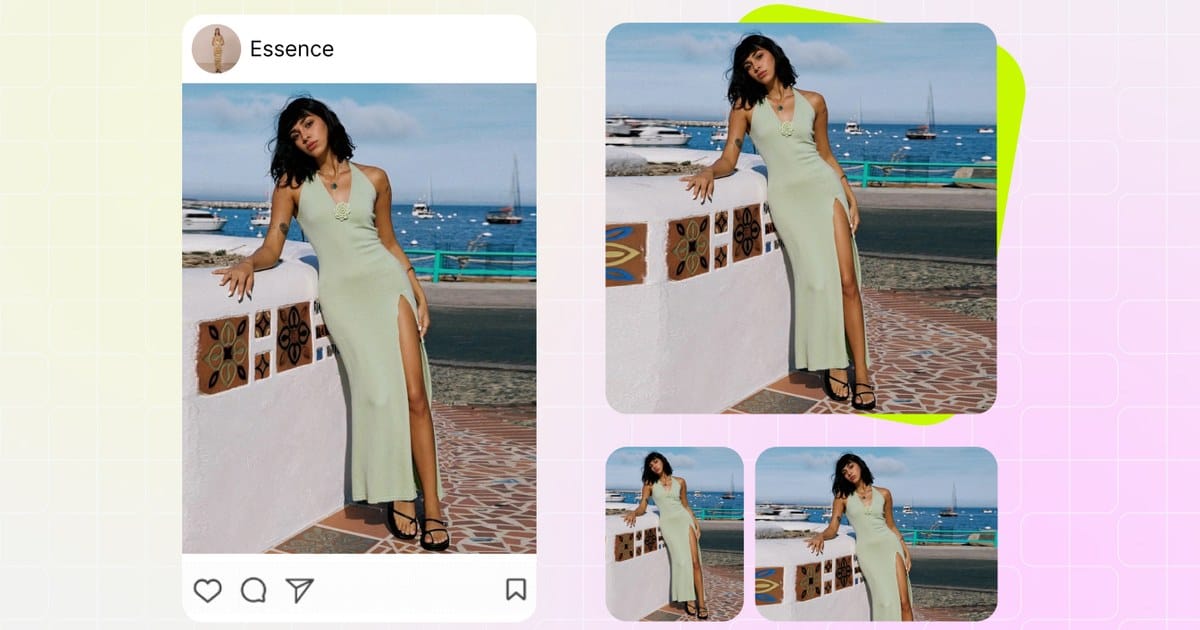
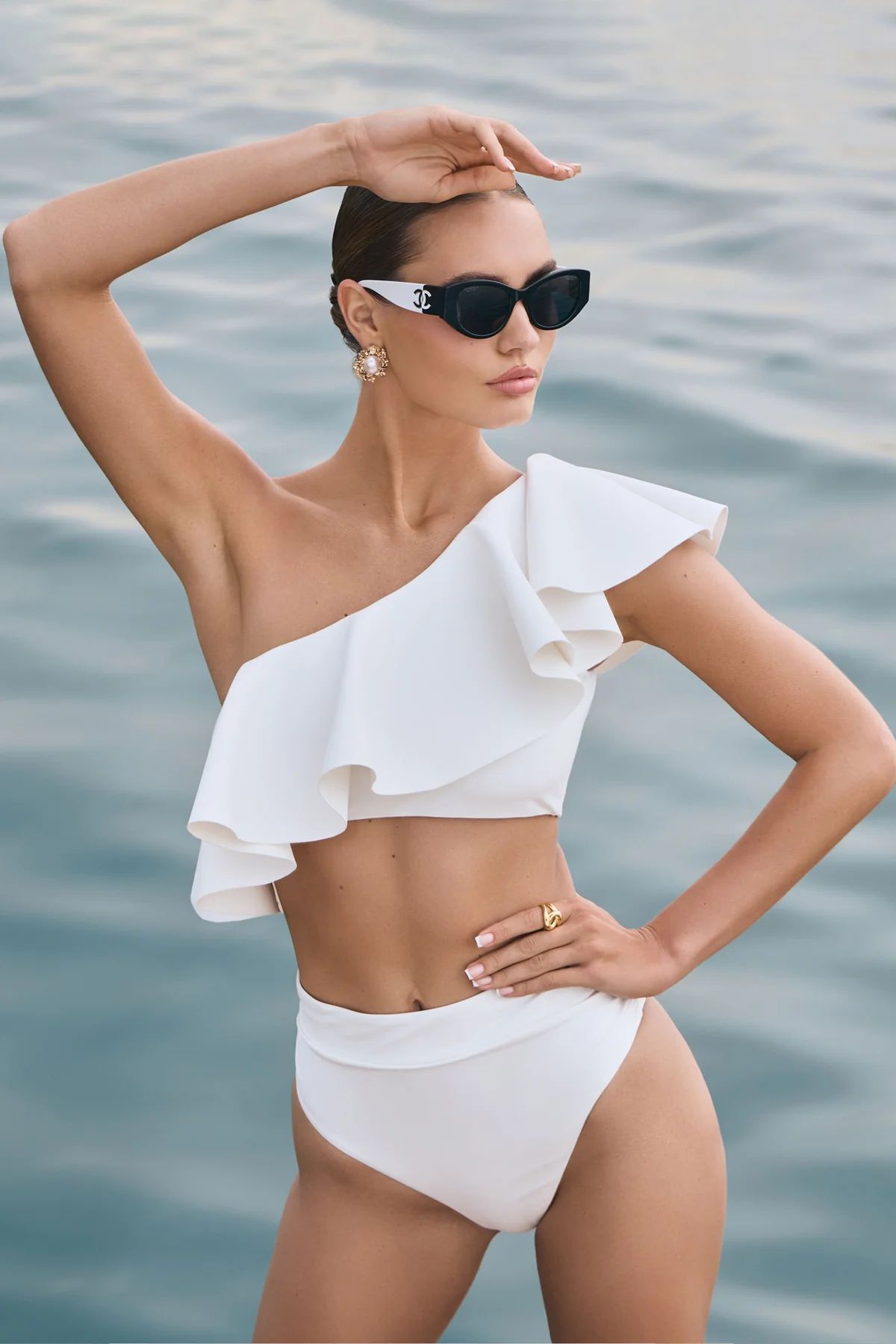
Drop the flat-lay into AI Fashion Model. The tool generates an image of a virtual model wearing the bikini, with marketplace-spec output options. Useful for the second or third image in a listing where buyers want to see fit.

From Flat Lay to Ghost Mannequin

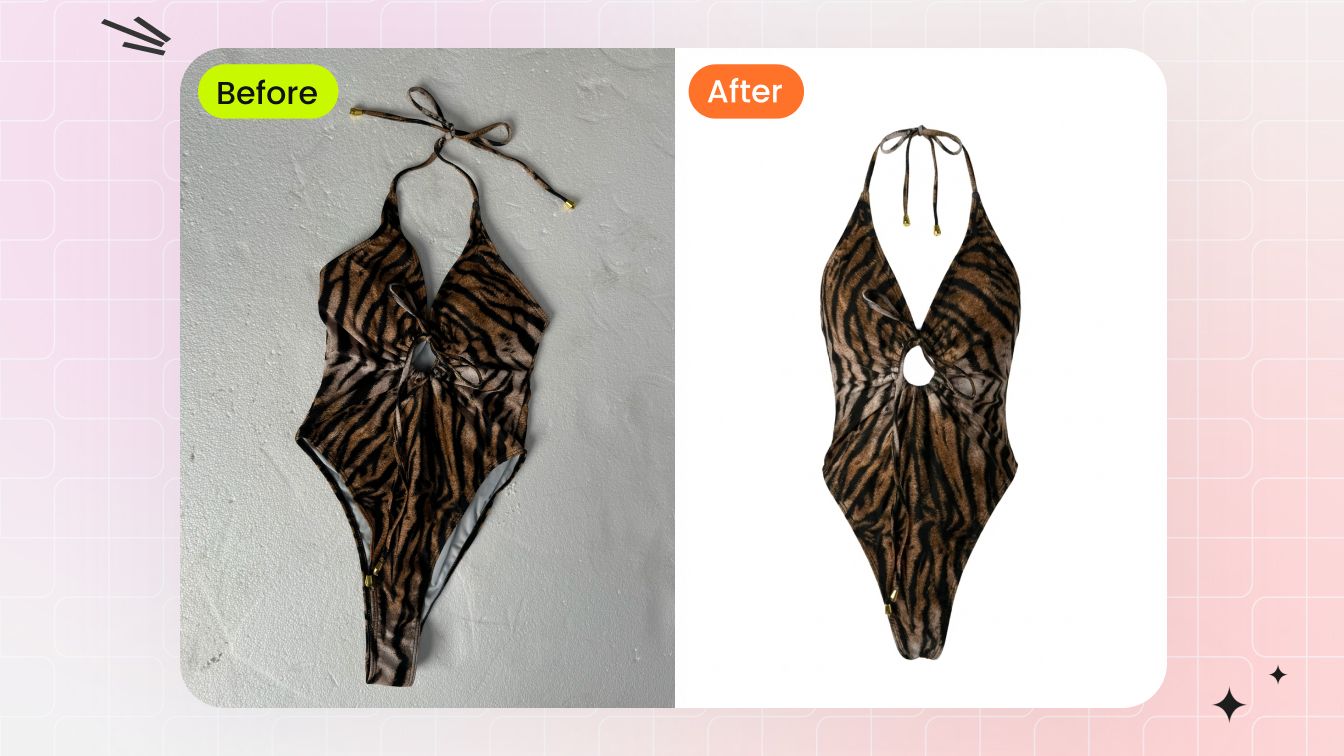
The same flat-lay into AI Ghost Mannequin. The tool generates the 3D-shaped on-mannequin look without a real mannequin. Perfect for Amazon-spec white-background main images.

From Flat Lay to Color Variants

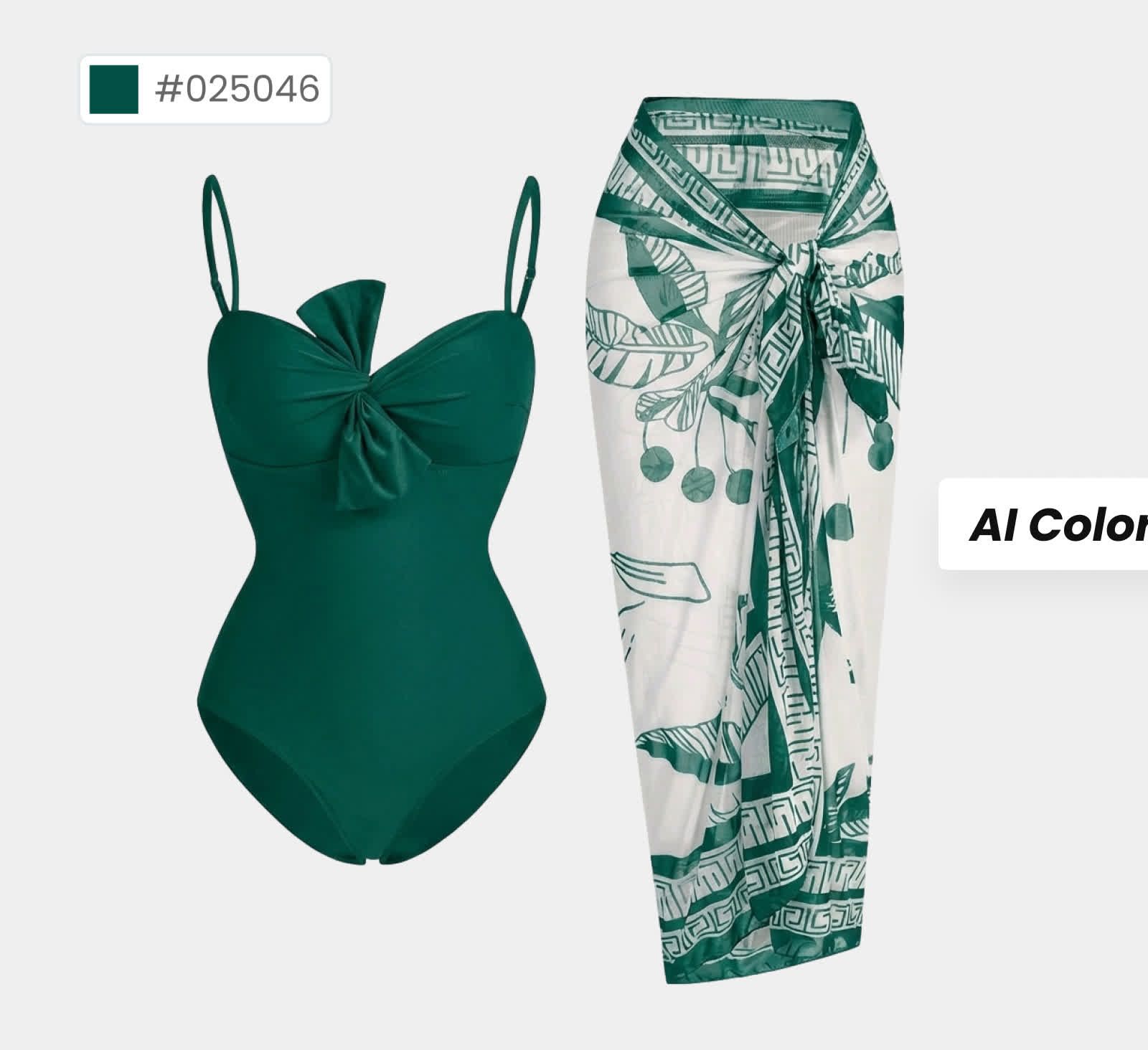
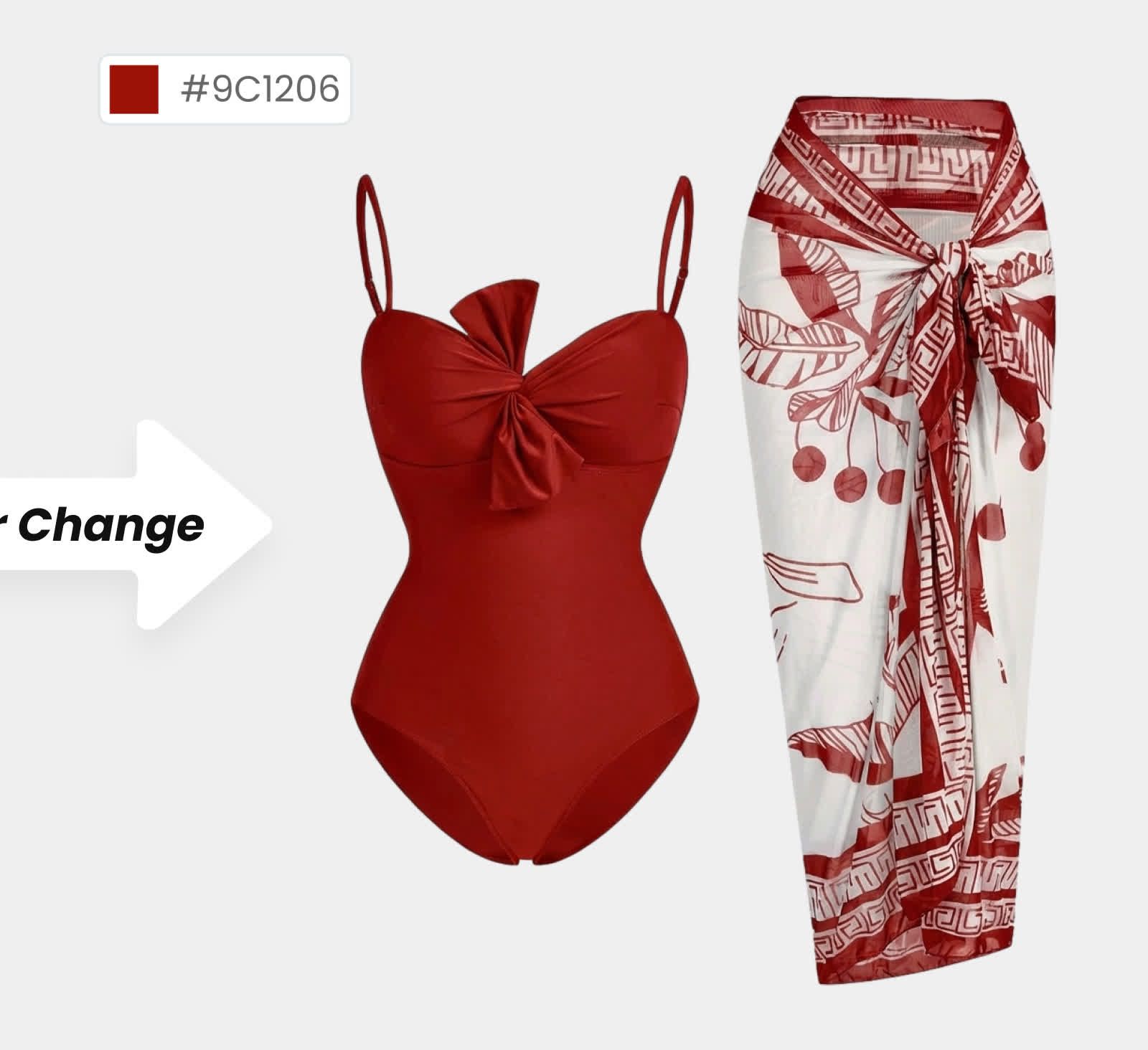
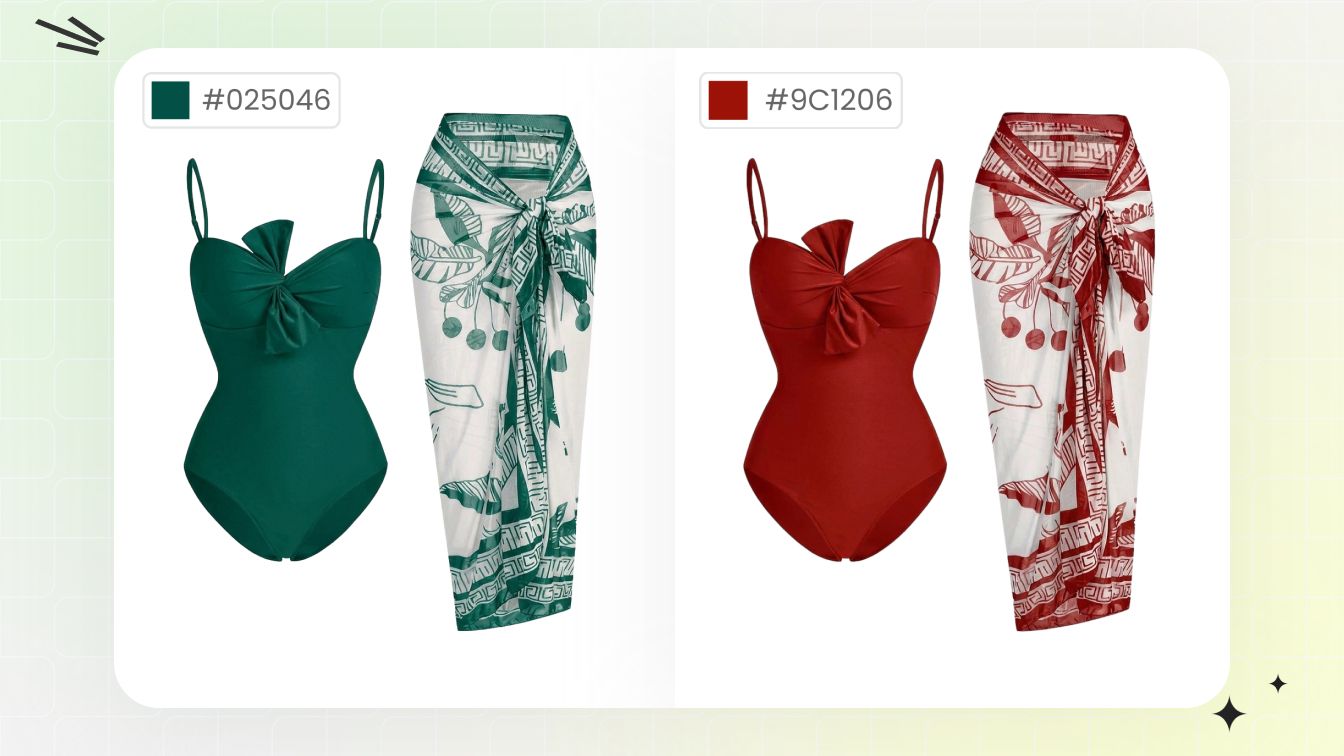
Run the original flat-lay through AI Color Change to generate color variants of the same garment. One flat-lay shoot becomes 10 color SKUs in your catalog.

From Flat Lay to Motion Video

Drop the on-body output from AI Fashion Model into AI Fashion Video. The static model image becomes a 5-10 second clip suitable for Reels, TikTok, and Shopify hero videos.

Try the marketplace-ready tool first. Your existing flat-lay photos can produce on-body and ghost-mannequin images in under two minutes with Snappyit's flat-lay-to-everything pipeline.

Common Mistakes in Swimwear Flat Lay

  • Wrinkled fabric — visible creases read low-quality. Steam everything.
  • Color cast — yellow incandescent bulbs or wood reflections turn white fabrics warm. White-balance correct in-camera.
  • Lint and hair — invisible to the eye, obvious at full resolution. Use a lint roller before every shot.
  • Inconsistent surface — switching between sand, white paper, and marble across one catalog confuses the brand signal. Pick one surface per collection and commit.
  • Over-styled props — five props and a coffee cup is too many. The product should be the hero, not the styling.
  • Bad cropping — cutting off a strap end or a corner of the garment kills the listing. Frame with 10-15% margin on all sides, then crop later.

Conversion Impact: What Flat-Lay Can and Cannot Do

2026 fashion ecommerce conversion data shows on-model imagery converts 20-30% better than flat-lay alone, with time-on-page rising 40-60% on listings with on-body shots. For premium apparel categories the lift can reach 30-50%. Forty-two percent of consumers cite size/fit as the reason for their last return.

Flat-lay is not failing as a method — it is being used in the wrong slot. The 2026 high-performing swimwear listing pattern looks like this:

  • Slot 1 (main image): On-model or ghost mannequin (required by Amazon for adult clothing). This is the conversion driver.
  • Slot 2-3: Lifestyle on-model or styled flat-lay. These set the aesthetic.
  • Slot 4-5: Pattern detail, fabric close-up. Flat-lay shines here.
  • Slot 6-8: Color variants, back view, fit detail.

Brands using flat-lay only across all slots — especially on Amazon where the main image rule forbids it for adult apparel — leave 20-30% conversion on the table and risk listing suppression.

Two trend palettes are dominating 2026 swimwear flat-lay content:

  • "Rooted Luxury" — bronze, camel, cocoa, golden apricot, antique moss. Warm mineral tones designed for golden-hour photography. Flat-lay on terrazzo or sand with brass and wood props.
  • "Marine Minimal" — pure whites, navy, sea-glass green. Cool tones on pure white paper or weathered driftwood. Flat-lay with a single shell or rope prop.

Both palettes call for AI Color Change after the base flat-lay shoot to test trend colors before committing to production. Brands testing 3-4 trend variations per design through AI before manufacturing are launching 4-8 weeks faster than brands tied to physical sample cycles, and they enter peak season (April-June, 48% of annual sales) with already-validated colorways.

The 2026 Swimwear Flat-Lay Prop Library

Successful 2026 swimwear flat-lay content uses a controlled prop library — not a random selection. Brands that lock 6-10 reusable props across an entire collection produce visually cohesive catalogs that outperform inconsistent shoots by 15-25% on engagement metrics. The 2026 working prop list:

Beach and Resort Props

  • Single ripe pineapple or coconut — placed at 1/3 frame, props the negative space.
  • Wide-brim straw hat — works as a backdrop element, framing the bikini.
  • One pair of cat-eye or oversized sunglasses — adds focal weight without distracting.
  • Driftwood piece — natural texture against fabric.
  • Single sand dollar or shell — small natural prop, low visual weight.
  • Sunscreen bottle — color-matched to your collection palette.

Premium / Editorial Props

  • Brass or gold-tone tray — frames the bikini against a metallic neutral.
  • Single linen napkin or scarf — adds soft texture, can act as background.
  • Layered gold jewelry — single anklet or chain, sparingly placed.
  • Ceramic candle in muted color — adds vertical element without competing.

Athletic / Surf Props

  • Surfboard wax — niche but recognizable to surf brand audiences.
  • Tortoise hair clip — implies post-beach styling.
  • Water bottle or thermos — active lifestyle signal.

2026 Color Palette Deep Dive

Two dominant palettes are defining 2026 swimwear flat-lay content. Understanding the palette context helps a brand position itself either inside the trend (broad appeal) or deliberately outside (niche differentiation).

"Rooted Luxury"

Bronze, camel, cocoa, golden apricot, antique moss. Warm mineral-inspired tones that read luxe under golden-hour or warm soft light. Pair with terrazzo or sand surfaces and brass or wood props. Snappyit's AI Color Change lets brands test these specific shades on existing inventory without committing to a manufacturing run.

"Marine Minimal"

Pure whites, navy, sea-glass green, faded denim. Cool tones that read editorial against pure white paper, weathered driftwood, or pale linen. Pair with sparse props — single shell, single piece of rope, or no prop at all.

Counter-Trend "Maximal Print"

Some indie brands are deliberately moving away from the muted palettes — running tropical florals, bold geometrics, and clashing color blocks. The flat-lay treatment for this style works against pure white background to let the pattern carry the visual weight without competition.

Composition Errors That Tank Etsy Conversion

Etsy's algorithm rewards listing-card visual quality at the search-result thumbnail level. Common flat-lay composition errors that hurt thumbnail performance:

  • Garment too small in frame — Etsy crops thumbnails at the center 70%. A garment that fills only 40% of the frame gets cut off in the thumbnail.
  • Strap or tie out of frame — clear violation of "show the whole product" rule. Returns rise sharply because buyers feel deceived.
  • Confusing horizon line — a styling surface that splits the image horizontally creates a "broken" composition that tracks poorly in Etsy's image quality score.
  • Multiple bikini sets in one shot — confusing for the buyer about what they are buying. One SKU per listing photo.
  • Heavy filter or grain — Etsy's algorithm appears to detect over-filtered images and rank them lower than natural-finish content.

Flat-Lay Workflow by Catalog Size

The flat-lay setup that works for a 10-SKU Etsy seller breaks for a 100-SKU brand. Workflow scaling matters.

Under 20 SKUs — Single-Session Setup

Lock four variables: surface, lighting position, camera position, prop palette. Shoot the entire catalog in one afternoon. Total time investment: 4-6 hours for 20 SKUs including styling. Equipment: phone, tripod arm, single softbox or window light, neutral surface.

20-60 SKUs — Repeatable Studio Setup

Build a permanent or semi-permanent flat-lay setup. Mark tripod feet positions, lock light power and angle, photograph against the same backdrop every time. Total time per SKU drops to 5-7 minutes including styling. Shoot in batches of 20 across multiple days to keep styling fresh.

60+ SKUs — Production-Line Approach

Treat flat-lay as a production process. One operator styles, one shoots, one edits in parallel. Per-SKU time drops to 3-4 minutes. Output runs through a Lightroom or Capture One preset for consistency. This volume justifies a dedicated table, dedicated lighting kit, and a stylist-photographer pair rather than a solo shooter.

From Flat-Lay to On-Body in 60 Seconds: The 2026 Pipeline

The 2026 norm for sellers using AI is to treat flat-lay photography as the "raw material" stage, then use AI to expand each source flat-lay into the full catalog of formats. The pipeline:

  1. Flat-lay phone shoot — 60-90 seconds per SKU including styling.
  2. Snappyit AI Fashion Model — turns flat-lay into Etsy-spec lifestyle on-body image at 2000×2500 4:5, in 30-60 seconds.
  3. Snappyit AI Ghost Mannequin — same source into Amazon-spec pure-white-bg ghost mannequin at 2000-3000px, in 30-90 seconds.
  4. Snappyit AI Color Change — color variants without re-rendering full model, in 15-30 seconds per variant.
  5. Snappyit AI Fashion Video — Reels and TikTok Shop 9:16 motion video from the on-body image, in 1-2 minutes.

Per-SKU asset bundle (1 flat-lay + 1 on-body + 1 ghost mannequin + 2-3 color variants + 1 video) total time: under 5 minutes of operator attention plus AI processing. The full bundle would have taken 1-2 hours per SKU in 2024.

Frequently Asked Questions About Swimwear Flat Lay

1. Is flat-lay enough for a swimwear listing, or do I need on-body shots too?

Flat-lay alone is enough for marketplace approval, but listings with both flat-lay and on-body images convert 20-40% better and have lower return rates on average. The on-body shot answers the fit question that flat-lay cannot.

2. What lighting equipment do I need for swimwear flat-lay?

For most sellers: a north-facing window during midday. For consistency across multi-day shoots: one large softbox at 5500K daylight, a bounce card on the opposite side, both stationary. Total equipment investment under $200.

3. How do I keep my flat-lay style consistent across a 50-SKU catalog?

Lock four variables and never change them within a collection: surface, lighting setup, camera height, and prop palette. Shoot all 50 SKUs in one session if possible. If you must shoot across days, mark the camera position with tape and use the same lights at the same power level.

4. Can I use phone photos for Amazon and Etsy swimwear listings?

Yes. Modern phone cameras shoot at resolutions that exceed every marketplace's minimum. The differentiator is setup and styling, not the camera. A well-styled iPhone flat-lay beats a poorly-lit DSLR shot every time.

5. How do I edit out the surface background to a pure white for Amazon?

Either shoot on a pure white paper background and use a curves adjustment to lift the white to RGB 255 (preserving the garment edge), or shoot on any neutral surface and use a background-removal tool to replace it with white. Snappyit's Ghost Mannequin tool handles this automatically as part of the on-body conversion.


Generate your first flat-lay-to-on-body image in 90 seconds

Your existing flat-lay photos are enough. Run them through Snappyit and get on-body model images, ghost-mannequin white-background shots, and color variants — all from one source flat-lay.

Try Snappyit AI Flat Lay free →


The bottom line on swimwear flat lay photography

Swimwear flat lay photography is the foundation of every cost-efficient swim catalog in 2026, but it is no longer the whole job. The 2026 workflow treats swimwear flat lay photography as the source-image step and uses AI fashion model tools to extend each flat-lay into on-body, ghost-mannequin, and colorway variant outputs. Sellers who lock the swimwear flat lay photography setup (one softbox + one bounce + a clean surface + steamed product) ship the entire catalog from a single afternoon of capture.

The single biggest swimwear flat lay photography mistake in 2026 is treating it as a standalone solution and refusing to layer on AI extensions for the on-body slots. A flat-lay-only listing converts 20–40% worse than a listing with both flat-lay and on-body imagery, and the AI extension cost (sub-$0.10 per output) is far cheaper than the marketing dollars needed to recover that conversion gap on traffic alone.

For sellers building a swim brand from zero in 2026, the right starting investment is one weekend dedicated to swimwear flat lay photography, $150–$200 in gear, and a free trial on Snappyit or SellerPic for the AI extension step. That combination ships a marketplace-ready catalog faster and cheaper than every traditional swimwear photography workflow that came before it.

More Resources for Lingerie & Swimwear Sellers