
What Fashion Video Is and Why It Matters
Imagine scrolling past a still photo of a silk dress. You see the color, the silhouette, maybe a hint of drape. But you don't see how the fabric catches light when the model turns, how the hem moves mid-stride, or how the whole look comes together in motion. That gap between a flat image and a living, breathing garment is exactly where fashion video lives.
What Exactly Is a Fashion Video
A fashion video is any moving-image content created to showcase clothing, accessories, or style concepts through motion, sound, and visual storytelling. It goes well beyond simply filming a model walking. The format spans a wide creative range, from high-budget cinematic campaigns produced by luxury houses to quick vertical clips a solo creator shoots on a phone. What ties them all together is the intent: communicating how fashion looks, feels, and moves in a way that static photography cannot.
The term covers a broad spectrum of content types, each serving a different purpose within the fashion ecosystem:
- Runway recordings - direct captures of live fashion shows, used for press coverage, archival purposes, and consumer engagement
- Brand campaign films - polished, narrative-driven videos that convey a seasonal theme or brand identity
- Lookbook videos - clean, straightforward presentations of a collection, often shot in a studio or minimal setting
- Editorial fashion films - artistic, short-film-style content that blurs the line between advertising and cinema
- Behind-the-scenes content - raw or lightly edited footage from shoots, fittings, and production days that humanizes a brand
- Styling tutorials - educational clips showing viewers how to wear, pair, or accessorize specific pieces
- Fashion documentaries - long-form explorations of designers, movements, or cultural moments in fashion
Each of these formats targets a different audience and stage of the customer journey. A campaign film builds aspiration. A styling tutorial answers a practical question. A behind-the-scenes clip builds trust. Together, they form a content ecosystem that no single photograph, however striking, can replicate.
Why Fashion Video Matters for Modern Brands
Consumer attention has shifted decisively toward video-first content. Social feeds prioritize clips over carousels. Product pages with embedded video outperform those without. And viewers on platforms like YouTube are 2x more likely to purchase something they watched on the platform compared to those who only saw a static ad. For fashion brands, this shift is not optional to acknowledge. It is the operating reality.
Video captures what still images simply leave out. A photograph can show a jacket's color and cut, but it takes motion to reveal how the fabric drapes across the shoulders, how a zipper catches light, or how an outfit transitions from day to evening with a single accessory swap. These details, texture, movement, and context, are exactly what drive purchase confidence. When a shopper can see a garment in motion, the mental leap from "that looks nice" to "I need that" gets much shorter.
Beyond product detail, fashion video builds emotional connection. A New Wave Magazine analysis of video versus photo engagement found that video content keeps viewers' attention longer and drives stronger interaction, partly because it can layer music, pacing, and narrative to create a mood that a single frame cannot sustain. Brands that lean into this medium are not just showing clothes. They are telling stories, building worlds, and inviting audiences into a lifestyle.
The practical upside is just as compelling. A single well-planned shoot can yield a campaign film, a set of short-form social clips, product page videos, and behind-the-scenes content, all from the same production day. That kind of versatility makes video one of the most efficient formats in a modern marketing toolkit, stretching a single investment across social media, e-commerce, email, and paid advertising channels.
Still, knowing that video matters is only the starting point. The real question is what kinds of fashion video exist, how they differ, and which formats fit which goals. That distinction is where most brands either build momentum or waste budget.
Every Type of Fashion Video Explained
Not every fashion video serves the same goal, and treating them as interchangeable is one of the fastest ways to burn through a production budget with little to show for it. A campaign film and a styling tutorial may both feature the same garment, but they speak to different audiences, live on different platforms, and require entirely different creative approaches. Understanding these distinctions is what separates a scattered content calendar from a strategic one.
Campaign Films and Editorial Fashion Videos
Campaign films sit at the top of the production spectrum. These are the cinematic, narrative-driven pieces that luxury and mid-market brands commission to define a season, launch a collection, or reinforce brand identity. Think moody lighting, carefully art-directed locations, and a storyline that sells a feeling more than a product. The goal is aspiration. A viewer should walk away wanting to inhabit the world the brand has built, not just buy a single jacket.
What makes campaign content distinct is its emotional architecture. As Flying Solo's creative breakdown puts it, a campaign captures the emotional essence of a brand, transforming a collection into a lifestyle or story. Art direction, casting, and location come together to create visuals that are bold, expressive, and often cinematic. These pieces are designed for marketing, digital ads, and social media, building desire and recognition so customers can imagine themselves in the brand's world.
Editorial fashion films push even further into artistic territory. These are conceptual, short-film-style videos curated by magazines, stylists, or directors where garments are styled alongside other pieces to evoke mood, relevance, and artistic vision rather than to sell directly. Editorial video exposure functions much like editorial print placement: it brings press legitimacy and positions a brand within the broader cultural conversation. For emerging designers, landing an editorial feature can be a powerful signal of industry validation.
Lookbook Videos and Styling Tutorials
If campaign films are about emotion, lookbook videos are about clarity. A lookbook video is the clean, structured presentation of a collection, designed so buyers and customers can understand a line at a glance. You'll typically see consistent lighting, neutral or minimal backdrops, and straightforward model movement that highlights fit, silhouette, and range. The camera work is deliberate but restrained, letting the garments do the talking.
This format mirrors the function of a traditional print lookbook but adds the dimension of motion. Viewers can see how a blazer sits across the shoulders when the model walks, how a skirt falls at different angles, or how color shifts under studio lighting. For wholesale buyers reviewing collections remotely, a well-produced lookbook video can replace an in-person showroom visit and still communicate the essential details: design, fit, fabric behavior, and styling range.
Styling tutorials occupy the more accessible, education-driven end of the spectrum. These clips answer practical questions: how to layer a transitional outfit, three ways to style a single pair of trousers, or what accessories elevate a basic look. The tone is conversational, the production is lighter, and the value proposition is immediate. Viewers learn something useful while being introduced to specific products in context. For brands, styling content doubles as both a team building activity for community engagement and a soft-sell product showcase, making it one of the most efficient formats for social platforms.
Runway Recordings and Street Style Clips
Runway recordings serve a dual purpose. On one hand, they are archival documents, preserving the choreography, music, and sequencing a designer intended for a collection debut. On the other, they are promotional tools. Clips from runway shows fuel social media coverage, press recaps, and consumer-facing highlight reels for weeks after the event. The format is straightforward: fixed or tracking cameras capture models walking the runway, sometimes supplemented by backstage footage or audience reactions.
Street style videos flip the script entirely. Instead of a controlled environment with a creative director calling the shots, street style content captures real people wearing real outfits in real settings. These clips thrive on authenticity and trend discovery. A well-timed street style video from Fashion Week can rack up millions of views because it feels organic, unscripted, and relatable. For smaller brands and independent creators, producing street style content requires minimal equipment and no studio access, making it one of the most democratic entry points into fashion video production.
To make these distinctions easier to reference, here is a breakdown of each major format and where it fits best:
| Video Type | Primary Purpose | Typical Length | Best Platform |
|---|---|---|---|
| Campaign Films | Build brand desire and seasonal narrative | 30 seconds - 3 minutes | Brand website, YouTube, paid social ads |
| Lookbook Videos | Showcase collection with clarity for buyers and consumers | 1 - 5 minutes | Brand website, wholesale portals, email |
| Runway Recordings | Archive shows and fuel press and social coverage | 5 - 20 minutes (full); 15 - 60 seconds (clips) | YouTube, Instagram, brand website |
| Street Style Clips | Capture organic trends and drive discovery | 15 - 90 seconds | TikTok, Instagram Reels, YouTube Shorts |
| Fashion Documentaries | Explore designers, movements, or cultural moments in depth | 15 minutes - feature length | YouTube, streaming platforms, brand channels |
| Behind-the-Scenes Content | Humanize the brand and build audience trust | 30 seconds - 10 minutes | Instagram Stories, TikTok, YouTube |
Each format occupies a specific role in a brand's content ecosystem. Campaign films and editorials build the aspirational layer. Lookbooks and tutorials handle the practical, conversion-oriented middle. Runway recordings and street style clips keep a brand visible in the cultural moment. The real leverage comes from understanding which type to deploy, when, and on which channel, a decision that gets much easier once you see how these formats evolved from a single, much simpler origin.

How Fashion Video Evolved Into a Dominant Medium
Every format in that taxonomy traces back to the same starting point: a camera pointed at a runway. The journey from those early recordings to the vertical clips flooding your feed today is not just a story about technology. It is a story about who gets to create, who gets to watch, and how the relationship between fashion brands and their audiences fundamentally changed along the way.
From Runway Tapes to Digital Editorial Films
For decades, fashion video meant one thing: documentation. Cameras at runway shows captured collections for press archives and buyer reference. The footage was functional, not creative. Framing was static, lighting was whatever the venue provided, and the final product existed to inform, not to inspire. Television coverage followed a similar pattern, with segments on fashion weeks offering brief, surface-level glimpses into an industry that remained deliberately exclusive.
That started to shift in the late 1990s and early 2000s, when a handful of creatives recognized that the moving image could do something for fashion that neither photography nor live shows could achieve on their own. As Tim Noakes wrote for the D&AD Annual, experimental filmmakers like Guy Bourdin and Erwin Blumenfeld had explored fashion on film as early as the 1960s, but the real turning point came when the internet gave these works a distribution channel beyond gallery screenings and niche festivals.
British photographer Nick Knight launched SHOWstudio in November 2000 with a specific mission: to create a destination where commercial and experimental fashion films could coexist. The platform treated fashion video as a creative medium in its own right, not a byproduct of a photo shoot or a promotional afterthought. It commissioned directors, stylists, and artists to produce work that blurred the line between advertising and cinema. In 2010, LVMH and Dazed Media followed with NOWNESS, a video platform that premiered formative work from emerging directors and positioned fashion film as a genre with its own aesthetic standards and creative ambitions.
Fashion houses took notice. Suddenly, seasonal campaigns were not just print ads repurposed for screens. They were cinematic productions with real narrative ambition. Wes Anderson and Roman Polanski directed for Prada. Sofia Coppola and Martin Scorsese created films for Chanel. Spike Jonze and David Lynch worked with Kenzo. Jonathan Glazer directed for Alexander McQueen. These collaborations signaled that fashion video had earned a seat at the same creative table as independent cinema and music video production.
Gucci's Alessandro Michele pushed the format even further by commissioning auteurs like Gus Van Sant and Harmony Korine to create clips worthy of an IMAX screen. In 2020, he launched GucciFest, a week-long digital film festival featuring the brand's own high-budget campaign films alongside work from 15 independent young designers. The message was clear: fashion video was no longer a marketing tool bolted onto a collection launch. It was the launch.
The Short-Form Revolution in Fashion Content
While luxury houses were investing in cinematic storytelling, social platforms were quietly rewriting the rules of the entire medium. The rise of Instagram, TikTok, and YouTube Shorts introduced constraints that would have seemed absurd to the directors crafting three-minute editorial films: vertical orientation, sub-60-second runtimes, and audiences who scroll past anything that does not hook them in the first two seconds.
These constraints did not shrink the format. They exploded it. Shorter runtimes demanded faster editing rhythms, punchier visual hooks, and a directness that polished editorial work often lacked. Creator-driven content replaced the top-down broadcast model. A stylist with a ring light and a phone could produce an outfit transition clip that outperformed a six-figure campaign in raw engagement. Platforms like TikTok accelerated this shift dramatically. A fashion challenge or styling hack could go viral within hours, spreading globally and influencing millions of users before a traditional marketing team even finished reviewing the brief.
This democratization reshaped who could participate. Before social media, producing fashion video required access to studios, professional crews, and distribution deals with publishers or broadcasters. Independent creators and smaller brands were effectively locked out. Platforms leveled that playing field. An emerging designer who could not afford a runway show could release a lookbook video on Instagram and reach a global audience overnight. A vintage reseller could film a 30-second styling reel and build a following that rivaled established retailers.
The music industry mirrored and amplified this convergence. As Noakes observed, music video production moved beyond awkward product placement into full-blown fashion partnerships. Rihanna's Savage x Fenty lingerie films stream as annual events on Amazon Prime. Megan Thee Stallion's video for "Plan B" doubled as an official film for Mugler, directed by the brand's own creative director. These crossovers blurred the boundary between entertainment and fashion content, training audiences to expect style-driven visuals everywhere they looked.
Fashion video has shifted from a top-down broadcast medium controlled by a handful of houses and publishers to a participatory, platform-native format where anyone with a camera and a point of view can shape the conversation.
That shift carries a practical consequence for anyone producing this content today. The creative ambition of editorial filmmaking did not disappear. It merged with the speed, accessibility, and platform awareness of the social-first era. A modern fashion video strategy has to account for both ends of the spectrum, and that means understanding the people behind the camera just as well as the platforms where the work will live.
Skip the full production shoot. Turn product photos into on-model fashion videos in minutes. Try Snappyit free →
Key Creative Roles Behind Every Fashion Video
A stunning concept and the right platform mean nothing if the wrong people are executing the shoot. Every fashion video, whether it is a three-minute campaign film or a 15-second styling reel, depends on a small set of core creative roles working in sync. Understanding who does what helps you hire smarter, communicate clearer, and avoid the kind of on-set confusion that turns a one-day shoot into a three-day problem.
Director and Creative Director Responsibilities
These two titles get used interchangeably in fashion, but they are not the same job. The director owns the visual narrative on set. They decide how a scene is blocked, how the camera moves, how the talent performs, and how each shot connects to the next. In a fashion context, that means translating a brand's seasonal story or product message into a sequence of images that feel cohesive, intentional, and emotionally resonant.
The creative director, by contrast, typically operates at a higher strategic level. They define the overall aesthetic direction of a campaign or brand identity, often before a director is even hired. A creative director might build the mood board, select the color palette, and set the tone. The director then takes that vision and figures out how to execute it on camera, making real-time decisions about performance, pacing, and composition that the creative brief alone cannot dictate.
On smaller productions, one person fills both roles. On larger shoots, the creative director may not even be on set, having handed off the execution to a director they trust. Knowing which structure your project needs prevents the kind of creative tug-of-war that stalls a shoot and inflates budgets.
Stylist and Cinematographer Collaboration
If the director shapes the story, the stylist and cinematographer shape how the clothes actually look on screen. This partnership is where fashion video lives or dies.
The fashion stylist is responsible for making garments read correctly on camera. That sounds simple, but it involves a surprising number of decisions: pinning a jacket so it sits cleanly on a model's frame, choosing fabrics that move well under specific lighting conditions, swapping out accessories that create unwanted glare, and ensuring color accuracy between what the eye sees on set and what the camera sensor captures. A stylist who understands video knows that certain textures, like fine knits or sheer fabrics, behave differently under continuous lighting than they do in a flash photography setup.
The cinematographer, or director of photography, translates the creative vision into technical execution: camera angles, lens selection, lighting design, and camera movement. In fashion work, their choices directly affect how a garment is perceived. A wide-angle lens can distort proportions. Flat overhead lighting can erase the texture of a woven fabric. The wrong color temperature can shift a carefully chosen navy into something closer to black.
Fashion cinematographer Alex Gaar describes this attention to detail as foundational: "Every decision I make regarding lighting has a clear purpose, whether it's to highlight the textures of a garment, create a specific atmosphere, or enhance the expressiveness of the talent." Before every shoot, Gaar plans how light will interact with clothing materials, shape forms, and influence the visual narrative. That level of intentionality is what separates a fashion video that sells from one that simply documents.
The Editor and Post-Production Team
The footage that comes off the camera is raw material. The editor turns it into a finished piece by controlling pacing, rhythm, and emotional arc. In fashion video, editing choices carry commercial weight. A quick-cut montage set to a driving beat creates urgency and energy, ideal for social content or a launch teaser. A slower, more deliberate edit with lingering close-ups lets viewers absorb fabric detail and craftsmanship, better suited for a brand website or lookbook presentation.
Beyond the cut, the post-production team handles color grading, which ensures the final palette matches the brand's visual identity and that garment colors appear accurate across devices. Sound design layers in music, ambient audio, or voiceover that reinforces the mood. And final delivery involves exporting the piece in the correct formats and aspect ratios for each platform, a step that sounds mundane but directly affects how the content performs once it is live.
Poor post-production can undermine even the best footage. Oversaturated color grading that distorts fabric hues, jarring cuts that break the visual flow, or a soundtrack that clashes with the brand's tone will all pull a viewer out of the experience. The editor's job is to make every creative decision from pre-production through the shoot feel seamless and inevitable in the final product.
Here is a quick reference for each core role and what they bring to the table:
- Director — shapes the visual narrative, blocks scenes, and guides on-set performance to deliver a cohesive video
- Creative Director — defines the overarching aesthetic direction, mood, and brand alignment before and during production
- Fashion Stylist — ensures garments look accurate and intentional on camera, managing fit, fabric behavior, and accessory choices
- Cinematographer (DP) — executes the visual plan through camera angles, lens choices, lighting setups, and camera movement
- Editor — controls pacing, assembles the narrative, and shapes the emotional rhythm of the final cut
- Colorist — grades footage to match brand identity and ensure garment colors translate accurately across screens
- Sound Designer — layers music, ambient audio, and effects to reinforce mood and commercial intent
Each of these roles can be handled by a dedicated specialist on a large production or collapsed into fewer people on a lean shoot. What matters is that every responsibility is covered. Skip the stylist, and garments look sloppy on camera. Skip the colorist, and your hero product shows up in the wrong shade on every screen. The people behind the lens determine whether a production delivers on its creative brief or falls short, and that outcome is decided long before anyone presses record.

How to Plan and Shoot a Fashion Video
Knowing who belongs on your team is one thing. Knowing what that team should actually do, and in what order, is where most productions either gain momentum or stall out. The difference between a smooth shoot day and a chaotic one almost always traces back to what happened in the weeks before anyone picked up a camera. Whether you are producing a polished campaign or a quick social clip, the fundamentals of planning and execution stay remarkably consistent.
Pre-Production Planning for Fashion Shoots
Pre-production is where a fashion video is won or lost. Every hour spent planning saves multiples of that on set, and more importantly, it protects the creative vision from the kind of last-minute compromises that dilute a final product. As PetaPixel's comprehensive production guide puts it, good things take time, and skipping steps in the planning phase is the fastest route to a failed shoot.
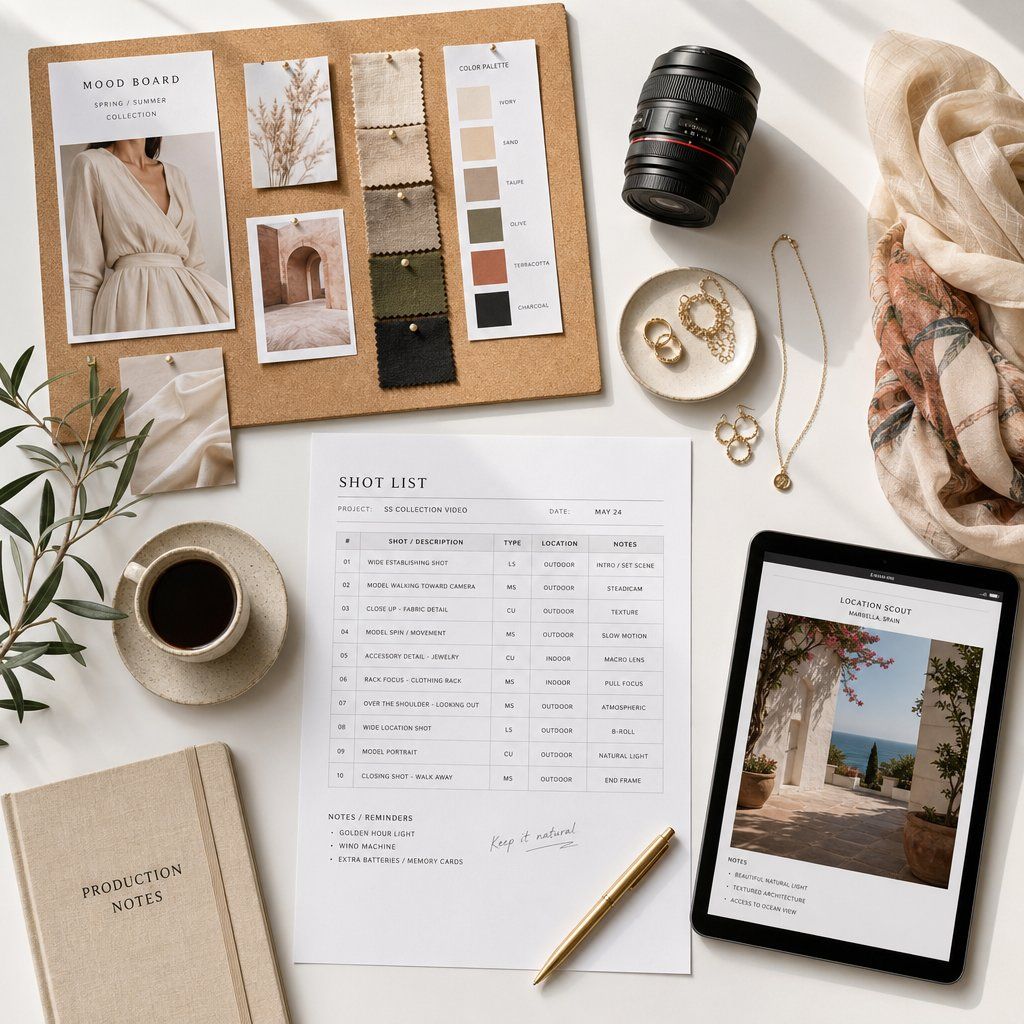
It starts with the creative brief. This is the single document that aligns everyone, from the director to the stylist to the model, around a shared understanding of what the video needs to accomplish. A strong brief answers the core questions: What is the concept? Who is the audience? Where will this content live? What is the mood? Without it, you end up with a team making independent creative decisions that may look fine in isolation but clash when assembled into a final cut.
From the brief, you build a mood board. Think of it as the visual translation of your written concept. Pinterest boards, reference clips from other productions, color palettes, fabric swatches, even screenshots from films that capture the right tone. The mood board gives every collaborator a shared visual language so that when you say "warm and editorial," everyone pictures the same thing. Experienced fashion photographers often find that their mood boards and shot lists blend into one another as strong reference images naturally become shots they want to recreate or reinterpret.
Location scouting comes next, and it deserves more attention than many teams give it. A location is not just a backdrop. It affects lighting conditions, sound quality, available power, and the overall visual tone of the piece. Studio environments offer control and predictability, which is why they are often the smarter choice for teams still building their production confidence. On-location work introduces variables like weather, ambient noise, and permit requirements that can derail a timeline fast. If you are shooting outdoors, always have a backup plan.
Casting and wardrobe preparation happen in parallel. The model needs to match the brand's aesthetic and the video's concept, and the wardrobe needs to be confirmed, steamed, and organized by look well before shoot day. Waiting until the morning of the shoot to discover that a key garment does not fit the model or that an accessory is missing is the kind of avoidable problem that burns through your schedule and your budget.
Here is a concise pre-production checklist to keep your planning on track:
- Define the creative brief: concept, audience, platform, and deliverables
- Build a mood board with visual references, color direction, and tonal cues
- Scout and confirm locations, including backup options for outdoor shoots
- Cast talent that aligns with the brand aesthetic and video concept
- Prepare wardrobe and accessories, organized by look and shooting order
- Create a detailed shot list covering every setup, angle, and camera movement
- Confirm all equipment, crew availability, and a production timeline with call times
That last point, the timeline, is easy to overlook but critical to a smooth day. A clear schedule with call times for each team member, time blocks for hair and makeup, setup windows for lighting, and allocated minutes per look keeps everyone moving in the same direction. Without it, you end up with the set ready for look one while the stylist is still prepping look three.
Shooting Techniques That Make Garments Look Their Best
When the camera rolls, every technical choice either reveals or obscures the clothing. Lighting, camera movement, and framing are not abstract creative decisions. They are the tools that determine whether a viewer sees the texture of a linen weave, the structure of a tailored shoulder, or the flow of a pleated skirt.
Lighting is the single most consequential variable. One of the most common mistakes in video production is relying on harsh overhead lighting, which flattens texture and creates unflattering shadows that obscure garment detail. For fashion work, soft, diffused light sources are essential. They reveal the surface character of fabrics, from the subtle sheen of silk to the matte depth of raw denim, without blowing out highlights or crushing shadows. A key light paired with a fill and a subtle backlight, the classic three-point setup, gives you control over dimension and separation between the model and the background.
Color accuracy matters just as much as light quality. Different fabrics respond to lighting in unpredictable ways. A deep navy can read as black under the wrong color temperature. A vibrant coral can shift toward orange if the white balance drifts. Professional productions use color passports and calibrated monitors to ensure what the camera captures matches what the eye sees on set. As Squareshot's production team notes, green tones are particularly difficult to reproduce accurately, and maintaining a consistent color pipeline from set to post-production is the only reliable way to prevent hue shifts across a batch of content.
Camera movement is where fashion video separates itself from static product photography. A slow dolly or tracking shot that follows a model's walk conveys garment flow in a way no still frame can. A gentle tilt from hemline to neckline guides the viewer's eye through the design details in a deliberate sequence. Handheld movement can add energy and immediacy to street style or behind-the-scenes content, but it needs to be controlled. Shaky, unsteady footage reads as amateur and pulls the viewer's attention away from the clothing and onto the camera work itself. A gimbal or stabilizer is a small investment that pays off in every frame.
Framing is the final piece. A common mistake is defaulting to wide, static shots that show the full model but fail to highlight what makes the garment special. Tighter compositions, a close-up on a hand brushing across a textured sleeve, a mid-shot that isolates the drape of a coat, give viewers the detail they need to connect with the product. The best fashion videos alternate between wide establishing shots and intimate close-ups, creating a rhythm that keeps the eye engaged and ensures no design detail goes unnoticed.
Imagine you have nailed the lighting, the movement feels fluid, and every frame highlights the garment exactly as intended. The footage looks great on the monitor. But great footage alone does not drive results. The real commercial impact of a fashion video depends on where and how it reaches an audience, and each platform has its own rules for what performs and what gets ignored.

Fashion Video Strategy Across Every Platform
A beautifully shot fashion video sitting on a single channel is like a perfectly tailored suit hanging in a closet nobody opens. The footage only generates value when it reaches the right audience, in the right format, on the right platform. And here is the catch: what performs on TikTok will fall flat on a product page, and what converts in an email campaign would get scrolled past in a social feed. Each channel has its own grammar, and fluency in all of them is what turns a single production day into a content engine.
Social Media Strategies for Fashion Video
Social platforms are where most fashion video gets its first audience, but treating them as one monolithic channel is a mistake that costs reach and engagement. Each platform rewards different behaviors, formats, and pacing. The brands that win are the ones that shoot once and adapt many times.
On TikTok, speed and personality rule. Quick outfit transitions, styling hacks, and trend-driven clips thrive here because the algorithm favors content that hooks viewers in the first one to two seconds and holds attention through fast pacing. Launchmetrics data shows TikTok delivered a 122% year-over-year increase in Media Impact Value in 2024, with the Influencer Voice driving an average of 75% of that impact across industries. For fashion specifically, the platform saw 147% year-over-year growth, making it the fastest-rising channel in the sector. The takeaway is clear: creator-led, short-form clips are not a nice-to-have on TikTok. They are the primary currency.
Instagram remains the overall leader for fashion brands, accounting for 57% of Media Impact Value in the US in 2024. But the platform has evolved well beyond the curated grid. Reels now compete directly with TikTok for short-form attention, while Stories offer a space for ephemeral behind-the-scenes content, polls, and quick styling tips that keep audiences engaged between major posts. The key difference from TikTok is that Instagram still rewards polished visual consistency. A brand's Reels can be energetic and trend-aware, but they need to feel cohesive with the overall feed aesthetic. Think of Instagram as the platform where aspiration and accessibility meet.
YouTube is the underestimated player in the mix. Until 2023, it was still generating more Media Impact Value than TikTok, and it made up 16% of US performance in 2024. The platform's strength is depth. Longer behind-the-scenes features, designer interviews, seasonal campaign films, and detailed styling guides all find a natural home here. YouTube content has a longer shelf life than social feed posts, continuing to accumulate views and drive discovery months after upload. For brands willing to invest in content that runs beyond 60 seconds, it offers something no other platform can: sustained, searchable visibility.
Pinterest operates differently from all three. It functions less as a social network and more as a visual search engine, where users actively look for outfit inspiration, styling ideas, and trend direction. Repurposing short video clips as Pinterest video pins taps into this discovery behavior, driving traffic back to product pages or full-length content. The audience intent on Pinterest skews toward planning and purchasing, which makes it a quietly powerful channel for fashion brands that take the time to optimize for it.
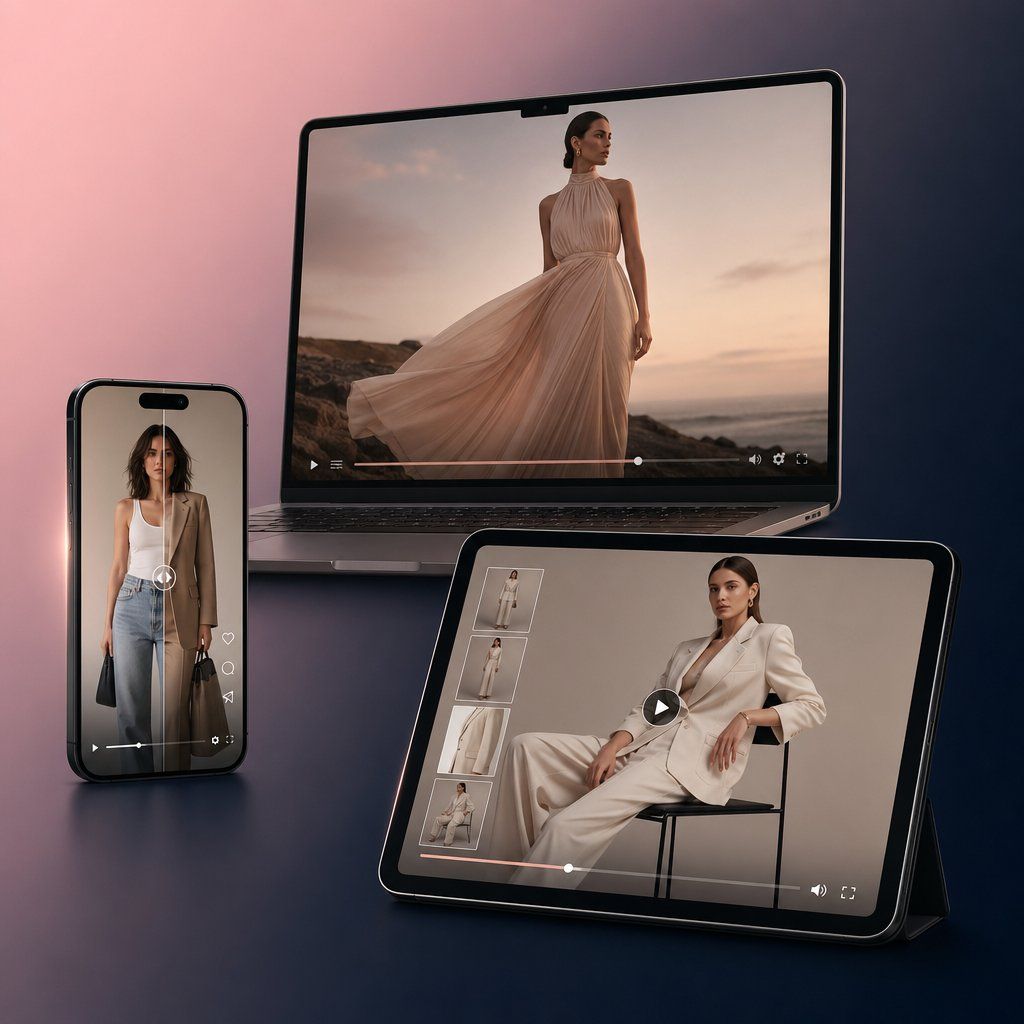
The smartest approach is not to create entirely new content for each platform. It is to plan a single shoot with multi-platform output in mind. A campaign shoot, for example, can yield a 90-second hero edit for YouTube, a 30-second cut for Instagram Reels, a vertical remix with trending audio for TikTok, and a set of still-frame pins for Pinterest. This repurposing strategy maximizes the return on every production dollar while respecting the distinct expectations of each channel. As Launchmetrics notes, a cross-channel approach lets brands repurpose core campaign content across platforms while adapting it for each environment, ensuring resilience against algorithm shifts or platform disruptions.
Fashion Video in E-Commerce and Email Marketing
Social media drives discovery, but e-commerce product pages are where purchase decisions actually happen. And this is where video earns its keep in the most measurable way possible.
When a shopper lands on a product page, they are trying to answer a simple question: will this look good on me? Static images can show color and cut, but they cannot show how a fabric drapes during movement, how a jacket falls when the model turns, or how a dress fits across different body types. Video fills that gap directly. Research from Invesp found that product pages with video see up to a 65% lift in conversion rates compared to those with images alone, while Shopify's internal data shows products with video convert at a rate 10 to 30% higher across multiple categories.
The impact on returns is just as significant. Online fashion purchases carry an average return rate of around 24%, largely because customers cannot touch or try on clothing before buying. Short product clips, even 10 to 15 seconds showing the garment from multiple angles and on different body types, reduce the gap between expectation and reality. Retailers who added product page video reduced return rates by an average of 12 to 18% within six months. That is not just a better customer experience. It is a direct hit to one of fashion retail's most expensive operational problems.
Beyond the product page, video is proving its value in email marketing and landing pages. A video thumbnail embedded in a promotional email creates a visual block breaker that draws the eye past text-heavy layouts and static banners. Click-through rates climb because the promise of motion, of seeing the product come alive, is a stronger call to action than another flat product shot. Landing pages built around a hero video keep visitors engaged longer, and that increased dwell time signals quality to search engines while giving the brand more opportunity to communicate its story and value proposition.
Engagement data reinforces this across the board. HubSpot found that the average internet user spends 88% more time on a website that features video, and shoppers spend roughly twice as long on product detail pages with video compared to static image pages. For fashion brands, where the product experience is inherently visual and tactile, that extra time on page translates directly into higher confidence and more completed purchases.
Here is a quick reference for matching your video content to the right channel:
| Platform | Ideal Video Length | Format | Primary Use Case |
|---|---|---|---|
| TikTok | 15 - 60 seconds | Vertical (9:16) | Trend-driven styling clips, outfit transitions, creator collaborations |
| Instagram Reels | 15 - 90 seconds | Vertical (9:16) | Polished short-form edits, behind-the-scenes content, product highlights |
| YouTube | 2 - 15 minutes | Horizontal (16:9) | Campaign films, styling guides, designer interviews, long-form BTS |
| 6 - 60 seconds | Vertical (2:3 or 9:16) | Outfit inspiration pins, trend discovery, traffic to product pages | |
| E-Commerce Product Pages | 10 - 45 seconds | Horizontal or square | Fit and movement demos, fabric detail, styling context for conversion |
| Email Campaigns | 10 - 30 seconds (or GIF preview) | Horizontal or square | Click-through drivers, new collection teasers, promotional highlights |
The pattern across all of these channels points to one operational reality: producing enough platform-optimized content to stay visible everywhere requires either a very large production budget or a very efficient workflow. Most brands do not have the former, which is why the conversation increasingly turns to tools and resources that can close the gap between what a team needs to publish and what it can realistically shoot from scratch.
Stock Footage and AI Tools Reshaping Fashion Video Production
That gap between content demand and production capacity is real, and it is growing. Brands need video for every platform, every product drop, and every seasonal push, but not every asset requires a full crew, a booked studio, and a week of post-production. The practical question is: when does it make sense to shoot from scratch, and when can you supplement with pre-made footage or AI-generated content without sacrificing quality?
Using Fashion Stock Footage Effectively
Stock footage gets a bad reputation in fashion circles, and some of that reputation is earned. Generic clips of models walking down anonymous hallways or spinning in slow motion against white backdrops rarely feel authentic to a specific brand. But used strategically, stock video is a legitimate production tool that fills gaps without draining budgets.
The key is understanding where stock footage works and where it falls short. It excels as mood-setting B-roll: atmospheric city shots, texture close-ups, lifestyle vignettes that establish a visual tone without needing to feature your actual product. If you are building a pitch deck for investors, assembling a sizzle reel for a retail buyer meeting, or padding out a social content calendar between major shoots, stock clips can carry the weight. Platforms like Pexels offer fashion-adjacent footage at no cost, while paid libraries like Shutterstock and Getty provide higher-end options with more specific styling and production value.
Where stock footage breaks down is brand-specific storytelling. A clip of an anonymous model in a generic outfit cannot communicate your brand's design language, fabric quality, or seasonal narrative. It also cannot show your actual product. Viewers are increasingly savvy about spotting stock content, and overreliance on it can make a brand feel hollow, like a storefront with nothing behind the display window. As CIESC Media's production team puts it, every shot you cut into your video should enhance the viewer's experience, not distract them. If B-roll footage appears to be too much of a filler, it will be obvious to the viewer and may distract from the overall message.
There is also an ethical dimension worth noting. Pulling footage from the internet without proper licensing is not just risky from a legal standpoint. It undermines the authenticity that fashion audiences expect. Always confirm usage rights, whether you are pulling from a free library or purchasing a premium clip. Original content remains more personal and genuine, but stock footage, used with intention and proper licensing, can stretch a production budget meaningfully when the alternative is publishing nothing at all.
A few practical guidelines keep stock footage from becoming a crutch. Shoot each B-roll clip for a minimum of 20 seconds to give yourself editing flexibility, and when sourcing stock, look for clips shot in sequences, wide, medium, close-up, and super close-up, so you can blend edits seamlessly with your original footage. The goal is subtlety. If nobody notices the stock clip, you have done the job well.
AI-Powered Fashion Video Creation Tools
Stock footage fills gaps in existing production. AI-powered tools are starting to change the production equation itself. A growing category of platforms now allows brands to generate or enhance video content directly from product imagery, reducing the need for a full-scale shoot every time a new SKU hits the catalog.
The numbers behind this shift are hard to ignore. Traditional fashion video production costs between $5,000 and $50,000 or more per campaign once you factor in models, studios, lighting crews, and weeks of coordination. AI video tools can reduce those costs by 70 to 90% while compressing timelines from weeks to days. One fashion brand used AI generation to produce over 50 advertising videos in less than a week, a volume that would have been logistically impossible with traditional methods at the same budget.
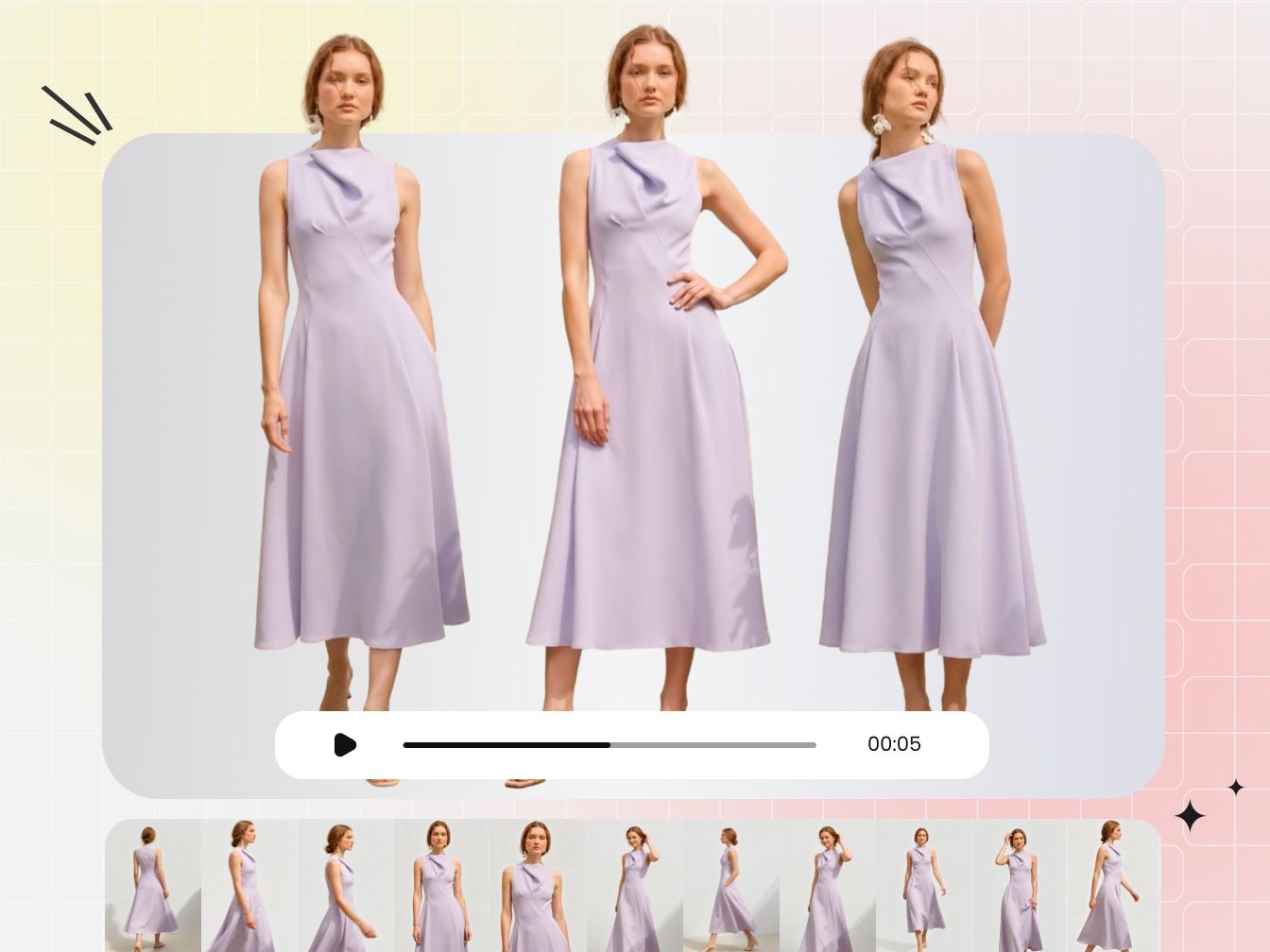
The technology works across several use cases. Virtual try-on tools place uploaded garments on AI-generated models with realistic fabric draping, no physical sample needed. Text-to-video platforms animate models walking, turning, and posing from a single prompt. Image-to-video features turn static product photos into motion clips with cinematic lighting and smooth fabric movement. URL-to-ad generators scan a product page and assemble a finished video ad in minutes, pulling images, descriptions, and brand colors automatically.
For apparel brands and e-commerce teams looking to turn product imagery into dynamic promotional visuals quickly, platforms like Snappyit are built specifically for this workflow. Rather than replacing original production entirely, tools in this category sit alongside it, handling the high-volume, fast-turnaround assets that would otherwise bottleneck a content calendar. A brand might still shoot a hero campaign film with a full crew, then use an AI-powered platform to generate the dozens of product-level clips needed for social ads, email campaigns, and marketplace listings.
That said, AI-generated content is not a blanket replacement for every production scenario. Output quality has improved dramatically, with tools like Runway ML delivering cinematic visual fidelity and platforms like Kling AI achieving photorealistic garment rendering. But an honest comparison reveals that traditional production still leads for premium brand films, emotionally driven storytelling, and content where authentic human performance is the core of the message. AI video competes strongly on cost, speed, scalability, and iteration, the exact dimensions that matter most for high-volume content programs.
The practical framework is straightforward. Match the production method to the content's purpose:
- Original production is ideal when the content is a flagship campaign film, requires authentic human performance, demands precise creative control over every frame, or when the emotional quality of the video directly drives its commercial impact
- Stock footage is a practical alternative when you need mood-setting B-roll, atmospheric filler for social content, or visual support for pitch decks and sizzle reels where brand-specific product shots are not essential
- AI-generated content is a practical alternative when you need high-volume product videos at scale, fast-turnaround social ads and marketplace listings, multiple creative variations for A/B testing, or localized content across different markets without rebooking talent
The smartest teams are not choosing one method over the others. They are building workflows that blend all three, using original shoots for the content that demands it, stock footage for the gaps that do not justify a crew call, and AI tools for the volume and velocity that no traditional pipeline can sustain alone. That blend is exactly what turns a one-off production into a repeatable system, and building that system is the final piece of the puzzle.

Building a Scalable Fashion Video Workflow
Blending original shoots, stock footage, and AI-generated assets solves the volume problem. But without a repeatable system holding it all together, you are still making one-off decisions for every piece of content. The brands that scale their video output consistently are not the ones with the biggest budgets. They are the ones that treat production like a process, not a project.
Building a Repeatable Production Framework
Consistency in process leads to consistency in output. That principle applies whether you are a two-person team producing weekly Reels or a mid-size brand managing seasonal campaigns across multiple channels.
Start with templated creative briefs. Instead of writing a new brief from scratch every time, build a standard document that captures concept, audience, platform, deliverables, and mood references in a reusable format. High-performing teams use structured request templates that force the requester to be specific, eliminating the vague chat messages and half-formed ideas that slow down pre-production. Once a brief template works, every future project starts from a known baseline rather than a blank page.
Reusable shot lists follow the same logic. If your brand regularly produces lookbook content, you do not need to reinvent the shot sequence each season. A standardized list covering wide, mid, and close-up setups for each look, with notes on camera movement and lighting, becomes a living document that evolves over time rather than something rebuilt from memory every quarter.
Batch shooting is where the real efficiency gains appear. Instead of booking a studio and crew for a single video, plan sessions that produce a full week or month of content in one block. Small teams using this approach routinely produce 10 to 15 pieces of content in a single afternoon, a volume that would have required a dedicated production crew just a few years ago. The key is preparation: scripts approved, wardrobe prepped, and assets organized before the session starts. Without that groundwork, a batch day turns into a scramble.
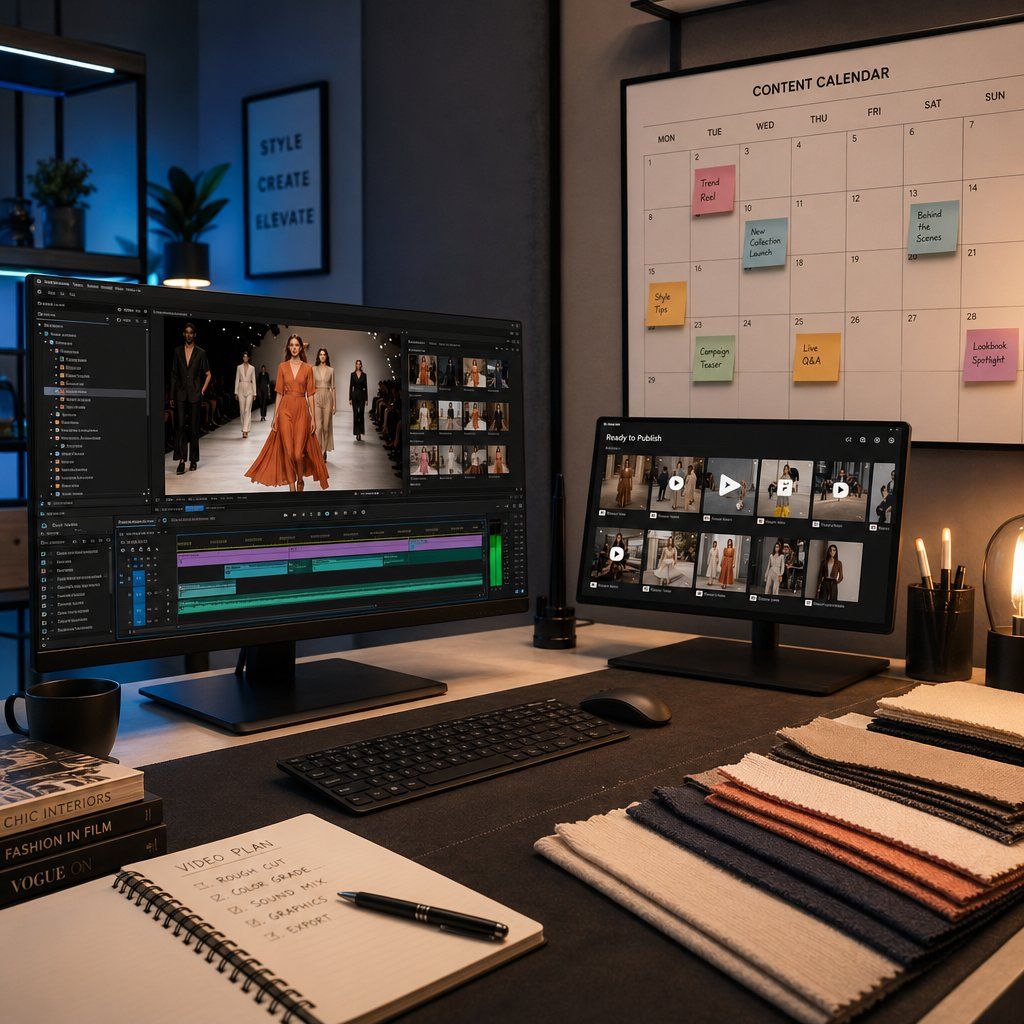
Post-production needs the same standardization. Define your color grading presets, audio templates, and export settings once, then apply them across every piece. This keeps your brand presentation visually consistent whether a viewer encounters your content on a product page, in an Instagram Reel, or embedded in an email campaign. A standardized post-production pipeline also makes it easier to onboard freelancers or new team members without losing quality control.
Choosing the Right Tools for Your Fashion Video Workflow
A repeatable process only works if the tools behind it match your actual needs. The mistake most teams make is searching for a single platform that handles everything. The smarter approach, as workflow specialists note, is building a modular stack where each tool plays to its strength. Let the AI tool handle generation, the editing suite handle polish, and the collaboration platform handle project management.
Here are the core tool categories to evaluate for your workflow:
- AI-powered video generators — platforms like Snappyit that convert product imagery into promotional video content quickly, ideal for e-commerce teams and apparel brands that need high-volume, fast-turnaround assets without booking a full production
- Professional editing suites — software like DaVinci Resolve, Adobe Premiere Pro, or Final Cut Pro for detailed color grading, sound design, and narrative editing on campaign-level content
- Stock footage libraries — resources like Pexels, Shutterstock, and Getty for sourcing B-roll, atmospheric clips, and supplementary visuals that fill gaps between original shoots
- Social media scheduling platforms — tools like Later, Sprout Social, or Buffer that handle publishing, cross-platform formatting, and performance tracking so your content reaches the right channel at the right time
The right combination depends on your content mix. A brand producing primarily short-form social content might lean heavily on AI generation and scheduling tools, with occasional use of a professional suite for hero edits. A luxury label running seasonal campaigns will spend more time in editing software and less in automated generators. Neither approach is wrong. What matters is that every stage of your workflow, from brief to distribution, has a dedicated tool rather than a gap filled by improvisation.
A strong fashion video strategy combines creative vision, production fundamentals, and the right tools to deliver consistent, platform-optimized content at scale.
The brands that build this kind of system do not just produce more content. They produce better content, faster, with less waste and more creative energy left for the ideas that actually move the needle. Start with the process. Match it to the tools. Then let the system do what systems do best: turn a repeatable input into a reliable output, every single time.
Scale your video output without scaling your crew. Generate marketplace-ready clips from existing imagery. Try Snappyit free →
Build your fashion video workflow in seconds
Stop choosing between a costly production shoot and a thin content calendar. Snappyit turns your existing product photos into on-model fashion videos and marketplace-ready clips, so you can ship platform-optimized content at the volume modern feeds demand.
More Resources for Fashion Brands
Frequently Asked Questions About Fashion Video
1. What are the main types of fashion video?
Fashion video spans six primary formats: campaign films that build brand desire through cinematic storytelling, lookbook videos that present collections clearly for buyers and consumers, runway recordings that archive shows and fuel press coverage, street style clips that capture organic trends, behind-the-scenes content that humanizes a brand, and styling tutorials that educate viewers while promoting products. Each type serves a different audience and stage of the customer journey, from building aspiration to driving direct purchase decisions.
2. How much does it cost to produce a fashion video?
Traditional fashion video production ranges from $5,000 to $50,000 or more per campaign when factoring in models, studio rental, lighting crews, and post-production. However, costs vary significantly by format. A high-end campaign film with a professional director and full crew sits at the top of that range, while a simple lookbook video or social-first styling clip can be produced for far less. AI-powered platforms like Snappyit (https://snappyit.ai/fashion-video) can reduce costs by 70 to 90% for product-level video assets by converting existing imagery into dynamic promotional content.
3. What equipment do I need to shoot a fashion video?
Essential equipment includes a camera capable of shooting at least 1080p video, soft diffused lighting sources to reveal fabric texture without harsh shadows, a gimbal or stabilizer for smooth camera movement, and a color-calibrated monitor to ensure garment colors appear accurate. For professional results, add a three-point lighting setup with key, fill, and backlight, plus a color passport for post-production accuracy. Solo creators can start with a smartphone, a ring light, and natural window light for short-form social content, then scale up as budgets allow.
4. How long should a fashion video be for social media?
Optimal length depends on the platform. TikTok performs best at 15 to 60 seconds with fast-paced styling clips and outfit transitions. Instagram Reels work well between 15 and 90 seconds for polished short-form edits. YouTube supports longer content from 2 to 15 minutes for campaign films, styling guides, and behind-the-scenes features. Pinterest video pins perform at 6 to 60 seconds for outfit inspiration. The key principle is to hook viewers within the first two seconds regardless of platform, then match your runtime to the channel's native behavior.
5. Can AI tools replace traditional fashion video production?
AI tools complement traditional production rather than fully replacing it. They excel at high-volume product videos, fast-turnaround social ads, A/B testing variations, and localized content across markets. However, traditional production still leads for flagship campaign films, emotionally driven storytelling, and content where authentic human performance is central. The most effective approach blends both: shoot hero content with a full crew, then use AI-powered platforms to generate the dozens of product-level clips needed for e-commerce listings, email campaigns, and marketplace ads at scale.