



At a glance
Snappyit vs SellerPic for AI product photography: compare ghost mannequin, jewelry try-on, fashion video, marketplace tools and 2026 pricing for sellers.
| Need | What to do |
|---|---|
| Get oriented | Read the short summary, then use the checklist below. |
| Create a test image | Try Product Photo Editor Free |
1. What is SellerPic, and where does it fit in AI product photography?
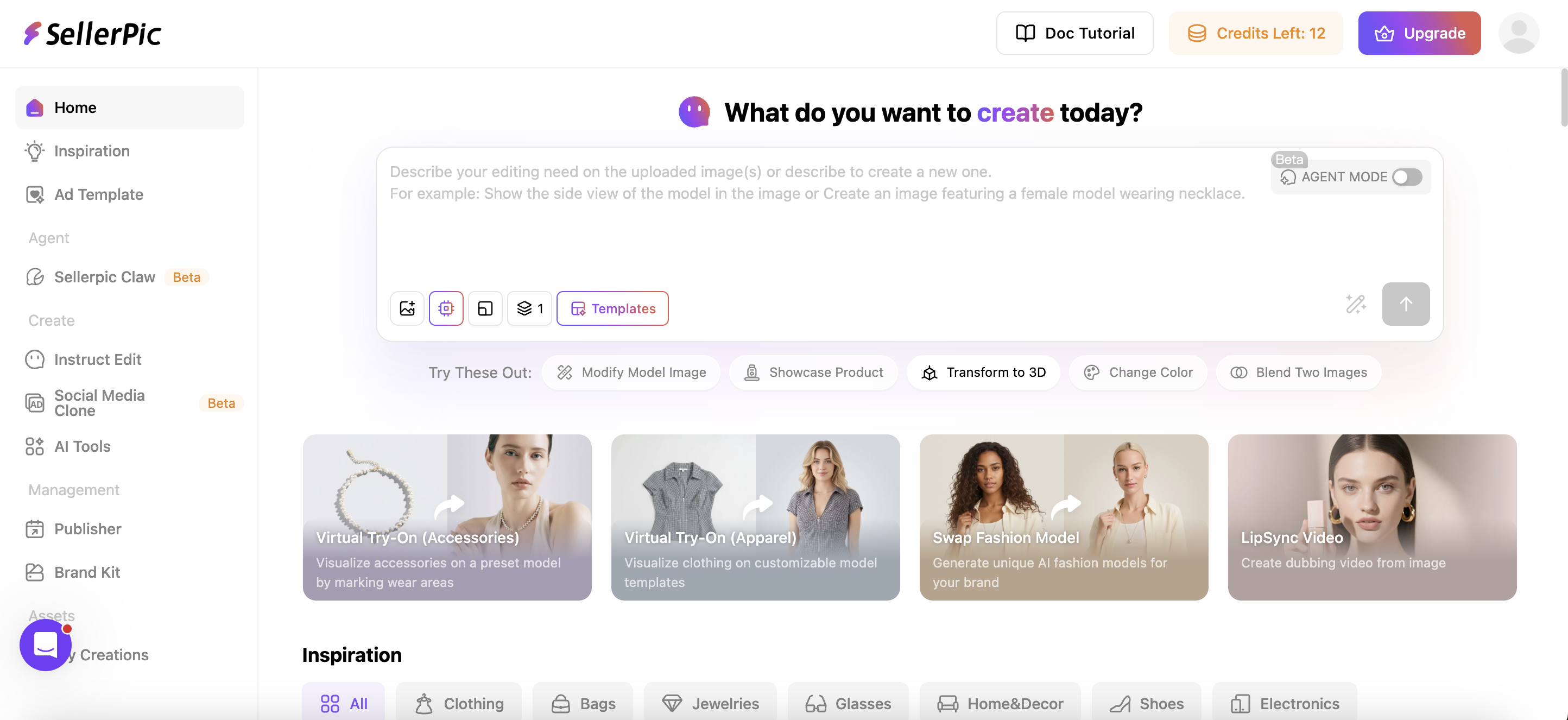
SellerPic launched as an AI photo and video platform aimed at marketplace sellers — Amazon-first, then Shopify and Etsy — and has grown to 30,000-plus users at a 4.8-star aggregate review. The platform's bet is that sellers want a single workflow that produces both still images (ghost mannequin, on-model fashion, jewelry try-on, lifestyle scenes) and short-form product video for TikTok and Reels, all in one place, with deep marketplace integration.
As an AI product photography tool, SellerPic is best understood as a fashion-and-jewelry-focused alternative aimed at the same buyer Snappyit targets. The feature overlap is genuinely close — both ship ghost mannequin, on-model fashion, jewelry try-on, recolor, and short-form video. Where SellerPic differentiates is its Shopify push-back integration (pull product images, edit, push edited versions back to the store with one click) and its dedicated per-category jewelry tools (separate workflow for ring, earring, necklace, bracelet, watch). Where Snappyit differentiates is its broader marketplace resizer coverage, longer-form video output, watermark-free trial with commercial use, and lower entry price.
2. Snappyit vs SellerPic — at a glance
Thirteen dimensions where these tools either align or pull apart. Lime rows mark moments where the gap matters for an apparel or jewelry seller's listing workflow.
| Capability | Snappyit | SellerPic |
|---|---|---|
| Entry annual plan | $6.9/mo Basic | $14.50/mo Starter |
| Free tier | Trial credits, no watermark, commercial use | 20 credits/mo, watermark, no commercial use |
| Pay-as-you-go pack | $5.9 / 30 credits, no subscription | n/a (subscription only) |
| Apparel ghost mannequin | Native dedicated workflow | Yes |
| On-model fashion render | Yes — body type, pose, ethnicity controls | Yes — model swap library |
| Jewelry workflow | Unified Jewelry Model + dedicated Jewelry Retouch | Per-category tools (ring, earring, necklace, bracelet, watch) |
| Color change / recolor | Texture-preserving | Yes |
| AI product video — max length | Image-to-Video + Fashion Video, longer outputs | 5 seconds Free · 10 seconds paid tiers |
| AI product video — concurrency | Standard | 1 → 3 → 3 → 5 concurrent |
| Face swap | Yes | No |
| Marketplace image resizer | 8 platforms, one-click | Marketplace-ratio presets |
| Shopify integration | Shopify App Store integration | Direct pull/push back to Shopify |
| Credit refresh | Monthly | Monthly |
The lime rows tell the story. Snappyit Basic is roughly half SellerPic Starter at the entry tier and ships full commercial use from the free trial; SellerPic free output is watermarked and not commercially licensed until you upgrade. Both handle jewelry credibly — SellerPic with five separate per-category tools, Snappyit with one unified workflow plus a dedicated retouch step. On video length, Snappyit's Image-to-Video and Fashion Video deliver longer outputs than SellerPic's 10-second cap.
3. Where SellerPic is genuinely better
SellerPic is a real competitor, and there are two places where its workflow choices outperform Snappyit:
- One-click Shopify pull-and-push back. SellerPic's Shopify integration lets you pull product images directly from your store, edit, and push the edited AI versions back to the same product in one motion. Snappyit ships a Shopify App Store integration but the pull-edit-push loop is not as tight. For Shopify-only sellers who never leave the Shopify catalog, this is a real time saver.
- Per-category jewelry interface. SellerPic exposes separate tools for ring, earring, necklace, bracelet, and watch try-on. Each tool has category-specific presets, which makes the workflow more discoverable for jewelry-pure sellers who think in product categories rather than in unified workflows. Snappyit handles all five categories inside one Jewelry Model workflow, which is more efficient at scale but less obvious on first use.
4. Where Snappyit wins for apparel + jewelry sellers
Snappyit wins on six dimensions that matter to most sellers in 2026:
- Entry price. Snappyit Basic at $6.9/month annual is roughly half SellerPic Starter at $14.50/month annual. Over a year, that's $91 in savings per seller — enough to cover the cost of a second tool, or simply to keep the spend on advertising instead.
- Watermark-free trial with commercial use. Snappyit's free trial credits ship with no watermark and full commercial licensing — your first listing can go live on Amazon, Shopify, or Etsy immediately. SellerPic's free plan watermarks every output and explicitly excludes commercial use, so first-listing testing requires upgrading to $14.50/month Starter before going live.
- Longer-form AI product video. SellerPic caps video at 5 seconds on Free and 10 seconds across all paid tiers. Snappyit Image-to-Video and Fashion Video produce longer outputs, and the longer clips are more usable for TikTok Shop hero videos and Reels organic content beyond the 10-second pure-format bumper.
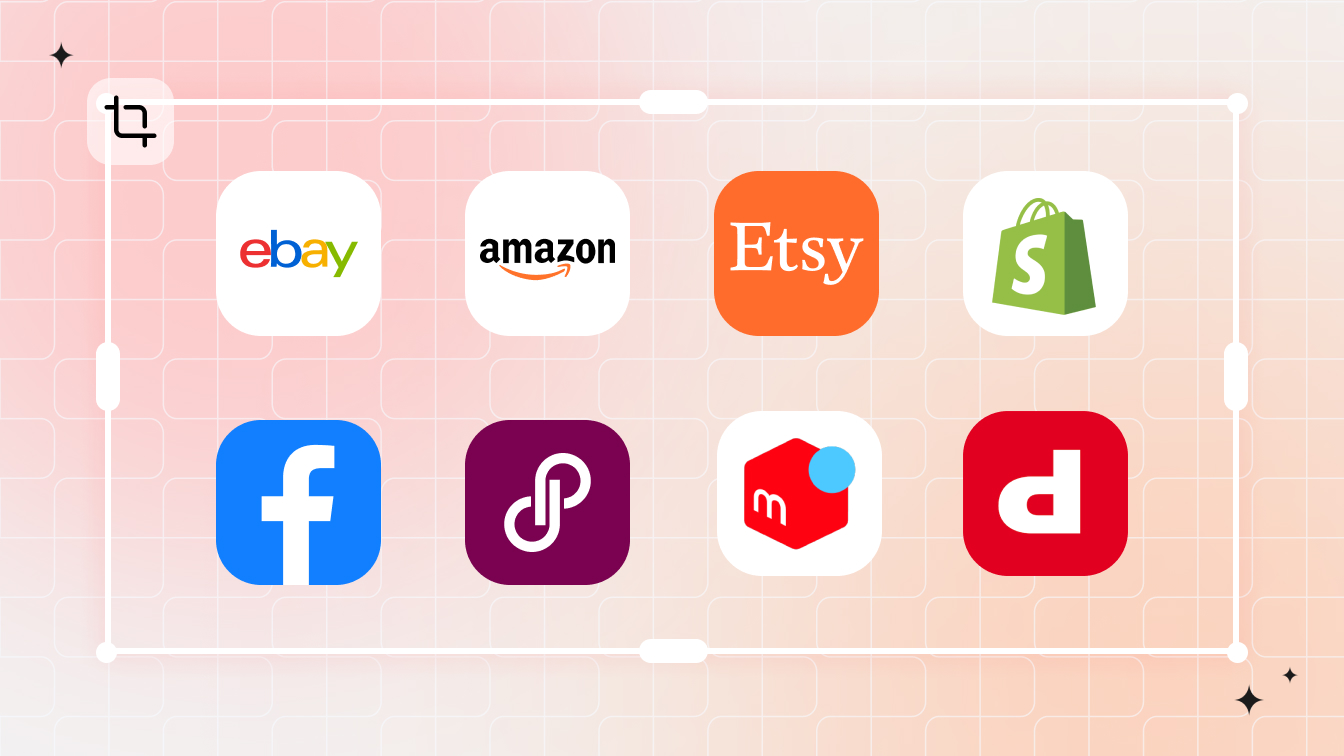
- Broader marketplace resizer. Snappyit's one-click image resizer auto-exports for 8 platforms — Amazon 1500–3000 px, Etsy 2000×2000, Shopify 2048×2048, eBay 1600 longest edge, Poshmark 1:1, Mercari 1:1, Depop 4:5, Facebook Marketplace flexible. SellerPic ships marketplace-ratio presets but the breadth is narrower for cross-listing reseller workflows.
- Face swap. Snappyit's AI Face Swap lets you swap model faces across shoots while keeping pose, outfit, and lighting. SellerPic does not ship this — sellers needing model continuity across a multi-shoot campaign run an external tool.
- Texture-preserving recolor. Snappyit's AI Product Recolor is trained on apparel and jewelry texture data and preserves weave, sheen, and stitching across multiple color shifts. SellerPic's recolor is competent but more general-purpose; complex prints and metallic surfaces show more drift across swatches.
Try Snappyit's AI product photography toolkit free →
5. Pricing — what you actually pay in 2026
SellerPic advertises 50-percent-off annual pricing prominently; the headline annual numbers are well below the monthly numbers. Here's what each tier actually buys.
| Tier | Snappyit | SellerPic |
|---|---|---|
| Free | Trial credits, no watermark, commercial use | 20 credits/mo, watermark, no commercial use |
| Entry (annual) | $6.9/mo Basic — for low-SKU sellers | $14.50/mo Starter (200 credits) |
| Entry (monthly) | $9.9/mo Basic | $29/mo Starter |
| Mid (annual) | $11.1/mo Standard — for mid-SKU sellers | $39.50/mo Growth (600 credits, 5 model swaps) |
| Top self-serve (annual) | $34.9/mo Pro — for high-SKU and brand teams | $49.50/mo Advanced (3,000 credits, unlimited model swaps) |
| Pay-as-you-go pack | $5.9 / 30 credits — occasional or seasonal need, no subscription | n/a (subscription only) |
| Per-image cost, typical use | $0.05 – $0.30 (subscription) · ~$0.20 (pack) | $0.05 – $0.30 at higher tiers |
At the entry tier the gap is real — Snappyit Basic at $6.9 covers more than half of SellerPic Starter's feature set for less than half the cost. At the Advanced tier ($34.9/month Pro vs $49.50/month Advanced) Snappyit is meaningfully cheaper at the top tier and feature parity is closer, with the main differences being video length (SellerPic 10-second cap vs Snappyit's longer outputs) and face swap (Snappyit only).
Sellers who plan to commercialize output from day one should weight the watermark-and-commercial-use line heavily. SellerPic free output cannot legally go on a live listing; Snappyit free output can. For first-listing testing, that matters.
6. Which tool fits which seller
Six seller profiles, and the tool that fits the workflow best:
- Solo Etsy seller, jewelry, thrift / vintage flipper — Snappyit. Entry price plus watermark-free trial plus broad marketplace export wins on unit economics.
- Shopify-only seller — Either. SellerPic's pull-push integration is tight; Snappyit's broader feature set covers Shopify Plus stores that also push to Amazon or Etsy.
- Amazon seller with apparel and jewelry mix — Snappyit. Lower entry price and 8-marketplace resizer support resellers who cross-list outside Amazon.
- TikTok Shop / Reels-first seller — Snappyit. Longer-form video, face-swap continuity across hero clips, and the broader fashion-video output beat SellerPic's 10-second cap for organic content.
- Jewelry-pure brand — Either. SellerPic's per-category interface is more discoverable; Snappyit's unified workflow plus dedicated retouch scales better at higher catalog sizes.
- Reseller cross-listing 5+ marketplaces — Snappyit. The 8-marketplace resizer is built for this exact workflow.
Try the listing-ready tool first. Snappyit Basic ships commercial use, ghost mannequin, jewelry, recolor, and video at $6.9/month — first listing can go live the same day. Try Snappyit free →
7. Workflow scenarios — from product photo to live listing
Four common AI product photography workflows, and how each tool handles them:
- Phone-shot t-shirt hanger photo → Amazon listing image. Both tools produce a clean ghost mannequin output in 30-45 seconds. Snappyit's output ships to Amazon's 1500–3000 px main-image preset in one click via the resizer; SellerPic exports to Amazon presets but ratio coverage is more selective.
- Ring product photo → on-model jewelry try-on for Etsy. Both tools handle this. SellerPic's ring-specific tool has category-tuned presets that make first-time use easier. Snappyit's unified Jewelry Model + Jewelry Retouch combo handles the scratch-and-shine cleanup in the same pass.
- Apparel product → 5-color variant catalog. Snappyit's texture-preserving recolor maintains fabric weave across all five swatches. SellerPic's recolor is competent but more drift on woven and metallic surfaces past three or four swatches.
- Static fashion photo → 15-second TikTok Shop hero video. Snappyit's Fashion Video produces longer outputs that fit TikTok Shop's preferred hero-video length. SellerPic caps at 10 seconds across all tiers.
8. When to use both side by side
Because the feature overlap is high, running both tools is generally redundant. The two narrow cases where the dual stack makes sense:
- Shopify-first seller with multi-channel push needs — SellerPic for the Shopify pull-edit-push loop, Snappyit for the multi-marketplace resizer + longer-form video for non-Shopify channels.
- Jewelry-pure brand operating at high volume — SellerPic's per-category jewelry tools for daily SKU work, Snappyit for the seasonal campaign images that need face-swap continuity or longer-form video for social.
Combined entry cost: Snappyit Basic $6.9 plus SellerPic Starter $14.50 = $21.40/month annual. For most sellers, picking one tool based on the entry-tier features they actually use is the right call. The dual stack is for specific niche workflows, not a general recommendation.
9. The verdict
Snappyit and SellerPic are the closest direct competitors in the AI product photography category — same target customer, similar feature breadth, comparable output quality on the apparel-and-jewelry core. Snappyit wins on entry price ($6.9 vs $14.50/month annual), watermark-free commercial trial, longer-form video, face swap, and broader marketplace resizer coverage.
SellerPic wins on Shopify pull-push integration depth, per-category jewelry interface, and headline review score in vendor channels. For Shopify-only sellers who never cross-list, SellerPic Starter is a credible pick. For everyone else — solo sellers, jewelry brands, Amazon sellers, cross-listing resellers, TikTok-first DTC, multi-marketplace catalogs — Snappyit is the better choice in 2026 on coverage, cost, and commercial-use flexibility.
10. Frequently Asked Questions
Is Snappyit a SellerPic alternative for AI product photography?
Yes. Both Snappyit and SellerPic are AI product photography platforms aimed at Amazon, Shopify, and Etsy sellers, and the feature overlap is substantial — ghost mannequin, on-model fashion, jewelry try-on, AI product video, marketplace export. The two differ on entry pricing (Snappyit Basic $6.9/month versus SellerPic Starter $14.50/month annual), free-tier terms (Snappyit ships trial credits with no watermark and full commercial use; SellerPic's free plan watermarks output and excludes commercial use), and on the structure of the jewelry workflow (SellerPic splits jewelry into a separate tool per category; Snappyit handles all jewelry categories inside one unified Jewelry Model workflow).
Can SellerPic do everything Snappyit does?
SellerPic covers most of the same ground — ghost mannequin, on-model, jewelry, fashion video, marketplace export — and is genuinely competitive on apparel and jewelry workflows. The main differences are coverage of footwear at the entry tier, the texture-preservation quality of recolor, the maximum video length (SellerPic caps at 10 seconds across all tiers; Snappyit's Image-to-Video and Fashion Video offer longer outputs), and the absence of a face-swap feature on SellerPic. For pure apparel-and-jewelry catalog work the two are close; for sellers who need video over 10 seconds, face swap, or texture-precise recolor, Snappyit pulls ahead.
Is SellerPic's free plan actually usable for ecommerce?
Only for testing, not for live listings. SellerPic's free plan gives 20 credits per month but watermarks all output and explicitly excludes commercial use — meaning you can preview the workflow but cannot legally use the images on Amazon, Shopify, or Etsy until you upgrade to a paid tier starting at $14.50/month annual ($29/month monthly). Snappyit's free trial credits ship with no watermark and full commercial use, so first-listing testing produces images that can go live on a marketplace immediately. For solo sellers evaluating tools, this is a practical difference at the start of the funnel.
Which is cheaper, Snappyit or SellerPic?
Snappyit is meaningfully cheaper at every tier. Snappyit's annual ladder is $6.9/month Basic, $11.1/month Standard, $34.9/month Pro — sized for low, mid, and high-SKU sellers respectively. SellerPic's ladder is $14.50/month Starter, $39.50/month Growth, $49.50/month Advanced. For 50–200 listings per month, Snappyit Basic is less than half SellerPic Starter. Snappyit Standard at $11.1/month sits below SellerPic Starter at $14.50/month. Snappyit Pro at $34.9/month is meaningfully below SellerPic Advanced at $49.50/month. Snappyit also offers a pay-as-you-go pack at $5.9 for 30 credits — useful for occasional or seasonal needs without a recurring subscription, an option SellerPic does not offer.
Does SellerPic handle jewelry photography?
Yes — SellerPic ships dedicated jewelry try-on tools per category (rings, earrings, necklaces, bracelets, watches). The output quality on macro jewelry detail is strong and widely cited in reviews. Snappyit handles all five jewelry categories inside one unified Jewelry Model workflow, with separate Jewelry Retouch for scratch removal, shine enhancement, and prong-shadow correction. For jewelry-pure sellers both tools are credible; Snappyit ships at one-half the entry price and bundles retouch plus on-model rendering rather than splitting them across separate tool pages.
Which tool fits Amazon, Shopify, and Etsy sellers best?
Both ship marketplace integrations and platform-ready export ratios. SellerPic's Shopify integration is notable — pull product images directly from your store and push edited AI versions back with one click. Snappyit ships a Shopify App Store integration plus a one-click 8-marketplace image resizer (Amazon, Etsy, Shopify, eBay, Poshmark, Mercari, Depop, Facebook Marketplace). For Amazon sellers focused on listing photo optimization, both tools work. For multi-channel sellers managing Shopify plus Amazon plus Etsy plus a reseller marketplace, Snappyit's broader resizer coverage saves more time than SellerPic's deeper but narrower Shopify-specific integration.
Can I use Snappyit and SellerPic together?
It is possible but generally redundant — the feature overlap is high enough that a dual stack pays twice for similar capability. The few teams that do run both typically use SellerPic specifically for its Shopify push-back integration and Snappyit for the broader catalog work (multi-marketplace export, longer-form video, face swap). Combined annual entry cost is $6.9 plus $14.50 = $21.40/month. For most sellers, picking one tool based on the entry price and feature coverage they actually use is the right call.
Are SellerPic and Snappyit outputs accepted on Amazon, Shopify, and Etsy?
Yes. As of 2026, Amazon, Shopify, Etsy, eBay, Poshmark, Mercari, Depop, Walmart, and TikTok Shop all accept AI-generated and AI-augmented product photography provided the listing image accurately represents the real item. Both tools preserve real product detail. Note that SellerPic free-plan outputs include a watermark and are not licensed for commercial use, so those specific outputs cannot legally go on a live marketplace listing — you need at least SellerPic Starter ($14.50/month annual) to commercialize SellerPic-generated images. Snappyit trial credits ship watermark-free and commercially licensed from the first generation.
Ship your next AI product photography listing in 60 seconds
Snappyit ships ghost mannequin, on-model fashion, jewelry retouch and modeling, recolor, image-to-video and the 8-marketplace image resizer in one workspace — at $6.9/month annual, watermark-free and commercially licensed from the free trial. No card required.
Try Snappyit's AI product photography toolkit free →